The concept of Anything Goes Marketing is simple: Don't let theories or best practices restrict you when it comes to marketing - specifically B2B marketing. We all know that in marketing, anything goes and if you don't, it's time that you did. Expect to find tips and tricks to improve your online marketing skills and some harsh comments for poor campaigns, articles and posts that I come across - beware!
Are your recipients not responding to your emails? This is a topic that I’m sure hits home with many of you. You work hard on getting an email campaign together, you send it out and then you find that the results were not what you were hoping they would be. I originally responded to a discussion on Focus called What strategies can you recommend for enhancing performance of email marketing campaigns? that covered this topic. The first few answers included suggestions such as good subject lines and ensuring that the emails are relevant to the recipient. I want to expand on this and provide five tips of my own that can help you improve your email response.
Content: The better and more relevant the content in your emails, the better the response. This may seem obvious but you would be surprised how often this gets overlooked. A recent customer of mine found that video and case studies outperformed white papers. Have you reviewed what content is working and what isn't? This should be done regularly. The type of content should also be tied to the stage of the buyer's journey that the recipient is currently in.
The Message: Does the message in your email provide an educational, thought leadership type approach or is it simply all about your company? Always put yourself in the shoes of the email recipient and think about what would convince them to open and respond to your email. It's the "what's in it for me" factor. Focus on your recipient's pain points and how to solve those and less on the benefits of your product or service. In addition, don't bore the reader with too much content. Keep it short, sweet and to the point. The point of email is to get someone to take the next step - focus on that.
Personalization: I'm not talking about "Dear so and so". Real personalization has the email coming from the Account Manager, Support representative or sales rep that has or will interact with the email recipient. By automating this process and having the email come from a real person, you can increase your email response 4X. There are some tricks here as well as to when to use this type of personalization and it may not be appropriate in some situations. As a standard rule, if a relationship has been established or you’re looking at a way of establishing a relationship, use this approach. This is a feature that you would typically find with a marketing automation tool.
Email Deliverability: This is an area that is difficult to consume as it's not tangible but it can make or break the success of your email campaigns. Ask yourself: Is your email list clean? Having a messy list can lead to spam complaints, hard bouncebacks, "unknowns" (non-responders), and spam traps. All of these factors can reduce your email reputation and prevent your emails from landing in the inboxes of the people that are keen to get your emails. You need to ensure that you know what your Sender Score is, if the emails you send have authentication, if you are receiving spam complaints, and the if you are hitting spam traps. Your email/marketing automation provider should be able to assist here. As a first step, I recommend checking out this guide on Email Deliverability and Privacy.
Test: - I hate this one as everyone always says “test, test. test” but I can't stress how important it is. If you don't believe me, have a look at a few examples over at www.whichtestone.com. You'll see that you never know what will work better unless you test it. Here is a great one that Sonic Foundry did on testing their subject line: Long vs. Short Email Subject Line Test.
I hope these short and sweet tips were helpful. I know it;s hard sometimes to look in the rear view mirror and examine the success of your campaigns but you need to do it. Look at a few of your low performing emails with the tips above in mind and think about questions you may have and what you can do to make improvements. Small changes to your emails can generate higher conversions and result in a higher impact further down the sales/marketing funnel. What you decide to do is in your hands.
Chad H @chadhorenfeldt
PS: If you have examples of your emails, I would be happy to have a look at them.
If you've recently rolled out marketing automation or are considering it, have a look at this two part series that was orginally published on the "It's All About Revenue" blog:
Have you recently rolled out a marketing automation platform like Eloqua, have you been using one for awhile, or are you considering one in the near future? Welcome to the party! It’s easy to think that once you have the basics configured you can set your platform on autopilot, concentrate on executing campaigns, and see the leads roll in. Of course, there’s this thing called “reality”... Read more
So you think you may know marketing automation, but in part Iof this post we only started to outline the many different areas you need to consider. Configuring your marketing automation platform, then letting it collect dust is a risky strategy. There are too many environmental factors affecting your marketing strategy that you need to consider.Marketing automationprovides the tools to adapt to changes occurring around you – it’s up to you to step up to the plate or be left behind.Read more
It’s not too early to start planning for email campaigns you will be launching next year. To help you with this task, I’m going to share a number of takeaways from a recent MarketingSherpa webinar that I attended titled “Top Tactics to Improve Email Relevancy and Deliverability” and included experts from MarketingSherpa and Return Path. In this post, I’ll provide a summary on some interesting data points and tactics to keep in mind as you plan for your 2011 campaigns.
What is on the Mind of Marketers When it Comes to Email?
Marketers are looking beyond cosmetic teaks to their emails to improve response rates. In the 2010 MarketingSherpa benchmark report, the Sherpa folk found that the most significant challenge for marketers when it comes to email is around relevancy. In fact ninety-five percent of marketers are looking to improve the relevancy of their emails. By relevancy, I mean sending the right message to the right person at the right time. Also high on the list was email deliverability. A good chunk of the marketers surveyed (78%) also viewed getting emails delivered to the inbox as significant. Both of these items are closely related which we’ll get to. First, let’s look at tactics to improve relevancy.
How You Can Improve Your Email Relevancy
From another Sherpa chart in the same benchmark report, the most effective tactic when it comes to sending relevant emails is to send emails automatically based on certain triggers. These are typically transactional emails that are sent when you purchase a product online or register to receive valuable website materials such as a white paper. MarketingSherpa has other data to back this up. They found that transactional emails are opened 36% more than regular emails. In the webinar, an example was used of a retailer that achieved a number of additional sales by including relevant products in the transactional emails that were sent after a purchase. B2B marketers should also use transactional emails to their advantage by including content in them that will help buyers move to the next stage in the buyinng process. This assumes that you have defined the different stages that a buyer proceeds through and the content that matches these stages.
Another very effective tactic is to use the behavior of your subscribers when creating your email lists. An example of behavior based segmentation may include an email campaign that targets your most active subscribers (those that have opened and/or clicked a number of emails in the last three months). A recent success story using this technique that I’m aware of involved a client that sent an email on the day of a webinar to those people who had opened or clicked on two previous email invites but had never registered for the event. The email that was sent on the day of the event received a 60% open rate and 25% click-through rate and greatly increased the number of leads generated by this campaign.
While marketers indicated which tactics they used, they also let Sherpa know that increasing relevancy isn’t easy. Most of the issues stem around having enough information on the subscriber to serve up content that is truly different. Another issue is generating the content itself. To create a relevant email, you need relevant content and you need people to create it (see the following amusing cartoon that captures the hard of this issue: Who is Creating Content for Your Company?). On the first point, Sherpa recommends a “use what you got” approach. Use the data that you have in your database to send relevant information. For example, you can use the create date of a contact to send new subscribers slightly different content to keep them engaged. On the content creation side, there are several approaches you can take. I recommend finding the people in your company that are knowledgeable, passionate and enjoy writing. This task doesn’t have to just fall on marketing’s shoulders.
This concept is very simple. The more relevant the email, the higher the chance it will be opened/clicked, the less chance it will be deemed as spam by the recipient, and the higher your email sender reputation will be. The less spam complaints you get and the higher your sender reputation, the better your email deliverability will be. Therefore relevancy increases your email deliverability.
The opposite is true as well. The less relevant the email, the less chance that people will respond to it, the greater the number of spam complaints, and the lower your email sender reputation will be. Return Path is also finding that some ISPs like Gmail and Hotmail are looking at the engagement of recipients to help determine your email sender reputation. For example, if your emails are being deleted without being opened, there is a chance that your email reputation will suffer. To make things even more difficult, Sherpa is finding that junk folders and spam filters are getting even more aggressive leading to an increase in the number of "soft bounces“ or emails that simply vanish into email purgatory. Return Path reported that in the second half of 2009, up 20% of emails sent never made it to the inbox with 16% of emails in North America disappearing (not bouncing or making it to the inbox). That is definitely scary.
How Can You Improve Your Email Deliverability?
Having a reputable email or marketing automation tool is important in terms of your email deliverability but that alone won’t ensure your emails make it to the inbox. As Return Path says, your vendor can only do so much for you. There is no little robot that is working 24/7 behind the scenes to ensure that your emails magically make it to your recipients (it reminds me of those Ford Sync commercials). That does not mean that there is no monitoring of blacklists or ensuring that the systems are running properly. Your vendor should provide the infrastructure, the tools and the resources to help you get your emails delivered. However, they can’t ensure that your data is clean and that your not hitting spam traps. As mentioned above, many aspects of email deliverability depend on email relevancy which is something that only you can control.
Here are the top email deliverability tips related to relevancy that I took away from the Sherpa webinar:
The easiest and most effective tactic is to get your own IP address(s) for sending your email. This option should be available from your email provider but may be sold at an additional cost. It is definitely worth it as it allows you to control your own email deliverability destiny and includes additional authentication protocols (SPF and DKIM) that tells your recipients that your email tool has permission to send emails on behalf of your company. You can also regularly check your email reputation which can be done for free via Return Path’s Sender Score website. If you have a low score, it may mean that your emails aren’t relevant and that you have additional issues that need to be addressed.
Remove your inactive email addresses. This refers to the people you have in your database that are not responding to your email campaigns. I recommend creating an automated reengagement campaign with special messaging to try and reengage these “do nothings”. However, don’t waste too much time on these guys. The more emails you send to these recipients, the more damage it can do to your email reputation and your overall email deliverability. It would be a shame to have these “do nothings” prevent your active recipients from receiving your emails. As an additional tip, be sure to add links to your social media channels such as LinkedIn, Twitter and Facebook within your reengagement emails as these email non-responders may prefer to keep in touch on other ways.
Get a seed list monitoring tool. Before you send out your emails to your lists, you can see if your emails will make it to the inbox, the junk pile or be blocked all together using tools available from Return Path. Many email and marketing automation vendors include these tools as part of their standard packages. Take advantage of these tools! If your emails are not reaching the inbox, there may be a relevancy issue.
Email frequency is not an issue if your sending relevant information. Many marketers are worried that their recipients are receiving too much email. You should be able to run reports to better understand the average amount of emails your database is receiving in a certain period. You can also verify of this is an issue by tracking unsubscribes and spam complaint data. That said, if the email your sending is being triggered by a certain event or activity, the recipient should not have any issue with receiving these additional emails. In another recent benchmark study by Eloqua, it stated that best in class companies weren’t too concerned with email frequency do to the high use of automation and relevant communication. They also had a low unsubscribe rate.
Personalizing your email increases relevancy and improves deliverability. There are many ways to add personalization to your email campaigns. This may include field merges and adding dynamic content. I’ve written more about this in the post “Top Automated Marketing Personalization Tactics”. In the short term, these tactics may increase the time needed to execute campaigns as additional planning and training may be required. It’s worth it. The time you’ll save in the long run and the increased response you’ll receive from your campaigns should result in you kicking yourself for not doing it sooner. Make sure your using the right tools that allow you to build in dynamic content. There’s no point manually writing in the signature for an email that you want to send on behalf of your sales team. You have better things to do.
The relevancy of your campaigns and email deliverability are deeply connected. The faster that you incorporate this into your thinking, the more you’ll get out of your database and the better results you’ll receive. I hope that you found this post interesting and let me know if you have any questions or your own stories on how you used relevancy to improve your email campaigns.
The importance of blogs in your B2B marketing mix can't be overlooked. Blogs are too important in keeping customers and future customers informed about your industry, your products and your company, driving people to your website, and generating leads. A recent study by Hubspot found that those companies that use blogs generate 67% more leads than those that don't. However, anyone that can open a web browser can start a blog. In fact there are more than two blogs are created each second with about 1.6 Million postings per day which works out to 18.6 posts per second. Let's just say that along with the great blogs out there, you also have a bunch of crap.
If you're a B2B company that is considering starting up a corporate blog or sprucing up your current blog, I have five examples that should provide you with some guidelines and tips on what your blog should include. I used the following criteria to help create this list:
Was it easy to find your blog on the corporate website? Blogs should be easily available on your website or within a resources section. Of all the criteria, this was lower on the list as most web visitors will find you via search. However, your blog content changes often and it may be something to consider featuring on you home page.
The appearance of the blog. The blog should look professional. It should include a real URL (unlike myself but I'm not a B2B company!), and have an enticing design. At times, blogs are seen as an afterthought and look very unprofessional when you compare it to the corporate website. Some blogs have different fonts for each post while others use large images of the authors. I really don't care to see a massive picture of the author for each post. I would much rather see a relevant picture that coincides with the content so I can better visualize what is attempting to be conveyed. Pictures can add a little fun to your blog and it's this type of personality that can keep a steady flow of followers. Make sure you get rid of the flashing images, the useless widgets and Google Adwords if you want people to take you seriously.
Is the content appealing? For the blogs I looked at, I wasn't basing my judgement on whether or not I liked the content. I was rather looking for content that would appeal to the target audience. Therefore, the content should not be solely about your products or services. Here is a quick gut check. Look at your last five blog posts. If the name of your company is in the title in three out of the five posts, then you may have an issue. Blogs shouldn't solely be another PR engine. They should educate your readers on topics outside of your company. That said, updating readers on the culture of your company via the blog is a good idea as it gives people a different view of your company that can't be done via the regular corporate website.
Is it engaging? Are the blogs engaging? Do people comment on the posts? Are people tweeting or "liking" (I'm referring to Facebook here) the posts? This provides a good indication if your creating blog posts that are designed for two way conversation. Now, I would expect the odd post to be a little bland depending on the purpose but this can't be an ongoing trend. And oh yeah, comments from your co-workers don't count.
PS - posting regularly is a given for me to even consider looking at the blog. If you're not able to post regularly on your corporate blog, it's time to review your blogging strategy. Based on this criteria here are a few blogs that I think you should check out:
Webtrends: Dear Report Monke
Webtrends: I really liked this blog. It has personality, informative content, a great design and loyal followers. I liked that it contained educational content as well as including some fun posts such as a regular feature that allows readers to ask "Report Monkey" questions. Webtrends also uses interesting headlines such as "It's All About the Visitor Stupid!"
I liked that it included webstats in the top right hand corner which blends the theme of the company with the blog. By focusing on its readers, Webtrends is able to get some great participation from its audience including one post that had 54 comments and counting.
InsideView: InsideView does a great job culling together appealing content. They do this by reusing a lot of content that is already out there. For example, in the post "15 Sales Productivity Posts You Should Read Today" InsideView has pulled together some very useful content that is relevant to its readers. This post also generated five comments and a number of retweets. Here is another tip - when you post about other blogs, they tend to comment on your blog and thank you for it (hint, hint, nudge, nudge).
What I really like about this blog is its simplicity. The design is a simple Wordpress design that InsideView has customized for its purposes but it's clean and functional.
CEB Views: The Corporate Executive Board has taken things to the next level by creating an informational portal. The design is very functional as it splits up posts based on different categories as well as different types of channels (video and podcasts). This site also makes it easy to find the popular posts based on page views and comments. While needing to keep the content more on the serious side due to the target audience, CEB does add some fun content pieces such as the "Daily Lift" category. For example one such post was on the The World’s Most Boring Article (let's hope we don't see this blog there!).
Rally Software: Rally has been able to generate a loyal following by maintaining a consistent tone and providing useful content that starts a conversation. For example, Rally uses an excellent blogging technique in which they interview an industry expert (Five Reasons Why CIOs Should Consider Agile Development). I also liked that Rally gave its readers a glimpse into the life of Rally workers with posts such as Rally’s week of culture and space “hackathons”. It's these types of posts that can help you feel closer to a company and understand how it ticks.
Ariba: This blog takes a bit of a different spin by not mentioning the company at all in the blog title and calling itself "Supply Excellence Blog". It includes different types of content such as videos and uses enticing headlines such as "Sourcing ‘Sexy’ Categories (Like Coffee)". This keeps the blog interesting for its readers and provides opportunities to weigh in on certain topics.
I hope that you have found these blogs useful. Remember that blogs take a lot of hard work. For example, Ariba has been working on their blog since 2006. Don't expect to have your web traffic triple in a few weeks after you've launched your blog. It takes effort, time and patience to achieve a successful blog. Create a plan and keep working at it and the rewards will pay off.
I would love to hear about any other corporate blogs that target B2B companies that you are aware of. What is it that makes these blogs appealing?
I had the pleasure of guest blogging on the “It’s all About Revenue Blog”. Here is a snippet from that post:
If you haven’t logged into LinkedIn these days, it’s time to get back in there and see some of the cool stuff that is now available. This post will provide tips for sales professionals and marketers to get the most out of LinkedIn so you can stay on top of your customers and prospects and make it easier to be found. That said, anyone who uses LinkedIn should find these tips invaluable.
I don’t need to remind you of the growing popularity of LinkedIn and the reputation it has in helping companies increase their pipeline, but I will anyway as there is some great data out there. A recent survey from OneSource that eMarketer published demonstrated that LinkedIn has become “the most effective social network for prospecting by a wide margin”. In addition, almost 50% of the respondents said they were using LinkedIn more for research and prospecting that a year before. Here is a good visual of what this looks like when compared to Twitter and Facebook:
With my son Matthew turning one this week, I’m feeling a bit nostalgic. I dug up and started contributing to a personal online journal that I hadn’t touched since 2004, reviewed pictures from past trips with my wife, and reflected on memories that I’ve had in my first year as a dad. Taking a look back and reliving great times in your life provides perspective and helps explain how things have changed. One year ago I had no clue on how to change a diaper nor did I realize what a luxury it was to get a full night’s rest.
I’ve come a long way this year - working hard at being a good father and developing a close bond with my son and I couldn’t be happier. I would encourage you to take some time to reflect on changes within your own life and the impact they’ve had on you whether it was a new job, a new home or a new perspective you’ve taken in your life.
I’ve also just passed my five year anniversary at Eloqua where I’m a Regional Manager on the Customer Success Team. I’ve seen many changes both at Eloqua and in the marketing automation industry over this time. In this post, I’m going to focus on how the process of developing a lead scoring program has transformed over the years. But first, let's go back in time to a typical (yet abbreviated and simplified) conversation around lead scoring circa 2005:
B2B marketer: “The sales team thinks the leads we send them are garbage. For them to take marketing seriously, I need to deliver higher quality leads rather than just focusing on quantity. What should we do?”
Me: “Implementing an automated lead scoring process should help here but it will depend on the lead management definitions you currently have in place. How do you define what a qualified lead is? Is this something that both marketing and sales agree on?”
B2B marketer: “A qualified lead is someone that has a specific challenge that our product can solve, has the budget to pay for our product and has the authority to get the deal done”.
Me: “OK, assuming you have worked out the specifics and have buy-in from sales, what are the key online behaviours that would indicate that one lead should be rated higher than the other?
B2B marketer: “Well, if the lead has attended an event of ours, let’s rate that higher and if they’ve visited 20+ pages and opened 5 or emails, I would consider that someone our sales team should follow up with”.
Based on these discussions, the marketer would further define her/his requirements and then go and build out the lead scoring program. Hopefully the assumptions made were correct and more qualified leads would be passed to sales. These were also the days of the “big ‘ole forms” on your website where you asked for every piece of BANT question that sales wanted and assumed that the data provided by registrants was accurate. If you found you weren’t getting enough qualified leads, you adjusted your lead scoring program accordingly based on feedback from sales and by reviewing the data.
The Hover Board
Fast forward to 2010 and in five short years, there are a number of new factors that that must be taken into consideration when designing your lead scoring program. Here are a few items to consider:
The accuracy of data captured has decreased over time
A recent GoogleTechTarget survey has found that almost 50% of the administrators, directors and executives from technology firms interviewed provided inaccurate data on web forms because these people didn’t want to be contacted when they were doing some simple research on a topic of interest. Therefore, a different strategy on how to best capture “explicit criteria” (BANT, job title, size of company) for lead scoring is needed. I'm not discounting the qualification process that can be done by an inside sales or teleprospecting team but an automated lead scoring process can weed out some of the "garbage" and allow these teams to increase the number of sales accepted leads.
Techniques such as progressive profiling where you build the visitor profile over time assists in developing more accurate data to score on. The progressive profiling technique should only ask the required information that a company needs for the specific buyer stage that the web visitor is in. If someone is signing up for a newsletter, only a few details such as a person’s email address and their preferences should be required. Additional information can be slowly obtained in a future campaign such as a multi-touch lead nurturing program. In addition, progressive profiling allows the marketer to record online behaviour that can feed into the scoring process.
Automate your data cleansing process
Broken Telephone
While you try and prevent inaccurate data from making it through the front door of your database, it finds multiple ways to seep in there. This will affect what you can score on as the data is not consistent enough. Let’s take job title as an example. Many of my clients use job title as an indicator for their lead scoring model. They’ve found that there are certain roles within an organization that have the highest probability to generate a sales opportunity. While marketing would prefer to force web visitors to select a specific job role when completing a form for accuracy purposes, sales people want to know the exact title. In addition, when collecting leads across various channels and sources, maintaining consistency is almost impossible.
A solution to this problem is an automated process called the “The Contact Washing Machine”. The goal of this program is to review the data that is fed into it and normalize it. For example, if we take the job title example, a Contact Washing Machine would bucket titles into specific categories as defined by marketing. Database records are updated with this normalized title which can then be used for scoring and other segmentation purposes. A great example of a Contact Washing Machine is provided by Amit Varshneya who is the VP of marketing at Hexaware Technologies.
Scoring should reflect the buyers’ journey and your defined sales/marketing stages
When developing a lead scoring program in the past, points were allotted for downloading certain pieces of content based on how marketing and sales subjectively perceived certain materials to valued by the prospect. Today, the assumptions that are made when building the lead scoring matrix are more firmly based on the buyer’s journey as defined by real data with input from sales, marketing, and third party sources. The 2009 TechTarget Media Consumption Benchmark guide confirmed that IT buyers favoured different online materials as they progressed through the buying process. Here is an example of the different materials that IT buyers review across the different buying stages:
By going through the process of mapping out the content that your buyers accessed at various stages in their evaluation process, it ensures that the actual score and associated ranking of leads is more accurate and provides a better indicator to sales on how to prioritize their follow ups. In fact, in a DemandGen Report survey called Transforming the BtoB Buying Process found that “more than 8 in 10 respondents said the buying process did not follow a traditional path where a budget was established”. Therefore the BANT criteria is not enough to accurately assess leads and may actually prevent sales ready leads from rising to the top.
As a best practice, I now recommend breaking out the explicit lead scoring criteria (job title, lead source, size of company) from the implicit criteria (activity) to provide a more accurate picture for the sales team that they can action on. Therefore, you may have a lead with a low explicit rank of a C (where A is the highest and D is the lowest) but has a high implicit score of 1 (with 1 the highest and 4 the lowest). This combined lead rank of C1 is a lead that sales should prioritize as the explicit information provided may be inaccurate but the implicit criteria or the Digital Body Language demonstrates that this person is definitely interested in your company.
In addition, best in class organizations have tied their sales/marketing funnel to their lead ranking definitions. Therefore, in order for a lead to be considered a marketing qualified lead (or MQL as defined by SiriusDecisions Demand Waterfall), it must attain a certain lead ranking such as A1 or C2. To the right is a good visualization of how an MQL may be defined when using Lead Scoring.
I’ve also included a great video that shows you how this is used in the lead management process:
Here are few examples that I recommend you review to get a better feel for this concept:
Terracotta: Lead Scoring A Buyer’s Journey in Open Source. In this example, Terracotta mapped out the different types of behaviours that made up the different stages that a buyer progresses through. They then used this to build their lead scoring matrix and constantly tweak the lead scoring algorithm to get more accurate results.
Taleo: Seeding and Cultivating the Taleo Revenue Engine with Lead Nurturing. The VP of Marketing Doug Sechrist stated “We built a matrix that looks at the buyer’s journey and our sales cycle, and based on that, we determined the right content for each touch point.” Besides lead nurturing, the buyer’s journey influenced its lead scoring rankings and determined the stage of the buyer. The case study goes on to outline how Taleo only sends A and B rated leads to inside sales as these are defined as MQLs (marketing qualified leads).
How marketing is now measured has made lead scoring more palatable
In my lead scoring example from 2005 above, marketers were mainly focused on the quantity of leads at the top of the funnel. There is no question that this is still the case today for a large percentage of B2B organizations but after having gone through a recession in 2009 and slowly working out from its shadow in 2010, marketing needs to do more to justify its budget to the other C level executives. Today’s B2B marketers are looking further down the marketing/sales funnel at metrics such as the number of marketing influenced opportunities, the velocity of deals that move through the sales/marketing funnel, the conversion rates across different stages in the funnel, the number of closed deals, revenue generated and ROI on campaigns. By focusing on higher qualified leads that can help sales reach their goals more quickly and impact these new joint metrics, lead scoring has been an easier concept to sell to marketing and sales organizations.
I don’t have to look any further for an example of this exact transformation than from within my own organization as described by our Senior VP of Worldwide Sales, Alex Shootman, in his post: At The Wheel of the Revenue Machine: But What if I Want to Follow Up on “D” Leads?. It took a shared goal of increasing revenue and a commitment from sales and marketing to work closer together to help make scoring more relevant in the lead management process. And guess what – if you’re reading about this, you can bet that your competitors either have lead scoring in place or are considering it. Don’t wait for them to beat you to the punch.
I’m sure others can add additional points on how lead scoring has progressed over time but this is one of the few chances I get to sleep and I need to take advantage of it while it lasts! Do let me know if you think I’m missing anything. On a final note as I wrap this up I would like to thank my wife, Allie, who has made being a father easy over this past year and has been such a wonderful mother to our son. I would also like to thank all of the Eloquans – past and present, partners, and customers that I’ve had the pleasure of working with over the past five years and plan to continue working with.
Hi everyone. Between taking a nice vacation, recovering from the vacation and then work travel, the ‘old blog was collecting some dust. During my travels and discussions with customers, one of the items that keeps coming up is the need for clean, complete and accurate data. When you have the right data you can laser focus your marketing efforts and achieve a higher response from your marketing campaigns. This hopefully results in more sales opportunities and closed business for your company and that nice bonus that you deserve.
Let’s face it, there is no magic wand that will instantly get you the data that you need for your segmentation goals. It’s going to take some time and effort but there are some ways to automate the process and I’m going to focus on two examples that I came across this week. Before we get to these, let’s examine the pitfalls that some marketers fall into when it comes to collecting data.
Reality Bites: We’re Too Busy, We Change and We Lie
One of the easiest ways to build out the profile of individuals in your database is to ask people to provide you with the information you need for your segmentation purposes and to make sales happy. This is typically done when visitors arrive on a landing page where they are encouraged to fill out a form to receive something in return (demo, white paper, webinar etc…). At times, you may see a really long form that asks for everything from your name to the name of your pet (Ok, maybe not the name of your pet but you know what I mean). Here are the problems with this approach:
If you ask for too much information, your form conversion rate will go down. The more fields you have on a form that is designed to generate leads, the greater the chance that a web visitor will not the complete the process. The reality is that buyers typically need the information you’re offering but can be impatient and feel that if there is too much effort for a simple piece of content, it’s just not worth it and move on.
People lie. Don’t tell me you’ve never entered in a fake name and phone number to download something. You really need to consider the information that you ask people and when in the buying process you are asking for it. Requesting web visitors for the time frame in which they are looking to buy your product can be problematic as the person completing the form may lie to avoid getting a call from a sales rep even if they are looking to purchase in the next 3 months.
Seasons change. People change. The interests and position you have today may not be the same three months down the road. Are you allowing people to update their information?
You’re probably saying “well, I need that data to properly segment and route potential leads so I have no other choice but to have those really long forms and ask for everything up front”. There are other ways to collect the information you need but it involves being patient and having the right tools. When creating a lead gen form remember to focus on collecting data that you need at that point in time and to ensure that there is a true value exchange of information. Therefore, while it may be okay to ask for the complete address of a registrant when they sign up to receive your newsletter, you need to ask yourself: Do I really need to collect this information now? Is it justified for me to ask for this information for what the web visitor will be receiving in return? Remember to keep the subscriber in mind as your work through your data collection processes. Let’s get to some possible ideas that will help you improve the way that you collect information from your subscribers.
Example 1: Dynamic Email Content Based on Email Clicks
When asking an email subscriber to provide any of their private information, it’s best to do so in a way that makes it as easy as possible for the subscriber and is as unobtrusive as possible. I recommend a method called “Progressive Profiling” in which you collect information from the subscriber over time. For example, if you’ve entered a new subscriber into a lead nurturing program you can ask for additional bits of info such as their title, major challenge or geographic location as they download pieces of content from the emails that are part of this program. This subtle approach works well and has produced high conversion rates (I need to dedicate a post just on this topic).
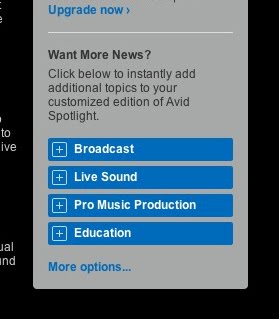
This past week, I read about a fantastic approach from Avid that makes it easy for email subscribers to customize the email content they receive from Avid as well as let Avid know what they are interested in. The other bonus for Avid is that they don’t need to send different versions of the newsletter – they just send one version that dynamically changes the content based on the subscribers preferences. Just by clicking on a button in the email, the subscriber will receive an updated email newsletter with content that is tailored to their needs. Avid now has additional data they can use to send more targeted communications and their approach could not have been easier for the subscriber.
How did Avid do this? You can get your “geek on” read the full details but I’ll provide you with the Coles notes version. On the initial email newsletter you receive when you provide your email address, you are encouraged to customize future newsletters by selecting the topics that most interest you. When a topic is clicked on, the registrants profile is updated through the magic of marketing automation and can be used to determine which content should appear when the next newsletter is sent. You can try this out yourself here: http://forms.avid.com/forms/spotlightdemo
Let’s move on the second example from SmartBrief that can help you get your subscribers to update their information.
Example 2: Optional Profile Update When You Clickthrough from Email
As a manager I’m always looking for tips on improving my leadership skills and one newsletter that I read consistently is by SmartBrief (which I highly recommend). While SmartBrief does ask for a fair amount of information up front, subscribers get tremendous value in the content and it’s worth it. Last week I had a unique experience when I clicked on an article from an email they sent me. Before I was taken to the article, I came to a screen that gave me the option of updating my profile or going right to the article:
While I don’t know how successful this approach was for SmartBrief, I thought it was innovative and shouldn’t be too difficult for marketers to replicate (ping me if you want to discuss how to do this in more depth). When I clicked on the “Update My Profile” button, all of my information was pre-populated which made it easy for me to scan it to see if any updates were needed. I also liked how I was thanked for being a loyal newsletter subscriber as well as provided with an offer of the 10 most popular stories from the past year if I chose to update my profile. I found this approach unique as I didn’t find this method too intrusive. I would recommend that marketers experiment with this tactic if they’re looking for a way to get subscribers to update their profile.
Both examples demonstrate how you can collect additional data for segmentation purposes in an easy and non-threatening approach. Hopefully this will spark some ideas of your own and you can work on improving how you get a more complete and accurate view of your database to assist you in your marketing efforts. Good luck!
 Are your recipients not responding to your emails? This is a topic that I’m sure hits home with many of you. You work hard on getting an email campaign together, you send it out and then you find that the results were not what you were hoping they would be. I originally responded to a discussion on Focus called What strategies can you recommend for enhancing performance of email marketing campaigns? that covered this topic. The first few answers included suggestions such as good subject lines and ensuring that the emails are relevant to the recipient. I want to expand on this and provide five tips of my own that can help you improve your email response.


 highest and 4 the lowest). This combined lead rank of C1 is a lead that sales should prioritize as the explicit information provided may be inaccurate but the implicit criteria or the