Showing posts with label landing pages. Show all posts

Sunday, July 04, 2010

Tips to Improve How You Segment Your Database

Hi everyone. Between taking a nice vacation, recovering from the vacation and then work travel, the ‘old blog was collecting some dust. During my travels and discussions with customers, one of the items that keeps coming up is the need for clean, complete and accurate data. When you have the right data you can laser focus your marketing efforts and achieve a higher response from your marketing campaigns. This hopefully results in more sales opportunities and closed business for your company and that nice bonus that you deserve.

Let’s face it, there is no magic wand that will instantly get you the data that you need for your segmentation goals. It’s going to take some time and effort but there are some ways to automate the process and I’m going to focus on two examples that I came across this week. Before we get to these, let’s examine the pitfalls that some marketers fall into when it comes to collecting data.

Reality Bites: We’re Too Busy, We Change and We Lie

One of the easiest ways to build out the profile of individuals in your database is to ask people to provide you with the information you need for your segmentation purposes and to make sales happy. This is typically done when visitors arrive on a landing page where they are encouraged to fill out a form to receive something in return (demo, white paper, webinar etc…). At times, you may see a really long form that asks for everything from your name to the name of your pet (Ok, maybe not the name of your pet but you know what I mean). Here are the problems with this approach:

  • If you ask for too much information, your form conversion rate will go down. The more fields you have on a form that is designed to generate leads, the greater the chance that a web visitor will not the complete the process. The reality is that buyers typically need the information you’re offering but can be impatient and feel that if there is too much effort for a simple piece of content, it’s just not worth it and move on.

  • People lie. Don’t tell me you’ve never entered in a fake name and phone number to download something. You really need to consider the information that you ask people and when in the buying process you are asking for it. Requesting web visitors for the time frame in which they are looking to buy your product can be problematic as the person completing the form may lie to avoid getting a call from a sales rep even if they are looking to purchase in the next 3 months.

  • Seasons change. People change. The interests and position you have today may not be the same three months down the road. Are you allowing people to update their information?

You’re probably saying “well, I need that data to properly segment and route potential leads so I have no other choice but to have those really long forms and ask for everything up front”. There are other ways to collect the information you need but it involves being patient and having the right tools. When creating a lead gen form remember to focus on collecting data that you need at that point in time and to ensure that there is a true value exchange of information. Therefore, while it may be okay to ask for the complete address of a registrant when they sign up to receive your newsletter, you need to ask yourself: Do I really need to collect this information now? Is it justified for me to ask for this information for what the web visitor will be receiving in return? Remember to keep the subscriber in mind as your work through your data collection processes. Let’s get to some possible ideas that will help you improve the way that you collect information from your subscribers.

Example 1: Dynamic Email Content Based on Email Clicks

When asking an email subscriber to provide any of their private information, it’s best to do so in a way that makes it as easy as possible for the subscriber and is as unobtrusive as possible. I recommend a method called “Progressive Profiling” in which you collect information from the subscriber over time. For example, if you’ve entered a new subscriber into a lead nurturing program you can ask for additional bits of info such as their title, major challenge or geographic location as they download pieces of content from the emails that are part of this program. This subtle approach works well and has produced high conversion rates (I need to dedicate a post just on this topic).

This past week, I read about a fantastic approach from Avid that makes it easy for email subscribers to customize the email content they receive from Avid as well as let Avid know what they are interested in. The other bonus for Avid is that they don’t need to send different versions of the newsletter – they just send one version that dynamically changes the content based on the subscribers preferences. Just by clicking on a button in the email, the subscriber will receive an updated email newsletter with content that is tailored to their needs. Avid now has additional data they can use to send more targeted communications and their approach could not have been easier for the subscriber.

How did Avid do this? You can get your “geek on” read the full details but I’ll provide you with the Coles notes version. On the initial email newsletter you receive when you provide your email address, you are encouraged to customize future newsletters by selecting the topics that most interest you. When a topic is clicked on, the registrants profile is updated through the magic of marketing automation and can be used to determine which content should appear when the next newsletter is sent. You can try this out yourself here: http://forms.avid.com/forms/spotlightdemo
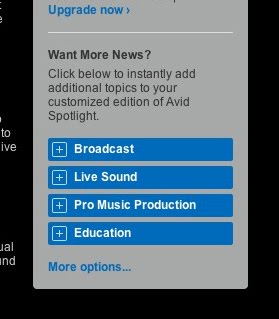

Let’s move on the second example from SmartBrief that can help you get your subscribers to update their information.


Example 2: Optional Profile Update When You Clickthrough from Email

As a manager I’m always looking for tips on improving my leadership skills and one newsletter that I read consistently is by SmartBrief (which I highly recommend). While SmartBrief does ask for a fair amount of information up front, subscribers get tremendous value in the content and it’s worth it. Last week I had a unique experience when I clicked on an article from an email they sent me. Before I was taken to the article, I came to a screen that gave me the option of updating my profile or going right to the article:

While I don’t know how successful this approach was for SmartBrief, I thought it was innovative and shouldn’t be too difficult for marketers to replicate (ping me if you want to discuss how to do this in more depth). When I clicked on the “Update My Profile” button, all of my information was pre-populated which made it easy for me to scan it to see if any updates were needed. I also liked how I was thanked for being a loyal newsletter subscriber as well as provided with an offer of the 10 most popular stories from the past year if I chose to update my profile. I found this approach unique as I didn’t find this method too intrusive. I would recommend that marketers experiment with this tactic if they’re looking for a way to get subscribers to update their profile.

Both examples demonstrate how you can collect additional data for segmentation purposes in an easy and non-threatening approach. Hopefully this will spark some ideas of your own and you can work on improving how you get a more complete and accurate view of your database to assist you in your marketing efforts. Good luck!


Until next time.

Chad H.
Read more >>

Monday, August 03, 2009

Tips on Using Twitter to Boost Your Marketing Efforts

Are you already tired of Twitter? Do you think it’s just a fad? Well think again because the popularity of Twitter is growing at an alarming rate.
I’m always trying to think about how marketers can better leverage the social media technologies that are out there and then share them with you. As you read these, you need to think about your end goals. Many of these may not be worth it to you and your company but they’re good to keep in mind.

I’ve already written a post on tips for using Twitter and email marketing but I wanted to take this to another level. This is not a post on the basics of Twitter. If you want some basic tips on Twitter, check out Twitter 101 or Hubspot’s How To guide. I was inspired by those bright people over at Radian6 who showed me some of the untapped potential of Twitter. This led me to research the ways that marketers are leveraging Twitter to improve their engagement with their target audiences. Most of these tips are dead simple so enjoy and use them well.

Taking Your Marketing to the Next Level With Twitter

  • Link to Your Twitter Testimonials. If you go to Radian6’s home page, they’ve included a banner that says “See what they are saying about us on Twitter”. imageWhat they’ve done is used the Twitter “favorite” feature to mark the posts where people have made positive comments about them and then featured this prominently on their home page as well as on confirmation pages. This is simple, yet brilliant. They’ve leveraged Twitter to show both Twitter and non-Twitter users what real people are saying about them. You could probably create an RSS feed from this URL as well and then display this content in real time on your blog or website.

  • Socializing Your Landing Pages. On his reside blog, Philip Nelson describes how Eloqua includes a number of Twitter links below the main call to action to continue the conversation via Twitter and other social media outlets and to leverage tools like Twitter to further promote your marketing materials. It also includes links to prominent Eloqua Tweeps that will help build your Twitter brand.

    image


  • A Picture is Worth a Thousand Words. If you’re looking to make your company seem more real to prospects and customers, Twitter is perfect for this. However, words can only say so much. If you’re at an event, have a cool employee get together or doing a live webinar, all you need to do to make your Twitter account come alive is a camera phone and a Twitpic account.

    Once you sign up at Twitpic, you’ll get an email address that you can email your pics to from your phone. The subject in your email is the message that will appear with a link to the pic. It’s that easy. Doing this in real time helps employees, customers and prospects feel like they are right there with you. Barefoot_exec provides an excellent example:
    image

  • Change Your Twitter Home Page Pic. This idea literally jumped out at me when I went to Dunkin Donuts Twitter page.

    image Look at the size of that drink! You know that they’ll change the iced drink to hot chocolate come the fall. That is a good use of Twitter for your marketing efforts. Think about how you can time the changes to your pictures to promote events or product launches.

  • Combine the Power of Twitter and StumbleUpon. The new URL shortener Su.pr makes it easy to shorten and track long URLs but goes well beyond that. By using this service, you can point people to your blog posts and events and have readers further promote it by indicating to the StumbleUpon community that they like it. In addition, this service makes it easy to promote a page on both Twitter and Facebook at the same time as well as allowing you to schedule when the Tweet should be published if it’s specific to an event or if you want to Tweet and have a life.
    image

  • Direct the Conversation #1 Using Hashtags. People are going to start talking about you on Twitter and you have little control over this conversation. However, there are a few tricks and tools you can use to direct the Twitter stream. For example, if you have an event, promotion, theme etc… create a hashtag for it (what is a hashtag?). Here is a great example of how Dunkin Donuts created a contest and used a hashtag to focus the conversation and engage its customers. To win a prize, their Twitter followers had to write about a bold moment in their lives. By using the hashtag, #FrznCapp, tweeps could monitor the conversation using the Twitter search tool:

    image
    In a recent webinar, Marketing Experiments had a great idea of including a slide at the beginning of the presentation that included the Twitter hashtag for the webinar and provided two ways to monitor and contribute to the presentation: Using Tweetchat.com or Search.twitter.com. To take this further, include the hashtag in the event invites and reminders on your emails, landing pages, tweets and your other marketing channels.
    image
  • Direct the Conversation #2 Using Unique Twitter Accounts. With my wife in the final stages of her pregnancy we’re seeing a lot of movies (while we still can). At the end of a preview its typical to see a URL for the movie site. I was a bit dumb founded when I saw “Follow us on Twitter”. Movies are jumping into the Twittersphere – check out: http://twitter.com/JulieandJulia

    image Think about an upcoming event or a new product release – would it make sense to create a unique Twitter account? There are many possibilities here but you need to think about how you would support that Twitter account.

  • Tracking Twitter as a Source of Web Traffic. Make sure that you can clearly track the source of traffic to your website from Twitter. This goes beyond tracking Twitter at the aggregate level. When someone fills out a form or purchases a product, you should be able to trace this back to the link you tweeted about. This can be done in a few ways. We typically use query strings to track other channels as well as paid search and banner ads.

  • Forcing User to Promote You on Twitter. This is something that will definitely not work for everyone but I thought it was unique. When I “upgraded” to the new HooteSuite Twitter platform, it forced me to tweet about why I liked HooteSuite before I could complete the upgrade process.

  • Creating Surveys for Twitter Followers. Use a tool like PollDaddy to engage your Twitter followers. You can use this information for a future campaign and share the results with your followers. This of course assumes that you have developed a strong following. Don’t be afraid to tweet about the survey more than once. Some of your followers may not have seen your tweet the first time.

  • Cross Promote Across Your Social Media Sites. This tip may be obvious but it’s certainly not done enough. Don’t look at your social media sites in silos. If there is a good conversation going on in your LinkedIn group, direct tweeps to it. If you’ve posted a bunch of pictures on your Facebook fan page or videos on your YouTube page, use Twitter to promote it.

    The opposite works as well. Use your blog to promote an offer that is exclusively through Twitter. Twitter can also be used to direct customers to content and/or discussions in a customer only portal. Just ensure you warn your followers as you don’t want to alienate those that can’t access the content. The possibilities here are endless but it’s time to start to brainstorm on how to leverage all of your social media channels to get the most out of them that will achieve your marketing goals.
I hope this post gave you some new ideas. Please let me know if you have any others.

Chad H
@chadhorenfeldt


Read more >>

Monday, June 29, 2009

Top Automated Marketing Personalization Tactics

There is a lot of talk these days that personalization is back in marketing but what does that really mean and what are some of the tactics you can use?


This is important: Besides all of the technology out there that can make this process easier, it’s important to keep in mind that the goal is to create engaging experiences for your customers and potential customers so that they will respond and ultimately purchase your products and services.


A personalized approach facilitates this process. It allows you to make people feel special by providing timely communication that is more like a dialogue than a one way conversation. The trick is to create this type of personalized experience that will drive sales but to make it easy for marketing to execute and not break the marketing budget bank.


I've listed the top tactics that I typically discuss in my day to day client meetings. Together, these make up a personalization playbook that you may want to keep in mind when you plan and execute your future campaign:

  • Email / direct mail merge fields: This is the bottom of the pyramid in terms of personalization. Adding someone’s “first name” to an email is the least that you can do these days. While it may seem obvious, don’t overlook it as it’s more important in conjunction with the other tactics I've listed below.

  • Personalized URLS (PURLS): I like to think of PURLS like those place cards at weddings that have your name on it and tell you where you’re sitting. It’s like an exclusive invitation that is also very practical. It’s saying “Yes, you belong here – now go sit down at table 10”. What do you do? You go find your table! PURLs act in the same way as they have your name as part of the URL and they take you to what you feel is an exclusive website designed just for you. We've found that people have responded better to offers that contain a personalized URL (such as www.fun.com/yourname). With the right technology, this is also very easy to do.

  • Form pre-population: When you've strike up a conversation with someone you've just met at a party, do you keep asking them what their name is every two minutes? NO! They would feel that you weren't listening to them and move on. It’s not that much different in the world of marketing. We want to feel that when I’m engaging with you that I’m at a place where “everyone knows your name” (now you know why I included the video on Norm). If you've already collected information from someone, avoid asking for it again at all costs. You should make the customer feel that you are carrying on a conversation from where it left off last time – not starting all over again.

  • Email / direct mail sender personalization: Notice how this is getting more difficult as we move down the list? When you send a post card to your family from your trip to Spain (I really want to go back to Spain but can’t with a baby on the way) do you sign it “Yours Truly, the marketing team”? NO! If there is someone in your organization that has a direct relationship with the intended recipient, send it from them.

    For B2B companies, have communications sent from sales reps or Account Managers if a relationship has been established. A recent Aberdeen Research report has proven that this technique can dramatically boost response rates. In B2C, this is more difficult but there may be opportunities to explore. For example, some sports teams can experiment having communications personalized from their players.

    Yes this method requires additional effort and yes it does mean that your data needs to be in order for it to work but it’s a proven method that brings your company closer to your prospects and customers. When sales reps call into prospects and they're not seen as strangers, there is a higher chance that they can make traction. This is especially the case if your prospect has already received an email from your company with a thought-leadership piece that was based on their interests and had a picture of the rep to put a face to the name. This process is 100% easier when you have tight integration between your customer relationship management tool and your marketing automation tool.

    I use this technique as part of an automated customer education nurturing program that I created and am seeing greater than 50% open rates when emails have the sender name of the account representative.
  • Personalized email/direct mail content. There are two parts to this and I could spend a whole blog post just on this topic. I’ve already discussed the first part which is personalizing the sender and signature of email or direct mail communications. The next part which is even more difficult is personalizing the message.

    Why is this part so difficult? For example, it would be great to have a platform that would know your home insurance subscription is due in 60 days and have an email automatically sent to you that told you to look for a mailing with your renewal documents. This email would include the name of person that will call you and what the new subscription cost will be.

    This can be difficult for a number of reasons:
    1. It can be costly to have a system that can execute these types of complex campaigns
    2. You need a way to collect the data and systems that make it easy to action on. For example, I recommend creating email campaigns based on the past web behaviour of individuals or their digital body language. This requires a system that can collect this data and then have an easy way to query this data so it can be actioned on.
    3. You need to have clean data. To personalize the message, you need to have the data to personalize it that is normalized and complete.
    4. It requires data sources that are integrated so they can be easily queried to create lists and personalized messages. There’s no point spending days building a list – it’s just not cost effective.
    5. Content must be created for each segment – this requires resources etc…

    To make this a personalization a bit easier, technology advancements allow you to add dynamic content sections to mostly generic communications. By adding in some slightly personalized sections you can really show that you can really make a difference in your response numbers. This may mean displaying a special offer for repeat purchasers or dynamically displaying an article in your regular newsletter that is geared specially to your customers. Is it worth it to make these personalized adjustments? What I recommend is to try it out and test the results. In countless examples it has led to increased response rates and reduced the time needed to execute campaigns by eliminating redundant steps when targeting multiple segments.
  • Dynamic landing page/microsite content.This is similar to the last point but typically is more flexible. Emails and direct mail are fairly static while website content can dynamically change on the go. For example, you can create campaigns that ask a series of questions that builds a profile and creates a personalized knowledge library or demo for an individual based on their selections in a web session. This also goes hand in hand with PURLs as the PURL is the gateway to a personalized microsite.

    This content should change based on the behaviours that the contact has exhibited over time. Only display the content that the web visitor will find relevant or you won’t find them there very long. We use a technique called "Progressive Profiling" where we collect addition information over time and build a more complete picture for the sale team.

    You can blend other elements such as merge fields, form pre-population, and dynamically displaying the sales rep’s contact information to make the web experience as personalized as possible.
  • Event triggered communication. We've talked about delivering the right message, now we’ll talk about how to deliver it at the right time. There are many different ways to do this but the best time to deliver the right message is at a time that matches your customer’s buying process. When my air conditioner blows up and it’s 100 degrees in the shade, that’s the time I want a call from someone that can fix my air conditioner.

    Here are so more obvious examples of triggered communication:
    1. Sending confirmation emails when a product is purchased or a white paper was requested
    2. Sending unique communications to new email subscribers Sending a promotion email to an opted-in subscriber who has visited certain product pages X amount of times in Y amount of days
    3. Email and Direct email sent to trial recipients over the lifetime of a trial
    4. Customer communications based on the terms of an agreement. The insurance example above is a good one
    5. An email promotion sent to customers on their birthday

    Some of the key requirements that I've described above are also required to make this a reality – namely a system that can automatically detect these triggers and fire off the
    right communication at the right time. If you have the right tools and data synced up correctly, your only limits are your creativity and your free time.
  • Automated, personalized voice messages. When I think about automated voice messages, I think back to an episode of the Simpsons where Homer spammed all of Spingfield trying to solicit money from them. That is a bad example.

    An example that I've seen really work well is combining personalized voice messages with email. For example, if you have an important webinar coming up, why not send a voice message from the webinar presenter inviting them to the webinar and telling them to look out for an email invite. For those that have registered, have a personalized voice message reminder. They key is to have this process automated so you don’t have to create different lists and coordinate the execution. All you need to do is to design the process and let the technology handle the rest.

  • Sales tools. A tactic that I recommend is to create email templates for the sales team that allows them to modify the content and supplement their own personalized messages for each situation based on what they know about a customer or prospect.

    For example, I use email templates in Outlook that I've created using my marketing automation tool. I can easily change up the text for these emails in Outlook to personalize them based on the specific circumstance before I send them. The template makes this process easier for me but it’s the personalization that is needed to make the content relevant.

You may have counted 9 points and said “what gives?”. The 10th point is using social media to deliver an automated, personalized experience but this concept is still in its infancy. There are a few examples here and there but for the most part, social media is real time communication by real people and the personalization is controlled more by the consumer. It will be interesting to see what new technologies develop in the near future.

Let me know if you have any other examples or opinions that you want to share.

Chad H
@chadhorenfeldt

PS: Here is a good article worth reading: The Four Dimensions of Personalization

Read more >>

Sunday, November 16, 2008

The Recession is Here - Time to Become an Eco-Marketer

When I say that you should become an eco-marketer, I don't mean that you should add some corny green recycle image to your website (who would do that?) or support a "Save the Whales" campaign. Although I'm a big supporter of environmental issues and started my career running an environmental organization, I would like to focus on eco-marketing in terms of demand creation.

I focused my research this week on how I can help my customers build out a demand waterfall as defined by the smart people over at SiriusDecisions. During my research, I stumbled upon a great article by the Canadian Marketing Blog called "2009 B-to-B Demand Creation Trends" eh (Canadian joke). It's here where I came across the term eco-marketer and I wanted to build on the excellent analysis that they have already provided. However, after I drank 10 cups of coffee, I've created my own version of the eco-marketer. Here are my three Rs that I recommend to become the best eco-marketer you can be in a down economy:

The Three Rs of Marketing and a Bonus R
  1. Reuse: In a down economy you need to reuse all of your marketing resources that you have out there and maximize your marketing investments. Here are my recommendations:
    • Reuse your webinars. If you have run a live webinar, post the archived version on your website behind a form. It's been proven that archived webinars can generate more leads then the actual live event.
    • Reuse your email newsletters by ensuring they are posted on your website. This is a simple one but it's surprising how many e-newsletters remain only in email format. I would recommend to post in on your website and even create an RSS feed. With an RSS feed, you can promote in your email footers and it can be re-used by other bloggers and companies. You should even consider creating a blog and reposting your newsletter articles on it.
    • Reuse your live presentations. If anyone from your company or your customers are speaking on behalf of your company ensure that you film them and add them to the resource area of your website. You can even just post the slides or the speech text. Don't miss these great opportunities to build marketing content.
    • Use social media techniques such as Twitter and YouTube to maximize the effect of your webinars, videos and white papers. For example, you can mention on your twitter profile that you've just released a new blog post or newsletter. Think of social media as a big marketing ecosystem (see, I am focusing on the environment) and make sure you take advantage of all the tools out there. In this way, you can reuse your marketing materials as much as possible.
    • Reuse all of your marketing materials in your lead nurturing efforts. Having the right content for automated lead nurturing programs can be the most difficult part of a lead nurturing campaign. However, many companies have all of the materials they need already created. Even though some may be dated, if the materials are good they should be reused. You don't need to just focus on pushing out new content, you probably have some gold nuggets that may be hidden on your site.

      For your nuturing campaigns, create a document that outlines all of the marketing content that you have and map this to the buying process of your target audiences that you have identified (assuming you have created defined marketing segments).

      You would be amazed at how you can reuse the content you already have (blog posts, newsletter articles, industry white papers, demos) and create a specific and defined automated program that is designed to target a specific segment and has a specific marketing goal.
    • Create marketing campaigns that can be reused. For example, if you have a large marketing team, create processes so that you standardize your email and landing page templates. Tweak them as necessary based on your successes (or failures). Another example is to create automated program templates such as an event management or lead nurturing template. These templates can be copied and reused.
    • Reuse (and abuse) your whole company. If you have Jimmy from the development team who did a lunch and learn on how he coded a solution that will benefit your clients, get him to write it down and post it on a blog. If Sarah from your Support team came up with a great solution to solve a customer problem, video tape her and post it on your site or include it in your next newsletter. MAXIMIZE YOUR ENTIRE COMPANY IN YOUR MARKETING EFFORTS. Did I just write in caps?

  2. Reduce: Not only should B2B companies reduce the amount of lead leakage where leads are being lost is the sales/marketing funnel by tightening up processes, the following also needs the be considered:
    • Reduce the amount of communication that you're sending to leads. Are you saying to yourself "Are you on drugs Chad? Why would I want to send less communications when I need to keep up the number of leads to my sales team?". In a down economy you need to work on further segmenting your campaigns and matching your communications to the right person at the right time. Any emails, direct mail etc... send should be based on a person's interest and the stage of the demand waterfall that they are in. This type of eco-marketing will achieve the best results and ensure that you conserve (another eco-friendly term!) you're ever shrinking opt-in database in the tough times ahead.
    • Reduce the amount of time it takes for qualified leads to be followed up with. An automated lead nurturing process will help deal with leads that are qualified but not yet ready to buy and thus reducing leads falling through the cracks but a process needs to be put in place to put the best leads on the desks of your sales team so they'll follow up right away. The best solution for this is a lead scoring process that scores leads based on their explicit information (industry, job role etc...) and their implicit activity (offers they've downloaded, emails they've responded to). With this type of process in place, you can ensure that your sales team is "cutting through the crap" and following up with the best leads before your competitors.
    • Reduce the complexity to getting access to information on your website. Optimize your landing pages by removing any unnecessary fields. Ask for more information only if it makes sense to the potential lead. Consider building up a profile of the lead over time. This requires more effort as you need to think through the stages on getting this information but it is worth it.

  3. Recycle: By recycling leads that are in your sales and marketing funnel you will get the most out of your marketing investments. Just because a potential lead attends a webinar and doesn't respond to a sales call doesn't mean they're not interested in buying from your company. An eco-marketer may want to further investigate SiriusDecisions methodologies around calling webinar attendees "inquiries" rather then leads and not passing these on to sales until they've been further qualified through an automated marketing program. In fact, SiriusDecisions has demonstrated that webinars are typically viewed at the beginning stages of the buying process. This is just one example of how marketers need to go beyond lead generation to concentrate on the lead funnel and developing strategies to move leads through this funnel.

    Recycle your "inactive leads". Recycling doesn't just include those leads that are not "sales ready" or not yet ready to buy. You need to have automated processes that will detect those leads that you've been sending emails to (or other forms of communication like direct mail) and haven't responded. This means that they haven't visited your website, filled out a form or responded to your marketing communications. You can recycle these leads by placing them in a separate automated program with messages that are specific to this segment. This may include an email with a survey asking these "inactives" what they would like to receive from your company or a request to opt back in with a targeted offer. You may decide that it's time to take some of these leads to the curb but at least you have tried your hardest to maximize those leads that came through your front door.

  4. A bonus R is "Remove". Remove any of the following:
    • Remove barriers between the sales and marketing team. Everyone needs to work together. Think peace and joy on earth (just like a real environmentalist).
    • Remove campaigns or tactics that are not working. To do this, you need a mechanism in place to measure every aspect of your marketing efforts. This goes back to my original premise of researching the demand waterfall. Having a defined process in place where you can measure the success of your marketing efforts at each stage of the sales marketing funnel is crucial. For example, if the conversion rate of a Google AdWords campaign is failing as the effort to turn these "inquiries" into MQLs (marketing qualified leads) is too expensive and takes too long, remove it. Focus on sources that are bringing in more qualified leads.
    • Remove crappy data and automate the process if possible. You will probably have fewer leads coming in the top of your pipeline so you can concentrate on creating processes that will remove contacts that should never hit your database. This may include contacts with bad email addresses, your competitors etc... You can also look at your database for data that is inconsistent and clean it up. Where possible, you can fix this data using automated data tools. For example, it may be possible to standardize contacts that have various job titles or contacts that have different versions of a country (USA, U.S.A., United States etc...). Bad data prevents you from further segmenting your database. Clean out the crap and ensure it stays as clean as possible.
    • Remove or punish people that have not bought in. Relating this back to the environment, in Toronto we've implemented a new program for home owners that taxes you based on the garbage that you put at the curb. If you follow the three R's and reduce your trash, you save money. If you don't want to get with the program, you'll pay for it with your wallet. It's fairly straightforward.

      As an eco-marketer, you need to get the senior people bought in on your new eco-marketing mantra. If you have sales people that don't want to participate, have them penalized. If you have marketing folks that can't see the forest through the trees, remove them. It's obviously easier said then done but that's why you need executive buy-in.
I'm sure you can add here to my points above and I implore you to do that by leaving some comments. Good luck to you during some tough times ahead and be the best eco-marketer you can be.

Chad H.

PS - Here are some additional resources I used in my research (let me know if you have other useful resources)
PPS - Here are some tips to reduce the amount of water you use in your home.

Technorati tags:
Read more >>

Monday, October 13, 2008

Landing Page Optimization: Mini Case Study

It's Canadian Thanksgiving up here today and I'm all about giving back. I'm always looking to help out marketers with their landing pages ever since I went to the Marketing Experiments Landing Page Workshop earlier this year (yes, it was in Florida and no, I didn't just go to the beach!). From time to time, I check out MarketingProf's Know How Exchange where people post their marketing questions and I try and help out.

The following was posted on MarketingProfs:

Landing Page Critique For Agency's Ppc CampaignPremium Member
Posted By: melissa on 10/10/2008 5:23 PM (CST) 125 Points
Hello,
We are running a PPC campaign for a full-service marketing agency, and trying to decide on the best landing page for the promotion. The conversion goal is for prospective clients to call or complete the short contact form.

The pay-per-click categories/keywords are for: marketing agency, advertising, copywriting, design, branding, etc. Lead results so far have been pretty good, but conversions are terrible (we have not used any of these landing page designs yet). It's possible that we are not attracting the right audience, however it may be another reason.

We have developed 3 different variations for the landing page - please review these links (refer to each as 1, 2, or 3) and let me know what you think?

Thank you,

1 -- http://www.discoverycomm.com/landingSample/DCG1.html

2 -- http://www.discoverycomm.com/landingSample/DCG2.html

3 -- http://www.discoverycomm.com/landingSample/DCG3.html

Here is my response (I admit I'm not modest and don't pull any punches). The picture above is the first example that is provided:

Let me preface this as I've been certified by Marketing Experiments in landing page creation. Out of the three, I liked the design of the first landing page but truthfully, I don't see your conversion rates increasing. Here's why:

a. What is compelling the web visitor to respond? What's in it for me? All I hear about is your company. I don't feel you've touched on any pain points of my company. This page seems way too broad. Create a title that is compelling and really hits on the keyword that someone typed in that led to them landing on this page.
b. The offer is the same old same old. Above someone mentions a case study. You'll have readers that do not want someone calling them right away. I would recommend starting the "conversation" with a simple download that hits on a pain point of the marketer as the call to action and not the "free discussion". Send them a follow up email with another call to action and see if they are interested. This will definitely increase your conversions.
c. This is petty but the letter looks like a 5 year old designed it. I'm not talking about the copy but rather the design. The letters are all sloped. This can be improved. (Actually, as I read this again, the copy is really hokey)
d. This is also petty but there is no submit button on the form!! You need something compelling such as "I want my free consultation" or "Have George call me".
e. Add a privacy agreement. This reduces the anxiety of the web visitor.
f. It's a best practice to remove the site navigation so keep the page as is. I disagree with a few of the folks above. Don't confuse the web visitor with additional information.

Good luck!!
I hope you found this helpful and feel free to send your landing pages my way and I'll try and review them (also feel free to go to the MarketingProfs forum and criticize my feedback or post a comment right here!).

Chad H.

PS: This case study on B2B online backs up my recommendations above.

Read more >>

Sunday, June 22, 2008

The Right Way to Generate More Leads on Your Site

It's been a very busy month with lots of travel thrown in. Throughout my journeys much of the conversation comes back to generating a higher quantity of leads from the web that are of better quality. I had the pleasure of attending the Marketing Experiments Website Optimization workshop that was held in Florida earlier this month (still waiting for my landing page professional certification badge :) ). From that conference, combined with a very good study on email tactics in retail I've been inspired to write a post on this topic.

What's in it for me?

They key point hammered home at the Marketing Experiments Workshop is that all points of interaction on your website should answer the following question from the web visitor's perspective: "What's in it for me?". Therefore, if you have one of those newsletter sign up boxes on every page of your site (like the one I have in the top right hand corner) that says "Enter your email to get our newsletter", you may need to rethink this area as you're not providing a compelling reason for the visitor to sign up for your newsletter. A better approach may be "Get expert updates on X" (by X I mean a specific topic that is assumed to be relevant to the site's content or why would they be there in the first place). Even the submit button should be written in a way that answers the question "What's in it for me". For example: "Send me Product Alerts".

To use a simple sign up form or to not use a simple sign up form - that is the question.

To go back to my last point on that newsletter sign up - should this be a simple email only form or should you have a link that directs web visitors to a newsletter sign up page? This depends on your target audience as well as the type of segmentation and personalization you would like to perform in your marketing campaigns. B2C companies may only need email to begin the conversation but B2B companies typically collect company name and first and last name.

Here are the points to remember:
  1. Most of the pages on your site can be accessed from a search engine. Don't assume that web visitors come waltzing through the front door (your home page). A website is like a big semi-permeable blob (think back to your to your biology days) that can be entered from all areas. Therefore ensure that you have a call to action on every page to engage new visitors and turn them into leads that you can market to.

  2. Ensure you answer the question "What's in it for me" and don't assume that because they are on a website about say hot dogs that the visitor will know that the newsletter will provide the latest deals on hot dogs. Don't assume anything. You need to spell it out.

    Another bad tactic that I see is to use landing pages for multiple purposes. For example, directing newsletter registrations to the Contact Us page. This is not a good idea as the call to action doesn't correspond to the desired result and possible subscribers would be scared off as they don't want Mr/Mrs Salesperson calling on them asking them how many hot dogs they want.

  3. The more fields on your web form, the less conversions. For some marketers, this is OK as they only want serious submissions. For example, if you're inquiring about how you can fly into space through one of those private space programs, you first need some serious coin to be considered. It would be a good idea to ask subscribers for their annual income before having someone in sales call them back.

    However, if you are just trying to start a conversation to attract a larger audience to a subject area that you have expert content in, the less fields on your form that you do have, the higher the conversion rate. Always ask yourself if you really need those additional form fields (say for segmenting or personalization) and can you get that information in a future campaign or do you need this information right away.

    Another consideration is to ask subscribers what type of information they would like to receive. This is definitely recommended. It should also be clear how often you will be sending subscribers communications.

  4. Test, test, test... I know you hear that all the time. Imagine being stuck in a conference room for 8 hours straight each day in Florida right beside a PGA golf course and being forced to hear that when you could be outside. Of course the Marketing Experiment people are right. You need to test out the method that will work the best for your situation.
I hope that this post has been helpful and I should be adding some additional findings from my landing page workshop experience. In the meantime, feel free to check out my twitter profile for updates on marketing tools and info that I pick up. I just found an interesting tool that can tell you the type of email client that your subscribers are using to view your email in. This can be key in better understanding how best to design your emails.

Chad H.

PS: I just changed my blog updates sign up form text - we'll see if it improves conversions. I think I need to provide content more often. :)
PPS - image courtesy of www.wearyourbeer.com

Technorati tags:
Read more >>

Wednesday, May 07, 2008

Preventing incorrect email addresses

Do you have a lot of bounce backs in your database? Keeping your data clean is a top priority for the marketers I speak with. I was just reading a good article on Marketing Sherpa that outlines "4 Ways to Fix Misspelled Email Addresses". I really liked one of the ideas which involves displaying the email address to the web visitor as part of a second step in the registration process. A simple modification to this is to serve up a confirmation page after the registration that includes the email address that the person just entered in large letters. The content would be something like this:

Here is the email address you entered:
aquachad@gmail.com
Is that correct? If it isn't, please update your profile (link to a profile page)

This is fairly easy to implement as a solution depending on your system and is something I'm going to recommend for clients to at least test out on a few landing pages. If visitors click on that update your profile link and update their email address, you'll know you're on to something. You can also sleep better at night knowing that the you're getting more out of your marketing campaigns as the data that enters in your system is correct.

Chad H.
Read more >>

Tuesday, September 25, 2007

Easy Tip: Maximizing Your Whitepaper Downloads

I'm going through my old emails and I found one of those rare MarketingSherpa studies that are "open to the public". This is a great one that focuses on B2B lead generation.

Effectiveness of white papers in B2B marketing

As you can see from the chart, people who are accessing white papers less frequently would prefer not to have to fill out a form. Really? I don't think you knew that! It's pretty obvious that we all hate filling out a form. Just give us the damn white paper!

One item that Anne mentioned in her audio for this presentation gave me an idea. She says "If you want your white paper to go viral, you need to loosen the strings early on and get rid of those barriers. Set the white paper free!" They're right that if you just allow a user to access a white paper without placing a barrier in front of it, you'll turn a lot less people away. But what about your lead generation efforts? How do you grow your lead funnel? We know from previous studies that web visitors will fill out a form if it's easy and the page provides a good summary as to what they can expect. How can we have our cake and eat it too?

Add a Little Viral Marketing, Get a Bigger Bang Out of Your Marketing Buck

Ok, so here is my idea. If your white paper is good and you've followed the landing page best practices, you'll get some web visitors to download it. Now what? When the person fills out a form, some marketers push them directly through to the white paper which is a good idea as it's one less click if they first go to a confirmation page. Why not also send them a confirmation email with the white paper as a link in the email? Your copy could be something like this:

Jim,
Thanks for downloading the white paper on XXXXX (link to the white paper). If you know someone who may find this useful, feel free to forward it on to them.

In the above example, the web visitor gets a reminder via email as to what they downloaded and now they can easily forward it on to other people within their organization. The copy above spells this out which may be needed for some folk.

Kicking Viral Marketing Up a Notch - Turning the follow up email into Lead Generation

How could we improve the example above? For starters, we could have added a second paragraph with a link that says:

Interested in learning more about xxxxx (your company's specialty)? Sign up for our monthly newsletter!

If the email was forwarded on, and another person viewed the white paper, they can now easily click on the newsletter sign up link and add their email to your list. They'll be more inclined to do this because:
  • Their friend recommended your company to them
  • They just read an interesting white paper that their friend sent them and want to learn more.
You've just added an additional lead generation weapon! You can make this email more interactive by using dynamic content based on the subject matter of the email. For example, if the white paper was focused on a specific industry or targeted a specific business group, your email content could reflect this. However, you never now who this may get emailed to and it's best to keep it generic.

Kicking Viral up a Further Notch: Using B2C techniques

You can also turn this into a bit of a contest that you see more in the B2C realm. What if you gave an incentive to the original white paper recipient to forward it to 5 of their friends and they could be entered into a draw to win an IPhone? Has anyone tried this? This would encourage a more viral effect so it would be interesting to see the results of this.

Hopefully these ideas inspired you to further maximize your white papers and other website downloads.

Chad H.

Read more >>

ShareThis

LinkWithin

Related Posts Widget for Blogs by LinkWithin