The concept of Anything Goes Marketing is simple: Don't let theories or best practices restrict you when it comes to marketing - specifically B2B marketing. We all know that in marketing, anything goes and if you don't, it's time that you did. Expect to find tips and tricks to improve your online marketing skills and some harsh comments for poor campaigns, articles and posts that I come across - beware!
Showing posts with label marketing metrics. Show all posts
Showing posts with label marketing metrics. Show all posts
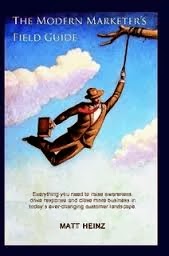
When it comes to B2B marketing, there are not a lot of great books out there. For the most part, the books that do exist focus on the novice marketer or focus on high level approaches. Matt Heinz has brought us probably the most practical book out there for the more advanced B2B marketer - the modern marketer. The Modern Marketer's Field Guide is a must read for any marketer that is looking to get to that next level. Matt has assembled a number of experienced marketers such as Brian Hansford, Maria Geokezas, Jackie Jordahl and Bailie Losleben to provide the advice and guidance that many B2B marketers desperately need.
The book is broken down into the following sections:
Content Strategy
Demand Generation
Lead Management and Nurturing
Social Media
Events & Tradeshows
Sales Operations
Customer Loyalty & Retention
In just 137 pages, this book is jammed packed with tips and practical advice that you can start using today. For example, I used a tip from the chapter on blogging on how to improve the way I promote blog posts. I now post tweets that include the Twitter handle of anyone that I've quoted or mentioned in my blog posts. I'll try and incorporate more prominent people and then ask them to promote my post via Twitter. I've also challenged people via Twitter that I mentioned in my posts which has proven to be effective in getting a response. Not only does this help you promote your blog, it can also help you expand your social network, it helps you grow your social currency. I've also been inspired to think of other ways to improve my social presence such as starting a Twitter chat on an area that I have expertise.
The Modern Marketing Field Guide is Groundbreaking
In this book Matt covers new ground where most marketing books fall short. As an example, he focuses on B2B marketing past the end of the sale. For many marketers, the sales-marketing funnel ends with the purchase of a product. Matt takes this further. In his chapter on content marketing advice, he suggests that marketers need to develop content to help transform customers into advocates and to help keep them at this level. Matt is also a proponent of an advocate centric organization that listens to its customers, communicates regularly, provides practical advice and thought leadership, and owns up to its mistakes. This is sound advice that all B2B marketers and executives should heed to and I applaud Matt for focusing on this. Listen, the book isn't revolutionary as all of this content can be found on different blogs but I've found few sources that pull of these areas together into one book - that makes it unique.
Because the book is a compilation of mostly blog posts, it's a bit of a mishmash of content that can be jarring at times. Matt may have been in a rush to get this content out to the public and before long, the content may be obsolete. It's easy to see past this as the content provided by true industry experts who have been there and done that is just too good. If you are a B2B marketer, you will walk away with at least five ideas you can incorporate into your current marketing plans today.
I could keep going here but I want to encourage you to experience this for yourself. There are too many nuggets in this book from getting the most of webinars and marketing automation to advanced marketing metrics that you should be tracking. I highly recommend that you get a copy of this book today or download the free version.
Please Note: I did receive a complimentary copy of this book but I have no financial incentive to write a positive or negative review. From someone that has worked with many of the best marketers around the world for over 10 years I do feel I'm qualified to provide a through review.
For years I’ve been helping B2B marketers execute on their marketing strategies and at times I felt like I was working from scraps of information here and there that I have learned over the years. The issue was that there really wasn’t a guide for B2B marketers. We now have one: The New Rules of Lead Generation: Proven Strategies to Maximize Marketing ROI by David T. Scott. David was kind enough to send me on a copy and I will provide a short review of his groundbreaking work.
There are many smart marketers out there that have provided a bunch of insightful resources but there really wasn’t a straightforward starting point for someone new who was just breaking into the field. David’s book has helped bridge that gap by creating the B2B Marketing bible for demand generation marketers. I have not seen another book out there that is ambitious enough to include the majority of marketing tactics covering both offline and online formats.
Who Should Read This Book: Anyone New to B2B Marketing or Wanting to Improve
David makes it very clear whom he is targeting – it’s not the mom and pop shop businesses. He’s trying to help those marketers that are looking for information on principles and strategies of enterprise level lead generation. If you are someone that wants to get an introduction into some of the tried and tested tactics as well as the basics on putting a lead generation strategy together, this book is for you.
Besides those that may be new to B2B marketing, I would also recommend this book to those that are trying to put the various pieces together and may have been thrown into the role or volunteered without a full background in this area. Have a look at this book – you will benefit from it.
What Did I Like? A Focus on Strategy, Testing and Metrics
Definitions & Strategy. I love this quote from David “You can’t build a strong house without a string foundation”. The book is split up into two major areas: definitions and strategy of lead generation and lead gen tactics.
David makes it clear that you need a firm strategy in place or your tactics will fail and you won’t be able to convince your executives to get the funding you need. He provides you with the details you need to start the planning process so even a newbie can get this in place in no time. David starts off by defining some of the basic concepts of lead generation as well as focus on targeting and segmentation (My comment: YES!). Without these foundations, it can be difficult for marketers to get their bearings and execute on their strategy. This is something I have emphasized to many marketers over the years and it’s nice to see something in writing with a hard cover that that outlines this. Don’t miss David’s “5 Steps of a Lead Generation Campaign”.
Testing. A number of resources will tell you what you need to do. David emphasizes throughout his book that you are never done tweaking your tactics. You need to constantly test as a best practice for one organization may produce the opposite effects for another. You never really know what works best unless you test in lead generation. He covers testing techniques from emailing to cold calling. David believes that there are no mistakes in testing lead generation – you need to experiment to find out what works best to reach your target audience. The Importance of Metrics. So you don’t consistently measure the effectiveness of your campaigns. David gets you. Marketers are really behind in this area and David documents in laymen’s terms how to measure the overall Return on Marketing Investment (ROMI) of your campaigns as well as some of the basic metrics. Running some campaigns and hoping for the best is not a smart option. Metrics should be part of your overall strategy and something that you present to executives on a regular basis. This book will help point you in the right direction. He has included a good example of comparing the success of display ads vs. a tradeshow and how to measure the impact to demonstrate which tactic is better.
There are also many small tips that you’ll take from this book from where to setup your booth at a tradeshow to best practices on messaging for your Google Adwords campaigns. You will definitely walk away with something from this book that you can use in your day-to-day marketing campaign execution.
Where it Comes up Short
In this book David admits that lead generation is in a constant state of evolution. There is no way he can cover everything that is out there as well as all the emerging trends. There is just too much going on and David has done an admirable job. I would have liked David to have focused more on these areas:
Marketing Automation. David makes a passing reference to some of the vendors out there including Eloqua and Marketo. I’m a bit biased here but marketing automation is a major force in lead generation today and should have had a bit more space allotted to it.
Content Marketing. David dismisses search engine optimization as “passive marketing” and not a large aspect of lead generation. I disagree with his opinion here, as content marketing is instrumental in attracting viewers to your materials and assisting in generating leads and moving buyers through the sales and marketing funnel. This is probably an area that can be covered in a follow up in the next volume.
Mobile. There are a lot of opportunities here that should be better acknowledged when it comes to Iphones and Android.
Another consideration for the next volume is to cover the area of advocate marketing. David dismisses the area of “word of mouth marketing” but advocates today are generating leads through referrals. These are solid leads that have a much higher conversion rate then some of the other tactics out there.
The book also could have used more illustrations and practical examples. David has done well to focus on the various social media tactics such as Twitter and Facebook but there are some good examples that could have been included to help the new marketer grasp these concepts. Again, only so much that can be fit into this book. I also disagree with the book’s emphasis on list purchases when it comes to email. I would recommend spending the time to build your lists organically then wasting money and time on list purchases that can get you in hot water with your email or marketing automation vendor.
My Takeaway: Read it, Live it
Let’s face it - B2B Marketing is a newer concept that is still emerging. We’ve moved beyond the traditional type of brand marketing that you see in Mad Men and marketers need to understand these new frameworks. Another name for this book should be “Lead Generation 101”. The New Rules on Lead Generation will help marketers get to that next level and should be standard reading for those studying marketing in business schooland those that are newer or less experienced in this area. Happy reading!
I've had the following conversation a few times with clients who have implemented marketing automation: "so now that we have marketing automation in place we want to do ROI reporting - TODAY". Jumping into ROI/closed loop reporting right away can be difficult. You need to have the right processes in place including a strong relationship between marketing and sales as well as a focus on revenue metrics to name just a few of the requirements. A recent report by the Lenskold Group and The Pedowitz Group backs this up. Don't try and do everything at once with marketing automation - create a plan that will lead to incremental success but don't stop with just simple automation. Improving your organization's overall reporting structure and focusing on marketing's contribution to top line revenue brings many added benefits.
Show me the ROI?
While companies that have implemented marketing automation demonstrate a higher adoption of ROI type reporting such as sales metrics and revenue metrics, the focus is still on cost efficiency metrics, engagement metrics, lead metrics and response metrics (see the right side of the chart below).
Source: Lenskold Group - 2012 Lead Generation Marketing Effectiveness Study
There is no question that there has been a tremendous improvement in the number of companies that are now using some ROI type reporting (4 out 10 companies according to this report). That said, the biggest improvements with marketing automation are seen in increased quality and quantity of leads. Ensuring that the marketing automation building blocks are in place including automated lead scoring and nurturing help generate trust with sales and the rest of the organization. This can help you buy the influence that is needed when trying to close the loop and gain more insight on leads after they move to sales - especially with the long sales cycles that we see with many B2B companies. ROI reporting requires marketing to create a unified lead management process with sales and to also have support from IT when needed.
Source: Lenskold Group - 2012 Lead Generation Marketing Effectiveness Study
Take it to the Next Level - It's Worth it
The bottom line is that it is worth it to get to ROI type reporting. Those companies that are using marketing automation and ROI metrics are seeing a measurable difference when compared to companies that don't use these similar metrics. For example, companies using marketing automation and ROI metrics have seen a 69% increase in marketing's revenue contribution. I would be rather a CMO at a company where I can demonstrate how my team is impacting sales and revenue growth then a CMO at the other company that has marketing automation but can't demonstrate top line revenue contribution. Marketing Automation gives you the tools to reach the promised land. If you can't see a clear path to get to ROI reporting, talk to your account team with the marketing automation vendor you work with - they should have marketing experts that can help.
Source: Lenskold Group - 2012 Lead Generation Marketing Effectiveness Study
Oh and if that wasn't enough, here are a few of the other key findings from the report for companies using ROI metrics to assess their effectiveness:
More likely to be outgrowing competitors
More likely to define their marketing as highly effective and efficient
There is no question that there is some tough roads ahead for companies that go down this path. What this report backs up is what I see every day. The companies that roll up their sleeves and go all in get the best results. This requires patience, determination and proper planning. Good luck to those going down this road and congratulations to those that are already reaping the rewards.
As you’re gearing up for a great new year, I wanted to highlight some webinar/event best practices from the marketing team over at VMware. VMware has found that this marketing channel is one of their most successful when it comes to ROI so taking a few pointers and optimizing your own efforts could pay off big time this year. They achieved an ROI of 1324% in 2010 - not too bad! They were kind enough to share these best practices via a webinar and I’ve summarized the items that I thought you may be interested in.
Evolution of Webinars
Webinars have changed over the years at VMware. Previously, webinars were controlled by product marketing. VMware have now integrated webinars with marketing as a whole and have included them across various campaigns. Marketing has also aligned the topics with sales goals. This tells me that VMware has worked on eliminating silos that exist within its own marketing organization as well as those that exist between marketing and sales.
A few other interesting tidbits – VMware now prerecord all webinars rather than doing them live. This still do a live Q/A though which allows attendees to post questions and have them answered in real time. This cuts down on potential issues that I’m sure many marketers have been plagued by (“Can anyone hear me?”, “Our speaker will be a few minutes late”, “I’m firing my webinar provider today!”) and makes the recorded version instantly available.
VMware has also successfully experimented with virtual events which are now a mainstay in its event roster.
Social Media and Webinars
Here are a few of the best practices that VMware uses:
VMware broadcasts upcoming events to the VMware Twitter handle and Facebook page. The number of registrants from Twitter has consistently grown over the years.
The marketing team sends reminder tweets 24 hours before the event and an hour before the event.
The post an event reminder on Facebook 2 days before the event.
Some of these are obvious but I like how they stagger their event reminders using different social media platforms. I was also surprised not to see the use of LinkedIn (I'm sure it's used but it wasn't mentioned). Of course, LinkedIn is more contact focused at the moment (while you can follow a company). I would recommend using your own employees to highlight upcoming events to their LinkedIn friends and posting to various LinkedIn groups. I also expect Google+ to be more prominent this year with the launch of branded pages.
Maximizing Email for Webinars
Here are some best practices on using email to promote your webinars and remind registrants:
VMware sends the first email invite two weeks before the event and a second (final) email invite a week before the event.
VMware has found from testing that sending an email invite one week before the event for their Latin America webinars works best.
The email subject line for webinar invites should be kept short and simple - highlight why the email recipient should attend.
VMware has restrictions on how many emails it sends per month to a contact so they summarize all events per segment in a monthly email.
Targeting (the email list) is extremely important – better to have 100 people that are interested in the event then 1000 that aren’t and may unsubscribe. VMware segments based on title, size of company, product interest to name a few of the criteria.
Again, most of this is straightforward but VMware has done a good job of reviewing what has worked best for certain campaigns based on testing and improved its performance over time.
To take this a step further, here is an example of one of their email invites:
There are a few items to point out. The call to action (Register Now) is very apparent and is above the fold so it can be easily and quickly seen by the email recipient. The details of the webinar are also very clear and to the point. The subject line is simple and very straightforward but doesn’t tell us the content of the webinar. VMware has a strong enough following so additional detail may not be needed. I’ve also noticed that the header image is part image and part text. This allows the text to be seen by the email recipient even if images are turned off (which mostly occurs by default these days) and makes it easier for the marketer to reuse an email template and deploy emails (designers aren't needed to create header images for each email). Finally, VMware has included extra events in the emails to reduce the number of event invites they send and also include a link to access all of their recorded webinars (not a bad tip to get more bang for your webinar buck).
Promote events on specific product pages. As an example, VMware highlights an associated webinar in the bottom right on this page.
Previously recorded webinars provided leads every month. Make recorded webinars available to different teams in your marketing organization so that they reuse this content and generate even more leads.
Aligning Webinar Campaigns with Sales
Besides working with sales on the content for your webinars, here is how you can get sales to help you generate more leads:
Create emails that sales can use to send to their prospects that highlight webinar details. Again, having a central area for all events on your website makes it easy for everyone across the organization to see which events are coming up.
Update the sales team via internal newsletters and the sales portal on upcoming webinars/events and explain how they can inform their customers. Also let sales know how their help has generated more leads. Share the success.
Increasing Event Attendance
This is something that all marketers want. Here is what VMware recommends:
VMware found that having a live Q/A is the number one draw of live events. Ensure that your webinars/virtual events are interactive using Q/A, surveys and other interactive tactics.
Video webcasts (where you can see the person speaking) have a higher attendance then audio webcasts
Use an Outlook calendar reminder (.ICS File) in your reminder emails. This ensures that registrants books off time in their calendars and make the webinar information easily accessible. For more details, see this post: Increase Attendence for Webinars and Webcasts
Lead Management
Once leads are generated from your webinar campaigns, the job of the marketer is not over - it's just the beginning. VMware follows these processes:
Leads are downloaded within two business days from the event database and provided to the sales database.
Most leads are then followed up with by a telequalification team and those that are possible opportunities are sent on to sales.
Follow up emails are sent to attendees and those that registered but didn't attend.
To speed up the process of getting leads to sales, marketers are now linking marketing automation tools to webinar providers seamlessly via the cloud. For an example, check out Eloqua's Appcloud. This eliminates much of the manual upload processes needed for closed loop reporting and follow up communication.
Measure Webinar Success
Marketing can't be just about executing. There should be goals that have been established ahead of time to define what success means to the marketing team and the entire organization. VMware measures the following:
Marketing sourced vs marketing influenced pipeline. Marketing sourced pipeline is when a new opportunity tied to an individual is created due to the marketing campaign where one didn’t exist previously. Marketing wants to understand which opportunities it helped generate and specifically to this type of marketing channel, which webinars are generating potential revenue for the business.
Marketing influenced pipeline is when an opportunity that is less then 6 months old already exists for the individual that is tied to the current marketing campaign. In this case, marketing wants to understand the campaigns that are influencing the pipeline and hopefully converting prospects to closed deals.
VMware also track event registrants, attendees, attendee rate etc… The normal metrics you would expect to determine if a webinar campaign was successful.
I hope you found these useful and at least justified your current efforts. Please share any additional best practices that you have that have helped boost your webinar campaigns.
With a new year comes a time of reflection. This past year has been a great one for me personally. I have a new son, Judah, and my oldest is growing up quickly. I am very grateful for all that I have for what is to come. All the best to you and your family this year.
One of the things that I love most about my role is when I'm able to visit customers and participate in a customer user group. This past week I was down in Atlanta for the Eloqua All About Revenue Success Tour and I led a breakout session on the different ways that companies measure the success of lead nurturing. Why is this so important? If nurturing is improving the number of overall leads that your marketing team is generating then everything is good, right? Wrong! Companies that are investing in marketing automation should be demonstrating to their managers, the sales team and company executives the role that technology, specifically nurturing, has played in helping the company achieve its business objectives. This of course goes well beyond technology and encompasses all of the time and effort put in to put these campaigns together. Here is a summary of three main ways that marketers are measuring the impact of their nurturing campaigns:
Email Response. Most marketers who have been using lead nurturing were able to see improved open and click-through rates and lower hard bounces and unsubscribes as compared to regular batch and blast campaigns. Others broke this down even further by examining email response by region as an example. A few looked at which emails within the nurturing campaign had better response. This is definitely important to better understand which messages are resonating and which aren't and the optimal frequency to send these emails.
Compare Against Benchmarks. Another approach that was discussed was to compare certain marketing metrics after nurturing was initiated to the same metrics before the nurturing campaigns begun. Companies can compare email response, conversions, leads, total revenue generated, pipeline growth, average deal size and the velocity of movement through the funnel from one period to another if they have the benchmarks to compare to.
Measuring the True Influence of Nurturing. The more advanced marketing teams are able to understand specifically how many leads and qualified leads (MQLs), pipeline and closed deals were specifically influenced by lead nurturing. To do this, marketers are adding lead nurturing campaign responders to a Campaign object in the CRM. Reports can be generated that exhibit all of the campaigns that contributed to producing an opportunity and eventually a closed deal.
To make this work, marketing needs to create a process that ensures that this campaign association is occurring and needs to create campaign influence reports. Depending on the complexity of your process and the type of technology that you have access to, these types of reports can be challenging to generate. However, if you're able to tell your boss, the CMO and head of sales that 50% of the qualified leads generated in the last 6 months had been through lead nurturing and that lead nurturing influenced 20% of the pipeline in the last quarter, you're able to better argue your case for investing time and resources in additional marketing automation and content creation initiatives. There is no question that lead nurturing takes some up front planning and time. You need to prove that it's worth it and third party reports have clearly demonstrated the success of lead nurturing. Eloqua just produced a simple chart showing that the best in class companies that are doing the most automation have the highest amount of leads produced.
My advice and a theme from the user group last week is to start slowly. Follow the concept of crawl, walk, run and don't mix up the order! In this case, focus on one aspect of lead nurturing and get moving with that. As an example, choose a certain segment to nurture to. This may be a specific vertical, region or job role your focusing on. That way you don't need all of the content at once and you can build out the campaign and still get your other work done. As you get more comfortable and start to demonstrate some results, focus on how you can optimize the process and improve how you measure the impact of your campaigns.
Let me know if you have any other metrics you use to measure the impact of lead nurturing.
Chad H.
PS - here are two good resources that can help you today:
Webinar on lead nurturing: Automating the Buyer's Journeyhttp://lnkd.in/vjFt-V. This is a case study that is really a story about the evolution of marketing automation at NetApp. The story is told by Erin Rampey and there are some great tips that you can take away from this presentation
With my son Matthew turning one this week, I’m feeling a bit nostalgic. I dug up and started contributing to a personal online journal that I hadn’t touched since 2004, reviewed pictures from past trips with my wife, and reflected on memories that I’ve had in my first year as a dad. Taking a look back and reliving great times in your life provides perspective and helps explain how things have changed. One year ago I had no clue on how to change a diaper nor did I realize what a luxury it was to get a full night’s rest.
I’ve come a long way this year - working hard at being a good father and developing a close bond with my son and I couldn’t be happier. I would encourage you to take some time to reflect on changes within your own life and the impact they’ve had on you whether it was a new job, a new home or a new perspective you’ve taken in your life.
I’ve also just passed my five year anniversary at Eloqua where I’m a Regional Manager on the Customer Success Team. I’ve seen many changes both at Eloqua and in the marketing automation industry over this time. In this post, I’m going to focus on how the process of developing a lead scoring program has transformed over the years. But first, let's go back in time to a typical (yet abbreviated and simplified) conversation around lead scoring circa 2005:
B2B marketer: “The sales team thinks the leads we send them are garbage. For them to take marketing seriously, I need to deliver higher quality leads rather than just focusing on quantity. What should we do?”
Me: “Implementing an automated lead scoring process should help here but it will depend on the lead management definitions you currently have in place. How do you define what a qualified lead is? Is this something that both marketing and sales agree on?”
B2B marketer: “A qualified lead is someone that has a specific challenge that our product can solve, has the budget to pay for our product and has the authority to get the deal done”.
Me: “OK, assuming you have worked out the specifics and have buy-in from sales, what are the key online behaviours that would indicate that one lead should be rated higher than the other?
B2B marketer: “Well, if the lead has attended an event of ours, let’s rate that higher and if they’ve visited 20+ pages and opened 5 or emails, I would consider that someone our sales team should follow up with”.
Based on these discussions, the marketer would further define her/his requirements and then go and build out the lead scoring program. Hopefully the assumptions made were correct and more qualified leads would be passed to sales. These were also the days of the “big ‘ole forms” on your website where you asked for every piece of BANT question that sales wanted and assumed that the data provided by registrants was accurate. If you found you weren’t getting enough qualified leads, you adjusted your lead scoring program accordingly based on feedback from sales and by reviewing the data.
The Hover Board
Fast forward to 2010 and in five short years, there are a number of new factors that that must be taken into consideration when designing your lead scoring program. Here are a few items to consider:
The accuracy of data captured has decreased over time
A recent GoogleTechTarget survey has found that almost 50% of the administrators, directors and executives from technology firms interviewed provided inaccurate data on web forms because these people didn’t want to be contacted when they were doing some simple research on a topic of interest. Therefore, a different strategy on how to best capture “explicit criteria” (BANT, job title, size of company) for lead scoring is needed. I'm not discounting the qualification process that can be done by an inside sales or teleprospecting team but an automated lead scoring process can weed out some of the "garbage" and allow these teams to increase the number of sales accepted leads.
Techniques such as progressive profiling where you build the visitor profile over time assists in developing more accurate data to score on. The progressive profiling technique should only ask the required information that a company needs for the specific buyer stage that the web visitor is in. If someone is signing up for a newsletter, only a few details such as a person’s email address and their preferences should be required. Additional information can be slowly obtained in a future campaign such as a multi-touch lead nurturing program. In addition, progressive profiling allows the marketer to record online behaviour that can feed into the scoring process.
Automate your data cleansing process
Broken Telephone
While you try and prevent inaccurate data from making it through the front door of your database, it finds multiple ways to seep in there. This will affect what you can score on as the data is not consistent enough. Let’s take job title as an example. Many of my clients use job title as an indicator for their lead scoring model. They’ve found that there are certain roles within an organization that have the highest probability to generate a sales opportunity. While marketing would prefer to force web visitors to select a specific job role when completing a form for accuracy purposes, sales people want to know the exact title. In addition, when collecting leads across various channels and sources, maintaining consistency is almost impossible.
A solution to this problem is an automated process called the “The Contact Washing Machine”. The goal of this program is to review the data that is fed into it and normalize it. For example, if we take the job title example, a Contact Washing Machine would bucket titles into specific categories as defined by marketing. Database records are updated with this normalized title which can then be used for scoring and other segmentation purposes. A great example of a Contact Washing Machine is provided by Amit Varshneya who is the VP of marketing at Hexaware Technologies.
Scoring should reflect the buyers’ journey and your defined sales/marketing stages
When developing a lead scoring program in the past, points were allotted for downloading certain pieces of content based on how marketing and sales subjectively perceived certain materials to valued by the prospect. Today, the assumptions that are made when building the lead scoring matrix are more firmly based on the buyer’s journey as defined by real data with input from sales, marketing, and third party sources. The 2009 TechTarget Media Consumption Benchmark guide confirmed that IT buyers favoured different online materials as they progressed through the buying process. Here is an example of the different materials that IT buyers review across the different buying stages:
By going through the process of mapping out the content that your buyers accessed at various stages in their evaluation process, it ensures that the actual score and associated ranking of leads is more accurate and provides a better indicator to sales on how to prioritize their follow ups. In fact, in a DemandGen Report survey called Transforming the BtoB Buying Process found that “more than 8 in 10 respondents said the buying process did not follow a traditional path where a budget was established”. Therefore the BANT criteria is not enough to accurately assess leads and may actually prevent sales ready leads from rising to the top.
As a best practice, I now recommend breaking out the explicit lead scoring criteria (job title, lead source, size of company) from the implicit criteria (activity) to provide a more accurate picture for the sales team that they can action on. Therefore, you may have a lead with a low explicit rank of a C (where A is the highest and D is the lowest) but has a high implicit score of 1 (with 1 the highest and 4 the lowest). This combined lead rank of C1 is a lead that sales should prioritize as the explicit information provided may be inaccurate but the implicit criteria or the Digital Body Language demonstrates that this person is definitely interested in your company.
In addition, best in class organizations have tied their sales/marketing funnel to their lead ranking definitions. Therefore, in order for a lead to be considered a marketing qualified lead (or MQL as defined by SiriusDecisions Demand Waterfall), it must attain a certain lead ranking such as A1 or C2. To the right is a good visualization of how an MQL may be defined when using Lead Scoring.
I’ve also included a great video that shows you how this is used in the lead management process:
Here are few examples that I recommend you review to get a better feel for this concept:
Terracotta: Lead Scoring A Buyer’s Journey in Open Source. In this example, Terracotta mapped out the different types of behaviours that made up the different stages that a buyer progresses through. They then used this to build their lead scoring matrix and constantly tweak the lead scoring algorithm to get more accurate results.
Taleo: Seeding and Cultivating the Taleo Revenue Engine with Lead Nurturing. The VP of Marketing Doug Sechrist stated “We built a matrix that looks at the buyer’s journey and our sales cycle, and based on that, we determined the right content for each touch point.” Besides lead nurturing, the buyer’s journey influenced its lead scoring rankings and determined the stage of the buyer. The case study goes on to outline how Taleo only sends A and B rated leads to inside sales as these are defined as MQLs (marketing qualified leads).
How marketing is now measured has made lead scoring more palatable
In my lead scoring example from 2005 above, marketers were mainly focused on the quantity of leads at the top of the funnel. There is no question that this is still the case today for a large percentage of B2B organizations but after having gone through a recession in 2009 and slowly working out from its shadow in 2010, marketing needs to do more to justify its budget to the other C level executives. Today’s B2B marketers are looking further down the marketing/sales funnel at metrics such as the number of marketing influenced opportunities, the velocity of deals that move through the sales/marketing funnel, the conversion rates across different stages in the funnel, the number of closed deals, revenue generated and ROI on campaigns. By focusing on higher qualified leads that can help sales reach their goals more quickly and impact these new joint metrics, lead scoring has been an easier concept to sell to marketing and sales organizations.
I don’t have to look any further for an example of this exact transformation than from within my own organization as described by our Senior VP of Worldwide Sales, Alex Shootman, in his post: At The Wheel of the Revenue Machine: But What if I Want to Follow Up on “D” Leads?. It took a shared goal of increasing revenue and a commitment from sales and marketing to work closer together to help make scoring more relevant in the lead management process. And guess what – if you’re reading about this, you can bet that your competitors either have lead scoring in place or are considering it. Don’t wait for them to beat you to the punch.
I’m sure others can add additional points on how lead scoring has progressed over time but this is one of the few chances I get to sleep and I need to take advantage of it while it lasts! Do let me know if you think I’m missing anything. On a final note as I wrap this up I would like to thank my wife, Allie, who has made being a father easy over this past year and has been such a wonderful mother to our son. I would also like to thank all of the Eloquans – past and present, partners, and customers that I’ve had the pleasure of working with over the past five years and plan to continue working with.
2009 has been a long year but as I reflect back on my many conversations, I've created a top 5 list of items to avoid in 2010:
1. Not having a defined social media strategy
You would be surprised by the number of companies that say “yeah, social media is important but it’s not important to us at the moment”. In 2010 you will not have a choice but to make social media part of your overall marketing strategy. If you’re company is just breaking ground in this area, at the very least make a commitment to listen to what people are saying about you. For example, check out http://addictomatic.com/ and search for your company name. Most likely, you are being mentioned. Now search for your competitors. This may be enough of an impetuous to get moving on a reactive social media strategy such as “monitor what is being said about you and respond where needed to protect our brand”.
Addictomatic is a free tool that will get you started down this path. You may want to look at some of the paid services out there such as Radian6 or Vocus. Once you have this down, you can then start working on a proactive strategy and determine what it will take in your organization to make this possible. If you’re having trouble with this concept, skip down to #4.
2. Not sending relevant and timely messages
If you continue to only send email blasts on a schedule that you dictate to your email subscribers, you risk massive list attrition, damaging your overall email deliverability and a loss of sales and sales opportunities. The key to sending relevant communication is to automate the process. This may mean creating a lead nurturing program for new inquires on your website or using dynamic content in emails that presents a more relevant message. This concept needs to be at the forefront of your planning in 2010. If you have an automated program in place, look at ways that it can be adjusted to get an even higher response.
3. Not having an accurate picture of your database
Did you have an email campaign this year that received a lower than expected response and blamed the creative or the offer on the poor results? It may well have had to do with these items but did you consider looking at the state of your list and/or database? I highly recommend that you query your database to understand how "active" your contacts are. You need to understand the true state of your database so you can make decisions on what you need to do in 2010 to achieve your goals. Knowing how many contacts in your database have bounced and unsubscribed is no longer enough - you need to understand how much "dead wood" you're carrying around.
In addition, your data may need a "face lift" or a complete makeover as it's either inaccurate or out of date. Consider using data tools that are included in your marketing automation system to clean up your data. You can also look at services like Fresh Address (http://biz.freshaddress.com/) that can clean up your email addresses or providers such as ReachForce or MarketOne that can generate leads based on your specific needs.
4. Not taking advantage of your online community
As a marketer, there are thousands of online resources out there that you can take advantage of to improve your marketing skills. You can even get a marketing degree from schools online. However, this is just “half the battle” (why am I having memories of GI Joe cartoons from the 80s?). You need to engage other marketers to really learn and get the most out of the resources that are available and there are online communities that are waiting to be taken advantage of. Here are some things you can do today:
Search for a LinkedIn Group that interests you and join it. Participate in discussions or start a new one yourself. Not sure which group to join? See which groups your connections have joined or ask them directly.
Ask and answer questions on LinkedIn. You may see a theme here. There are a lot of experts in your area that are willing to help you so have a look at LinkedIn Answers. To begin, I recommend browsing the Marketing and Sales category and looking for a subcategory that interests you.
Join Twitter and look for a Twitter List that includes tweets about areas of marketing that interest you. To get started, use a tool like http://listorious.com/ that lists some of the top lists on Twitter. An easier idea is to look at the list of a tweeter that you admire and follow their list. Here is my Twitter list that I generated that I follow daily. Again, to really engage the community you need to ask questions and respond.
This is just the tip of the iceberg. At my company, I’m an active participant in our customer only community. If you’re lucky to have such a community available to you, take advantage of it. Find out who the people that contribute the most and try and help them out if they need it. They will hopefully help you in return. You may want to look for them on LinkedIn or Twitter and follow some of my recommendations above. I’m a big advocate of Xobni that is a plugin for Outlook. It helps me easily add people to my Twitter and LinkedIn communities – check it out.
5. Not using best practices or acting on lessons learned from past campaigns
While this may be a given, you need to be continuously updating your skills to get the most out of your marketing campaigns. I highly recommend that you subscribe to resources such as the Marketing Insights blog, MarketingSherpa, MarketingExperiments, SiriusDecisions, ClickZ, and MarketingProfs to name just a few of the great resources that I use on a daily basis. This is on top of the number of great articles that my community of LinkedIn and Twitter provide me.
I also recommend testing your campaigns by using A/B and multivariate testing for emails and landing pages. What you may find is that you're going to be creating your own best practices based on what you found successful.
My last point is to accurately track your campaigns so you can easily see why certain campaigns were more successful that others in order to reproduce this success for future campaigns.
Of course, one of your biggest sources of best practices should be the vendors you work with. Part of my daily job is to work with marketers to help them improve their campaigns and make them successful. You too should have access to a live person that can meet with you regularly and that can provide you with advice on what you’re doing right and where you can improve. Make that a priority for 2010 if you can.
I hope you enjoyed these and please let me know if there are additional mistakes that you recommend avoiding in 2010. Happy Holidays from my family to yours!
Chad H @chadhorenfeldt
”You’re so 2000 and late” courtesy of zazzle.com
”The Battle” image courtesy of Patrick Hester's Blog
”Good Data, Bad Data” courtesy of CounterForce Blog
”Your community Profile” courtesy of www.socialdesire.com
If you weren’t aware, Canada (Vancouver specifically) will be hosting the 2010 Winter Olympics. I was inspired to write this post by a group of brave Canadian ski jumpers that are have been denied permission to compete in the upcoming games. You may be saying – wait a minute, ski jumping is an Olympic event so what’s the problem? The “problem” is that these athletes are women and the IOC has not sanctioned women’s ski jumping as an official event making it the only Winter Olympics activity that does not allow women to compete in. We’ll come back to this story – let’s focus back on email marketing.
Sometimes it’s What’s Missing That Counts
I was reading MarketingSherpa’s 2009 Email Marketing Benchmarking Guide looking for useful metrics and tips. I found some extremely interesting data that I will discuss in future posts but what interested me more was what I believe is missing based on what I discuss with my customers on a day to day basis. The goal of this post is not to criticize the great work by the MarketingSherpa folks but rather to provide feedback and start a discussion on the types of benchmarks that should be included in future reports – especially when we’re talking about b2b marketing.
Email Metrics That Need Benchmarks
Here is a list of the email metrics that I would like to see in future MarketingSherpa Email Benchmark reports:
Automated Email Metrics. I’m not referring to autoresponder emails but rather to campaigns that contain two or more automated emails. These emails should be sent using a marketing automation system like Eloqua. The goal is to demonstrate that key email metrics such as opens, click-throughs and conversions are much higher while unsubscribes are much lower using an automated program such as lead nurturing when compared to manual email sends (“one offs”). It would be very useful to B2B marketers to have benchmarks to track if their automated campaigns are trending upwards or downwards year after year.
In addition, at a time when marketers need to do more with less, automated email campaigns allow marketers to reach many more recipients with a fraction of the effort. Therefore another metric may be the number of emails sent using automated campaigns and/or the number of programs executed. Considering that a recent Aberdeen Research report clearly demonstrated that best in class companies are finding lead nurturing successful, adding in these types of metrics should be a no-brainer.
How Email Contributes Further Down the Sales/Marketing Funnel. A common theme in 2009 is that marketers need to prove the value of their marketing spend in even greater detail. Therefore email opens as an example is not good enough. What we need to see is metrics such as the number of marketing touches (including email) that lead to an opportunity and/or closed deal. This data needs to go beyond the communications that marketing is sending but should combine the efforts from marketing AND sales.
I know that you're thinking this is not easy to do and I agree with you but today’s marketing automation systems track all of the “digital body language” associated to a customer or prospect and display this data in ROI reports. It’s this type of data that will allow marketers to decide which messages are working and which aren’t and to clearly demonstrate the value that marketing is contributing to the organization.
Database Accuracy Metrics. The cleaner your database, the better your marketing results will be – this is fairly obvious. However, do we really talk about this and benchmark this data enough so that marketers perceive this as a high priority? Marketers need to go beyond just generating new subscribers but also to ensure that they maximize the investment of these new contacts by ensuring that the profile for this contact is accurate and contains the necessary information for further segmentation. It’s been proven that contacts with accurate and complete information allow for better segmentation and personalization for email campaigns which increases response. I would like to see metrics that include the percentage completeness of contacts for key contact fields and the resulting email response metrics for campaigns that involve data that has been cleansed.
Multi-channel Metrics. The success of email marketing campaigns should no longer be looked at in isolation. In fact email marketing should no longer be looked at in isolation. Successful marketers are combining email with other channels such as SMS, direct mail, social media, tele-prospecting and recorded voice to maximize its effect.
It would be very helpful to see which channels combined with email were the most successful in certain situations. For example, should B2B marketers combine email and SMS messages for event reminders or is email sufficient? Did a combined direct mail and email campaign really lift response for a new product launch or was email sufficient? Marketers are looking for benchmark data to help them make decisions on how to maximize their marketing dollars and these types of metrics could really help.
With that said, MarketingSherpa may already be compiling these metrics in other reports but I did not see them in the recent email benchmarking report and wanted to ensure that they’re aware of these key items. I would love to hear from you if you feel these items should be included in future reports and if there may be other metrics that may be missing. And oh yeah, go sign the petition over at http://www.wsj2010.com/ to allow these courageous ski jumpers to fulfill their dream of competing in the Olympics in an event that is an obvious omission.
Are you already tired of Twitter? Do you think it’s just a fad? Well think again because the popularity of Twitter is growing at an alarming rate. I’m always trying to think about how marketers can better leverage the social media technologies that are out there and then share them with you. As you read these, you need to think about your end goals. Many of these may not be worth it to you and your company but they’re good to keep in mind.
I’ve already written a post on tips for using Twitter and email marketing but I wanted to take this to another level. This is not a post on the basics of Twitter. If you want some basic tips on Twitter, check out Twitter 101 or Hubspot’s How To guide. I was inspired by those bright people over at Radian6 who showed me some of the untapped potential of Twitter. This led me to research the ways that marketers are leveraging Twitter to improve their engagement with their target audiences. Most of these tips are dead simple so enjoy and use them well.
Taking Your Marketing to the Next Level With Twitter
Link to Your Twitter Testimonials. If you go to Radian6’s home page, they’ve included a banner that says “See what they are saying about us on Twitter”. What they’ve done is used the Twitter “favorite” feature to mark the posts where people have made positive comments about them and then featured this prominently on their home page as well as on confirmation pages. This is simple, yet brilliant. They’ve leveraged Twitter to show both Twitter and non-Twitter users what real people are saying about them. You could probably create an RSS feed from this URL as well and then display this content in real time on your blog or website.
Socializing Your Landing Pages. On his reside blog, Philip Nelson describes how Eloqua includes a number of Twitter links below the main call to action to continue the conversation via Twitter and other social media outlets and to leverage tools like Twitter to further promote your marketing materials. It also includes links to prominent Eloqua Tweeps that will help build your Twitter brand.
A Picture is Worth a Thousand Words. If you’re looking to make your company seem more real to prospects and customers, Twitter is perfect for this. However, words can only say so much. If you’re at an event, have a cool employee get together or doing a live webinar, all you need to do to make your Twitter account come alive is a camera phone and a Twitpic account.
Once you sign up at Twitpic, you’ll get an email address that you can email your pics to from your phone. The subject in your email is the message that will appear with a link to the pic. It’s that easy. Doing this in real time helps employees, customers and prospects feel like they are right there with you. Barefoot_exec provides an excellent example:
Change Your Twitter Home Page Pic. This idea literally jumped out at me when I went to Dunkin Donuts Twitter page.
Look at the size of that drink! You know that they’ll change the iced drink to hot chocolate come the fall. That is a good use of Twitter for your marketing efforts. Think about how you can time the changes to your pictures to promote events or product launches.
Combine the Power of Twitter and StumbleUpon. The new URL shortener Su.pr makes it easy to shorten and track long URLs but goes well beyond that. By using this service, you can point people to your blog posts and events and have readers further promote it by indicating to the StumbleUpon community that they like it. In addition, this service makes it easy to promote a page on both Twitter and Facebook at the same time as well as allowing you to schedule when the Tweet should be published if it’s specific to an event or if you want to Tweet and have a life.
Direct the Conversation #1 Using Hashtags. People are going to start talking about you on Twitter and you have little control over this conversation. However, there are a few tricks and tools you can use to direct the Twitter stream. For example, if you have an event, promotion, theme etc… create a hashtag for it (what is a hashtag?). Here is a great example of how Dunkin Donuts created a contest and used a hashtag to focus the conversation and engage its customers. To win a prize, their Twitter followers had to write about a bold moment in their lives. By using the hashtag, #FrznCapp, tweeps could monitor the conversation using the Twitter search tool:
In a recent webinar, Marketing Experiments had a great idea of including a slide at the beginning of the presentation that included the Twitter hashtag for the webinar and provided two ways to monitor and contribute to the presentation: Using Tweetchat.com or Search.twitter.com. To take this further, include the hashtag in the event invites and reminders on your emails, landing pages, tweets and your other marketing channels.
Direct the Conversation #2 Using Unique Twitter Accounts. With my wife in the final stages of her pregnancy we’re seeing a lot of movies (while we still can). At the end of a preview its typical to see a URL for the movie site. I was a bit dumb founded when I saw “Follow us on Twitter”. Movies are jumping into the Twittersphere – check out: http://twitter.com/JulieandJulia
Think about an upcoming event or a new product release – would it make sense to create a unique Twitter account? There are many possibilities here but you need to think about how you would support that Twitter account.
Tracking Twitter as a Source of Web Traffic. Make sure that you can clearly track the source of traffic to your website from Twitter. This goes beyond tracking Twitter at the aggregate level. When someone fills out a form or purchases a product, you should be able to trace this back to the link you tweeted about. This can be done in a few ways. We typically use query strings to track other channels as well as paid search and banner ads.
Forcing User to Promote You on Twitter. This is something that will definitely not work for everyone but I thought it was unique. When I “upgraded” to the new HooteSuite Twitter platform, it forced me to tweet about why I liked HooteSuite before I could complete the upgrade process.
Creating Surveys for Twitter Followers. Use a tool like PollDaddy to engage your Twitter followers. You can use this information for a future campaign and share the results with your followers. This of course assumes that you have developed a strong following. Don’t be afraid to tweet about the survey more than once. Some of your followers may not have seen your tweet the first time.
Cross Promote Across Your Social Media Sites. This tip may be obvious but it’s certainly not done enough. Don’t look at your social media sites in silos. If there is a good conversation going on in your LinkedIn group, direct tweeps to it. If you’ve posted a bunch of pictures on your Facebook fan page or videos on your YouTube page, use Twitter to promote it.
The opposite works as well. Use your blog to promote an offer that is exclusively through Twitter. Twitter can also be used to direct customers to content and/or discussions in a customer only portal. Just ensure you warn your followers as you don’t want to alienate those that can’t access the content. The possibilities here are endless but it’s time to start to brainstorm on how to leverage all of your social media channels to get the most out of them that will achieve your marketing goals.
I hope this post gave you some new ideas. Please let me know if you have any others.
If you’re looking for an eloquently written post on how B2B marketing has changed and recommendations on what you should do, you’ve come to the wrong page. What I have done is reviewed the tweets from the latest SiriusDecisions Summit 2009 and captured points that I thought were interesting and categorized them.
Unfortunately, I wasn’t able to go (not without trying!) but as you’ll see from the comments below, some great stats and thoughts have been captured by attendees via Twitter (yet another reason to use Twitter).
At some point I would like to come back to each category and focus on them specifically but for now, here is some organized Twitter talk for y’all – enjoy it:
Sales and Marketing Alignment jblock: Only 32% of sales and marketing orgs work together to define programs for existing customers. @megheuer#sds09
megheuer: Sales is protective of customers and late-stage deals; marketing needs give options, not mandates, to help at this stage #sds09@tjaros
jblock: 72% of B2B orgs can segment the customers and prospects in their marketing database. @megheuer#sds09
jblock: Management changes served as a catalyst for greater sales and marketing integration at Aspect @thetravelingcmo#sds09
megheuer: #sds09 If leads that marketing thinks are qualified get ignored by sales, find out why/what's changed to fix it @tjaros
megheuer: Question: Marketers, do you understand the compensation structure of the team you feed leads to? No=FAIL #sds09@tjaros
megheuer: #sds09 "whole sales team is motivated to make this work" so positive changes in marketing really make a difference --Perry Dembner
megheuer: #sds09 If leads that marketing thinks are qualified get ignored by sales, find out why/what's changed to fix it @tjaros
megheuer: #sds09 Ennis: "Get everyone clear on marketing's contribution to revenue" and use a common language to track, explain it
megheuer: #sds09@joegalvin says sales 2.0 is really about the dominance of buying cycles and increasing productivity through sales readiness
megheuer: #sds09 Only19% of attendees have sales and marketing collaborate on sales playbooks; 58% don't create them at all
megheuer: #sds09 Goal of sales playbooks is increased productivity: More opportunity, shorter sales cycles, higher win rates
megheuer: #sds09 It's not a new selling paradigm, it's a new buying paradigm, powered by technology @joegalvin says
cahidalgo: #sds09- 59% of attendees do not believe their sales and marketing are aligned.
amyblack: #sds09 how do you increase adoption? Process drives productivity - start with process then implement technology.
Lead Nurturing
jblock: @tjaros: If you get one deal out of a reconstituted leads program, it's worth the effort. #sds09
jblock: 5%-10% of leads that are sitting in your CRM system as "dead" can become real opportunities if put into a nurturing program. #sds09
cahidalgo: #sds09- Tony Jaros - lead nurturing business rules must be established by BOTH marketing and sales in order to be effective.
megheuer: #sds09 "When leads are actively disqualified, that' a good thing- you can address that lead in an automated way to nurture it" –@tjaros
megheuer: #sds09 When a quantity function (1-and-done marketing) feeds a quality-focused function (sales), leads fall out at top of funnel @tjaros
megheuer: #sds09 21% of attendees have a lead nurturing program in place now; twice that number are "working on it"
Marketing Effectiveness Measurement
megheuer: Biggest change in marketing results: About a 10% drop in closed deals over the last year @tjaros#sds09
megheuer: #sds09@jneeson reports 55% of marketing inquiries generated via the Web today; email 19%; events 15%, direct mail 11% (averages)
megheuer: Great metrics to track from CyberSource: # of days to close a deal and # of marketing touches to close #sds09
megheuer: "We know that sometimes approximate is good enough to get us where we're going" for marketing reports -Brenda Kring #sds09
megheuer: Need to be able to measure overall ROI and also activities, to align them with your overall strategy #sds09@lazgonzalez
MarketingFuel: 52% of attendees dont track conversion rates [in their sales pipeline] and 77% dont track sales cycle lengthi n the sales pipeline #sds09
jblock: Only 24% of orgs have a closed loop process between sales and marketing regarding detailed info on opportunities. #sds09
kdewitte27: #sds09 Org's that have embraced a closed loop approach=+21% profit and +24% rev growth vs -6% and 0% for those that haven't (3 yr timeframe)
amyblack: Deborah Nelson at HP says that her "best in class" roi target is $70 earned for every dollar spent. #sds09
Sales/Marketing Funnel
stharris: #sds09 Most case studies are after purchase. Why not have one on Why they switched? Case studies across the demand waterfall. (Tony Jaros)
cahidalgo: #sds09: TJaros- "The demand waterfall is as much about human behavior as it is numbers." Human change management is part of process change
megheuer: Omniture improved # of opportunities by 5X, marketing's pipeline contribution by 7X based on linking brand to demand #sds09
megheuer: "Not about how we measure progression of a sales opportunity, but how we impact the progression of an opportunity" -@joegalvin at #sds09
jeffernst: #sds09@jneeson This year sales is not just telling marketing we need more leads, we need marketing's help advancing our pipeline opps.
jblock: Focus is not so much at the top of the funnel; it has shifted to pipeline acceleration and sales enablememt. #sds09
Channel Marketing
jblock: Partners need guidance from their suppliers to run effective multi-touch campaigns. @lazgonzalez#sds09
cahidalgo: #sds09-common definition of a lead expands beyond direct sales and marketing and must also extend to the channel.
kdewitte27: #sds09 trend in channel demand gen strategy: let the partner create his leads and have the vendor support them with the right tools.
megheuer: #sds09 Channel programs shifting $ to supplier-to-customer programs, delivering message themselves, not waiting for partner @lazgonzalez
MarketingFuel: 83% of #sds09 attendees have absolutely no visibility into Channel marketing campaigns and effectiveness. Do partners really want you to?
Marketing Automation
megheuer: #sds09 Marketing automation is a requirement for best-practice performance says @jneeson
megheuer: #sds09 Prediction from @jneeson is by 2015, up to 50% of b-to-b marketers will deploy marketing automation
Marketing Structure
cedwardbrice: #sds09 more than half of audience making organizational changes to their marketing functions
kingsol: #sds09 Common theme between Deb (HP) and Buell (IBM) on creating single marketing themes for global deployment. Develop Once, Run Anywhere [DORA]
megheuer: #sds09 "Cajoling and good citizenship did not work" to drive use of run-once-use-everywhere programs; Centralized org structure did
megheuer: #sds09 By 2015, dominant marketing model will be an architecture of plays and tactics in an integrated, multi-dimensional approach
megheuer: #sds09 Attendees report marketing ops (38%), field mktg (36%) are areas of marketing programs that will change the most by 2015
megheuer: #sds09 The marketing demand center has advisory, execution and technical resources--more value-add than execution only @jneeson
megheuer: #sds09 Most attendees report their marketing org structure is a hybrid model (43%); 2nd most common is centralized (32%)
megheuer: #sds09 Leading organizations invest in marketing skills and address gaps in technology, process and programs that hurt progress
Social Media
cedwardbrice: #sds09 B2B organizations with a coordinated reputation strategy gain an average of 40 percent more inquires
brainshark: #sds09 Create content in smaller chunks that can be reused @jblock Convergence of Social and Traditional Media
megheuer: Need to have a baseline--do an annual audit of communications and social media activities to see what works/doesn't @jblock#sds09
megheuer: "We can't stick our heads in the sand anymore and not monitor what's going on in social media" -@jblock #sds09
megheuer: @jblock: Use a combination of social media and traditional awareness tools to improve leverage and reach of assets #sds09
amyblack: #sds09 Social media is cheap (technology) but expensive from a human resources stand point - it takes time and effort to do it well [ Amen!]
megheuer: #sds09 Only a small number of btob organizations have a coherent strategy for social media says @jblock
amyblack: #sds09 Communities are the fastest growing social media segment within b2b orgs - blog adoption is still higher ( 33% vs. 29%)
amyblack: #sds09 prediction that social media will become more a function of product marketing as that group needs to have a dialogue with customers
Here are some quick thoughts that I’ve jotted down (more later - just went through 25+ pages of Twitter search results and need to reflect more on this):
Inbound marketing is and will be extremely crucial go forward but marketers need to develop strategies to target leads that are deeper in the sales/marketing funnel – especially in this economy
Importance of lead nurturing (no need to say more right now)
No mention of lead scoring - any comment on this from summit attendees?
Suppliers are looking for ways to help out their partners
Social media in B2B marketing is still at its early stages but expect this to grow enormously for the next summit
The key across all of these topics is sales/marketing alignment. It may also be the most difficult part.
Thanks to all of the twitters who passionately twitted at the conference and gave people like me some semblance of being there. Of course, muchos gracias to @siriusdecisions for bringing together great presentations and great people.


 highest and 4 the lowest). This combined lead rank of C1 is a lead that sales should prioritize as the explicit information provided may be inaccurate but the implicit criteria or the


 It’s this type of data that will allow marketers to decide which messages are working and which aren’t and to clearly demonstrate the value that marketing is contributing to the organization.


