Showing posts with label content marketing. Show all posts

Tuesday, February 11, 2014

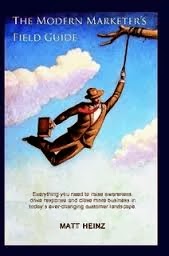
The Modern Marketer's Field Guide: Have You Read it? You Should

When it comes to B2B marketing, there are not a lot of great books out there. For the most part, the books that do exist focus on the novice marketer or focus on high level approaches. Matt Heinz has brought us probably the most practical book out there for the more advanced B2B marketer - the modern marketer. The Modern Marketer's Field Guide is a must read for any marketer that is looking to get to that next level. Matt has assembled a number of experienced marketers such as Brian Hansford,  Maria Geokezas, Jackie Jordahl and Bailie Losleben to provide the advice and guidance that many B2B marketers desperately need.

The book is broken down into the following sections:
  • Content Strategy
  • Demand Generation
  • Lead Management and Nurturing
  • Social Media
  • Events & Tradeshows
  • Sales Operations
  • Customer Loyalty & Retention
In just 137 pages, this book is jammed packed with tips and practical advice that you can start using today. For example, I used a tip from the chapter on blogging on how to improve the way I promote blog posts. I now post tweets that include the Twitter handle of anyone that I've quoted or mentioned in my blog posts. I'll try and incorporate more prominent people and then ask them to promote my post via Twitter. I've also challenged people via Twitter that I mentioned in my posts which has proven to be effective in getting a response. Not only does this help you promote your blog, it can also help you expand your social network, it helps you grow your social currency. I've also been inspired to think of other ways to improve my social presence such as starting a Twitter chat on an area that I have expertise.

The Modern Marketing Field Guide is Groundbreaking


In this book Matt covers new ground where most marketing books fall short. As an example, he focuses on B2B marketing past the end of the sale. For many marketers, the sales-marketing funnel ends with the purchase of a product. Matt takes this further. In his chapter on content marketing advice, he suggests that marketers need to develop content to help transform customers into advocates and to help keep them at this level. Matt is also a proponent of an advocate centric organization that listens to its customers, communicates regularly, provides practical advice and thought leadership, and owns up to its mistakes. This is sound advice that all B2B marketers and executives should heed to and I applaud Matt for focusing on this. Listen, the book isn't revolutionary as all of this content can be found on different blogs but I've found few sources that pull of these areas together into one book - that makes it unique.

Because the book is a compilation of mostly blog posts, it's a bit of a mishmash of content that can be jarring at times. Matt may have been in a rush to get this content out to the public and before long, the content may be obsolete. It's easy to see past this as the content provided by true industry experts who have been there and done that is just too good. If you are a B2B marketer, you will walk away with at least five ideas you can incorporate into your current marketing plans today.

I could keep going here but I want to encourage you to experience this for yourself. There are too many nuggets in this book from getting the most of webinars and marketing automation to advanced marketing metrics that you should be tracking. I highly recommend that you get a copy of this book today or download the free version.

Chad H.
@chadtev

Please Note: I did receive a complimentary copy of this book but I have no financial incentive to write a positive or negative review. From someone that has worked with many of the best marketers around the world for over 10 years I do feel I'm qualified to provide a through review.

Read more >>

Friday, December 27, 2013

The Slow Death of Email and What You Can Do About it

Being in the world of marketing automation for as long as I was, I was a bit jaded and defended email as a marketing tool like it was the be all and end all of marketing. Since moving to another part of B2B marketing and executing different types of email campaigns I now have a completely different perspective.

Email is in fact losing its touch. In this fantastic Slideshare by Gary Vanderchuck "How to Tell Your Story in 2014" he asks "When was the last time you were excited by an email?". I can tell you honestly that I don't remember. Perhaps it was a transactional email I received that told me a shipment had arrived? When was the last time you were excited about getting an email?

Gary goes on to show an image that says "Marketers ruin everything". What he means is that when marketers find a tactic that works, they can run it into the ground. The trick as I see it is to always staying ahead of the pack by using advanced marketing methods. I'm not alone in my thinking.
When was the last time you were excited to open an email?

The Evolution of the Modern Marketer: Email Tips From the Pros 


If you ever want to take a peak into the minds of the B2B marketers that are at the cutting edge of everything, head over to www.topliners.com. This discussion "Declining email response rates?" is a fantastic example as these top marketers are discussing their own email campaigns and what they have found to be successful. These are the new breed of marketers - the modern marketers. They of course live outside of Topliners but Topliners is one of the only public forums that you'll find them. Listen closely to what a few of these marketers are saying about email:

 Kristin Connell: IMO, I think it's too generalized of a statement to say that the "biggest pain point for digital marketers is declining email response rates." I think it's merely a symptom of the larger issue to digital marketers - to Eytan's researched response - in that it's becoming much more complex and doesn't just require better tools, but better, more "modern" skill sets.

Jennifer Gonzalez: I think declining response rates correlate to people trying to build their lists through less than ideal methods. For example, if you purchase lists to build up your database, your response rates will decline because you are emailing people who are not interested in your message.

lkincke:  I think it's a matter of perspective, it may feel (as a digital marketer) like response rates are the pain point but the truth behind having an engaged, responsive audience is having engaging content.  If your response rates are declining and all other factors surrounding your audience, deliverability, etc remain the same then the clear problem is in the content.  Being on the consulting/agency side the last few years I feel very strongly that the average marketer is reluctant to admit when their content might be the problem. It's much easier to claim it's an industry-wide trend than to attempt to optimize something you put together, no one wants to admit that maybe their baby is ugly. 

Dave Liloia: I think that there are two worlds at work here though. The first is made up of people like us who understand the space, know what is possible and work REALLY REALLY hard to be better every day. The other world is made up of people who still use a word that starts with B and ends with LAST and think that's an ok way of doing business.

Good data + good content + good process = good campaigns


Kurt Weisenberger: For LifeSize, since we've further segmented our database specifically by verticals for our nurture programs we've seen increased response rates. We also create very timely content on a monthly cadence for our primary prospects - and customers.

There are a bunch of good ideas here and they revolve around the following marketing concepts: segmentation, personalization, data and content. The tools are an instrument for success - they make it easier but it's more the mindset that makes these marketers have higher email response rates then the tools they use. However, is it enough?

Is it enough? Will These Best Practices Save Email? NO!


It's great that you have some advanced marketers that are creating a better, more engaging experience for their email recipients. Here's  the big question: even with employing these best practices, will email response continue to decline due to the overuse of this channel? Time will tell. These advanced marketers have proven that you can still be successful with email but it takes effort and commitment. It also takes knowledge. You need to know your customers - what they want, what their challenges are and what they would be interested in. I don't think it will be enough and Gary agrees with me.

Gary Vanderchuck summarizes this into the simple concept of "storytelling". Marketers need to communicate what the story of their organization is (its value proposition). To get the attention of potential buyers, marketers need to engage with their audience. Social media is a great channel to use for this purpose but it can't be used as a "blasting platform". You need to really engage your audiences.

While Gary focuses his story on driving marketers to use social platforms like Facebook, Twitter and Instagram as tools to tell your story, there is definitely more that can be done. Your story is being written outside of channels that you control and directly interact with.

Storytelling 2.0


While I agree with Gary that storytelling will win the day as it is the best way to convey a message, it goes well beyond the mainstream areas of social media. Marketers should be ensuring that their story is a positive one on online review sites such as Yelp, Linkedin, Quora and Google. Marketers should be leveraging their best customers - their advocates - to help spread this story. It should not just fall on the company to be the storytellers. Your customers and other influencers can assist here. Would you be more included to open or respond to an email that came from a company or from a friend or colleague of yours?

Email as we know it toady is definitely on the decline. You can use advanced methods to maintain a very good response rate but if you don't continue to evolve your marketing techniques, your efforts will be limited and will diminish with time. Best of luck to you.

Chad H.
@chadtev

Read more >>

Wednesday, October 30, 2013

Marketing Automation And Advocate Marketing: A Sweet Combination

waffles-and-syrup
Marketing automation + advocate marketing = delicious!
This post was originally posted here.

2013 has been a year of transition for me. My wife and I will be adding a new addition to our family, which will require me to paint a room pink and have tea parties (it’s a big transition after having two boys), and I moved from a behemoth of a technology company to a fast moving startup.
I have also moved from one area of B2B marketing to another. While the audience we focus on at Influitive is still primarily B2B marketers, the space that we play in is a bit different.

Marketing automation software is essentially a marketing database that runs marketing campaigns and provides insights on how those campaigns have performed. It’s the driving engine behind marketing’s efforts and can justify where marketing should be spending its budget. There are, of course, many other functions, such as sales enablement features, but let’s focus primarily on the core aspects of marketing automation.

Influitive focuses on advocate marketing, which is all about taking your customers, partners, employees and fans, and mobilizing them to support marketing campaigns, refer new business and help close deals. We call these super duper supporters your advocates and Influitive helps you tap into these amazing brand ambassadors.

Looking at these two areas of B2B marketing, they are not as different as they once appeared to me when I switched marketing disciplines.

Why advocate marketing and marketing automation are like waffles and maple syrup


Is it a coincidence that marketing automation and advocate marketing share the same initials, but in reverse? I think not!

Both areas actually work well together, like like waffles and maple syrup, for example.

Waffles, which represent marketing automation, are awesome by themselves, but they taste so much better with maple syrup, which is the advocate marketing component.

Adding advocates to campaigns which are being executed from your marketing automation system can amplify your existing campaigns and maximize your marketing automation investment.

5 ways marketing automation can tap into advocates to increase campaign effectiveness


Here are the top five recommendations on how you can leverage your advocates and advocate activities to maximize the effectiveness of your marketing automation campaigns:

1. Mix in online reviews to your lead nurturing efforts


The most recent Nielsen Trust In Advertising report found that 84% of buyers cited recommendations from people like them as their most trusted source when purchasing a product.

When mobilized, advocates can provide online ratings and reviews on sites such as G2 Crowd, TrustRadius, Quora, the Salesforce AppExchange and many others.

Instead of directing prospects to marketing materials that you have created, which are seen as less genuine in the eyes of your buyers, why not direct them to third-party sites where your advocates have left you glowing reviews?

You can also ask your prospects if they would like to connect with these advocates and set up a reference call.
tap-into-your-advocates
Did you know? Like maple syrup, marketing automation and advocate marketing have strong roots here in Canada.

2. Score leads based on acts of advocacy that have been performed


There are certain social indicators of advocacy which explicitly indicate that a prospect is more interested in your company as well as when their interest is peaking.
These can include:
  • Following your company on social channels such as Twitter, LinkedIn, YouTube, Google+, SlideShare, Spiceworks and Facebook
  • Sharing information about your company on social networks such as Twitter and LinkedIn
  • Mentioning your company on public forums such as Quora or Spiceworks
  • Responding to surveys and requests for more information
Many of your prospects are fans of your company even if they aren’t customers.

They may not have the budget or exact need at the moment for your services, they may have used your product or service at a former company or they may love what your company represents in their industry.

You can tap into this positive sentiment and track these activities.

As these activities increase, they should be scored appropriately, and an inside sales rep should reach out at the right time to see if they are ready to purchase or just to thank them for their support.

3. Add testimonials from advocates to landing pages to increase lead conversion


MarketingExperiments has published a number of case studies which show that including indicators of trustworthiness on your landing pages reduces friction.

There is no better way to do this than to use testimonials that you have collected from your advocates. You can gather testimonials that indicate the strength of your customer onboarding services, various benefits of your products and even justify spending the five minutes needed to read through an eBook.

Sprinkle in some testimonials and measure the increase in conversions.

4. Ask advocates to share your marketing content


These days, relying solely on email and even your owned social and web properties to reach your target audience is a mistake. The Nielsen Trust In Advertising report backs this up: content shared by people who are similar to your intended buyers is much more powerful and your prospects will be much more receptive to this information.

Have your advocates share your infographics, upcoming webinars and other marketing content with their social networks in order to maximize the effectiveness of the campaigns that you are running.

Be sure to accurately measure the leads coming from advocate activities by using unique URLs and/or designated landing pages.

5. Get feedback on your planned marketing campaigns


…before pulling the trigger on a larger audience. Advocates love to provide feedback. Why? Because they want to have their voices heard.

They feel connected to you and asking them for feedback enhances this relationship. Of course, you need to ensure you are recognizing their contributions for this to work. When performed properly, you can use advocates to provide advance feedback on campaigns that you want to run for a larger audience.

Think about it. You’ve spent or about to spend a significant amount of on a nurturing program, video, infographic or webinar series. Wouldn’t you want to get some honest feedback or test your messaging on a smaller, dedicated audience before you do a major campaign launch? This is easy to do with a co-ordinated advocate marketing program. Using advocates this way, you’ll guarantee a much better chance of campaign success.

I hope you will take advantage of these recommendations and add the sweetness of advocates to your marketing automation efforts.

Chad H.
@chadhorenfeldt
Read more >>

ShareThis

LinkWithin

Related Posts Widget for Blogs by LinkWithin