Showing posts with label marketing automation. Show all posts

Tuesday, February 11, 2014

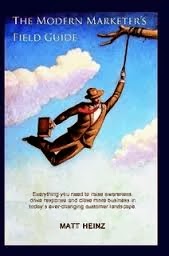
The Modern Marketer's Field Guide: Have You Read it? You Should

When it comes to B2B marketing, there are not a lot of great books out there. For the most part, the books that do exist focus on the novice marketer or focus on high level approaches. Matt Heinz has brought us probably the most practical book out there for the more advanced B2B marketer - the modern marketer. The Modern Marketer's Field Guide is a must read for any marketer that is looking to get to that next level. Matt has assembled a number of experienced marketers such as Brian Hansford,  Maria Geokezas, Jackie Jordahl and Bailie Losleben to provide the advice and guidance that many B2B marketers desperately need.

The book is broken down into the following sections:
  • Content Strategy
  • Demand Generation
  • Lead Management and Nurturing
  • Social Media
  • Events & Tradeshows
  • Sales Operations
  • Customer Loyalty & Retention
In just 137 pages, this book is jammed packed with tips and practical advice that you can start using today. For example, I used a tip from the chapter on blogging on how to improve the way I promote blog posts. I now post tweets that include the Twitter handle of anyone that I've quoted or mentioned in my blog posts. I'll try and incorporate more prominent people and then ask them to promote my post via Twitter. I've also challenged people via Twitter that I mentioned in my posts which has proven to be effective in getting a response. Not only does this help you promote your blog, it can also help you expand your social network, it helps you grow your social currency. I've also been inspired to think of other ways to improve my social presence such as starting a Twitter chat on an area that I have expertise.

The Modern Marketing Field Guide is Groundbreaking


In this book Matt covers new ground where most marketing books fall short. As an example, he focuses on B2B marketing past the end of the sale. For many marketers, the sales-marketing funnel ends with the purchase of a product. Matt takes this further. In his chapter on content marketing advice, he suggests that marketers need to develop content to help transform customers into advocates and to help keep them at this level. Matt is also a proponent of an advocate centric organization that listens to its customers, communicates regularly, provides practical advice and thought leadership, and owns up to its mistakes. This is sound advice that all B2B marketers and executives should heed to and I applaud Matt for focusing on this. Listen, the book isn't revolutionary as all of this content can be found on different blogs but I've found few sources that pull of these areas together into one book - that makes it unique.

Because the book is a compilation of mostly blog posts, it's a bit of a mishmash of content that can be jarring at times. Matt may have been in a rush to get this content out to the public and before long, the content may be obsolete. It's easy to see past this as the content provided by true industry experts who have been there and done that is just too good. If you are a B2B marketer, you will walk away with at least five ideas you can incorporate into your current marketing plans today.

I could keep going here but I want to encourage you to experience this for yourself. There are too many nuggets in this book from getting the most of webinars and marketing automation to advanced marketing metrics that you should be tracking. I highly recommend that you get a copy of this book today or download the free version.

Chad H.
@chadtev

Please Note: I did receive a complimentary copy of this book but I have no financial incentive to write a positive or negative review. From someone that has worked with many of the best marketers around the world for over 10 years I do feel I'm qualified to provide a through review.

Read more >>

Wednesday, October 30, 2013

Marketing Automation And Advocate Marketing: A Sweet Combination

waffles-and-syrup
Marketing automation + advocate marketing = delicious!
This post was originally posted here.

2013 has been a year of transition for me. My wife and I will be adding a new addition to our family, which will require me to paint a room pink and have tea parties (it’s a big transition after having two boys), and I moved from a behemoth of a technology company to a fast moving startup.
I have also moved from one area of B2B marketing to another. While the audience we focus on at Influitive is still primarily B2B marketers, the space that we play in is a bit different.

Marketing automation software is essentially a marketing database that runs marketing campaigns and provides insights on how those campaigns have performed. It’s the driving engine behind marketing’s efforts and can justify where marketing should be spending its budget. There are, of course, many other functions, such as sales enablement features, but let’s focus primarily on the core aspects of marketing automation.

Influitive focuses on advocate marketing, which is all about taking your customers, partners, employees and fans, and mobilizing them to support marketing campaigns, refer new business and help close deals. We call these super duper supporters your advocates and Influitive helps you tap into these amazing brand ambassadors.

Looking at these two areas of B2B marketing, they are not as different as they once appeared to me when I switched marketing disciplines.

Why advocate marketing and marketing automation are like waffles and maple syrup


Is it a coincidence that marketing automation and advocate marketing share the same initials, but in reverse? I think not!

Both areas actually work well together, like like waffles and maple syrup, for example.

Waffles, which represent marketing automation, are awesome by themselves, but they taste so much better with maple syrup, which is the advocate marketing component.

Adding advocates to campaigns which are being executed from your marketing automation system can amplify your existing campaigns and maximize your marketing automation investment.

5 ways marketing automation can tap into advocates to increase campaign effectiveness


Here are the top five recommendations on how you can leverage your advocates and advocate activities to maximize the effectiveness of your marketing automation campaigns:

1. Mix in online reviews to your lead nurturing efforts


The most recent Nielsen Trust In Advertising report found that 84% of buyers cited recommendations from people like them as their most trusted source when purchasing a product.

When mobilized, advocates can provide online ratings and reviews on sites such as G2 Crowd, TrustRadius, Quora, the Salesforce AppExchange and many others.

Instead of directing prospects to marketing materials that you have created, which are seen as less genuine in the eyes of your buyers, why not direct them to third-party sites where your advocates have left you glowing reviews?

You can also ask your prospects if they would like to connect with these advocates and set up a reference call.
tap-into-your-advocates
Did you know? Like maple syrup, marketing automation and advocate marketing have strong roots here in Canada.

2. Score leads based on acts of advocacy that have been performed


There are certain social indicators of advocacy which explicitly indicate that a prospect is more interested in your company as well as when their interest is peaking.
These can include:
  • Following your company on social channels such as Twitter, LinkedIn, YouTube, Google+, SlideShare, Spiceworks and Facebook
  • Sharing information about your company on social networks such as Twitter and LinkedIn
  • Mentioning your company on public forums such as Quora or Spiceworks
  • Responding to surveys and requests for more information
Many of your prospects are fans of your company even if they aren’t customers.

They may not have the budget or exact need at the moment for your services, they may have used your product or service at a former company or they may love what your company represents in their industry.

You can tap into this positive sentiment and track these activities.

As these activities increase, they should be scored appropriately, and an inside sales rep should reach out at the right time to see if they are ready to purchase or just to thank them for their support.

3. Add testimonials from advocates to landing pages to increase lead conversion


MarketingExperiments has published a number of case studies which show that including indicators of trustworthiness on your landing pages reduces friction.

There is no better way to do this than to use testimonials that you have collected from your advocates. You can gather testimonials that indicate the strength of your customer onboarding services, various benefits of your products and even justify spending the five minutes needed to read through an eBook.

Sprinkle in some testimonials and measure the increase in conversions.

4. Ask advocates to share your marketing content


These days, relying solely on email and even your owned social and web properties to reach your target audience is a mistake. The Nielsen Trust In Advertising report backs this up: content shared by people who are similar to your intended buyers is much more powerful and your prospects will be much more receptive to this information.

Have your advocates share your infographics, upcoming webinars and other marketing content with their social networks in order to maximize the effectiveness of the campaigns that you are running.

Be sure to accurately measure the leads coming from advocate activities by using unique URLs and/or designated landing pages.

5. Get feedback on your planned marketing campaigns


…before pulling the trigger on a larger audience. Advocates love to provide feedback. Why? Because they want to have their voices heard.

They feel connected to you and asking them for feedback enhances this relationship. Of course, you need to ensure you are recognizing their contributions for this to work. When performed properly, you can use advocates to provide advance feedback on campaigns that you want to run for a larger audience.

Think about it. You’ve spent or about to spend a significant amount of on a nurturing program, video, infographic or webinar series. Wouldn’t you want to get some honest feedback or test your messaging on a smaller, dedicated audience before you do a major campaign launch? This is easy to do with a co-ordinated advocate marketing program. Using advocates this way, you’ll guarantee a much better chance of campaign success.

I hope you will take advantage of these recommendations and add the sweetness of advocates to your marketing automation efforts.

Chad H.
@chadhorenfeldt
Read more >>

Tuesday, September 25, 2012

Marketing Automation Not Just About Revenue (But it's Damn Important)

I've had the following conversation a few times with clients who have implemented marketing automation: "so now that we have marketing automation in place we want to do ROI reporting - TODAY". Jumping into ROI/closed loop reporting right away can be difficult. You need to have the right processes in place including a strong relationship between marketing and sales as well as a focus on revenue metrics to name just a few of the requirements. A recent report by the Lenskold Group and The Pedowitz Group backs this up. Don't try and do everything at once with marketing automation - create a plan that will lead to incremental success but don't stop with just simple automation. Improving your organization's overall reporting structure and focusing on marketing's contribution to top line revenue brings many added benefits.

Show me the ROI?

While companies that have implemented marketing automation demonstrate a higher adoption of ROI type reporting such as sales metrics and revenue metrics, the focus is still on cost efficiency metrics, engagement metrics, lead metrics and response metrics (see the right side of the chart below).

Source: Lenskold Group - 2012 Lead Generation Marketing Effectiveness Study

There is no question that there has been a tremendous improvement in the number of companies that are now using some ROI type reporting (4 out 10 companies according to this report). That said, the biggest improvements with marketing automation are seen in increased quality and quantity of leads. Ensuring that the marketing automation building blocks are in place including automated lead scoring and nurturing help generate trust with sales and the rest of the organization. This can help you buy the influence that is needed when trying to close the loop and gain more insight on leads after they move to sales - especially with the long sales cycles that we see with many B2B companies. ROI reporting requires marketing to create a unified lead management process with sales and to also have support from IT when needed.

Source: Lenskold Group - 2012 Lead Generation Marketing Effectiveness Study

Take it to the Next Level - It's Worth it

The bottom line is that it is worth it to get to ROI type reporting. Those companies that are using marketing automation and ROI metrics are seeing a measurable difference when compared to companies that don't use these similar metrics. For example, companies using marketing automation and ROI metrics have seen a 69% increase in marketing's revenue contribution. I would be rather a CMO at a company where I can demonstrate how my team is impacting sales and revenue growth then a CMO at the other company that has marketing automation but can't demonstrate top line revenue contribution. Marketing Automation gives you the tools to reach the promised land. If you can't see a clear path to get to ROI reporting, talk to your account team with the marketing automation vendor you work with - they should have marketing experts that can help.
Source: Lenskold Group - 2012 Lead Generation Marketing Effectiveness Study
Oh and if that wasn't enough, here are a few of the other key findings from the report for companies using ROI metrics to assess their effectiveness:

  • More likely to be outgrowing competitors
  • More likely to define their marketing as highly effective and efficient
There is no question that there is some tough roads ahead for companies that go down this path. What this report backs up is what I see every day. The companies that roll up their sleeves and go all in get the best results. This requires patience, determination and proper planning. Good luck to those going down this road and congratulations to those that are already reaping the rewards.

Additional Sources:
Read more >>

Monday, August 08, 2011

Measuring the Impact of Lead Nurturing: 3 Methods You Can Use


One of the things that I love most about my role is when I'm able to visit customers and participate in a customer user group. This past week I was down in Atlanta for the Eloqua All About Revenue Success Tour and I led a breakout session on the different ways that companies measure the success of lead nurturing. Why is this so important? If nurturing is improving the number of overall leads that your marketing team is generating then everything is good, right? Wrong! Companies that are investing in marketing automation should be demonstrating to their managers, the sales team and company executives the role that technology, specifically nurturing, has played in helping the company achieve its business objectives. This of course goes well beyond technology and encompasses all of the time and effort put in to put these campaigns together. Here is a summary of three main ways that marketers are measuring the impact of their nurturing campaigns:

  1. Email Response. Most marketers who have been using lead nurturing were able to see improved open and click-through rates and lower hard bounces and unsubscribes as compared to regular batch and blast campaigns. Others broke this down even further by examining email response by region as an example. A few looked at which emails within the nurturing campaign had better response. This is definitely important to better understand which messages are resonating and which aren't and the optimal frequency to send these emails.

  2. Compare Against Benchmarks. Another approach that was discussed was to compare certain marketing metrics after nurturing was initiated to the same metrics before the nurturing campaigns begun. Companies can compare email response, conversions, leads, total revenue generated, pipeline growth, average deal size and the velocity of movement through the funnel from one period to another if they have the benchmarks to compare to.

  3. Measuring the True Influence of Nurturing. The more advanced marketing teams are able to understand specifically how many leads and qualified leads (MQLs), pipeline and closed deals were specifically influenced by lead nurturing. To do this, marketers are adding lead nurturing campaign responders to a Campaign object in the CRM. Reports can be generated that exhibit all of the campaigns that contributed to producing an opportunity and eventually a closed deal.

    To make this work, marketing needs to create a process that ensures that this campaign association is occurring and needs to create campaign influence reports. Depending on the complexity of your process and the type of technology that you have access to, these types of reports can be challenging to generate. However, if you're able to tell your boss, the CMO and head of sales that 50% of the qualified leads generated in the last 6 months had been through lead nurturing and that lead nurturing influenced 20% of the pipeline in the last quarter, you're able to better argue your case for investing time and resources in additional marketing automation and content creation initiatives. There is no question that lead nurturing takes some up front planning and time. You need to prove that it's worth it and third party reports have clearly demonstrated the success of lead nurturing. Eloqua just produced a simple chart showing that the best in class companies that are doing the most automation have the highest amount of leads produced.
My advice and a theme from the user group last week is to start slowly. Follow the concept of crawl, walk, run and don't mix up the order! In this case, focus on one aspect of lead nurturing and get moving with that. As an example, choose a certain segment to nurture to. This may be a specific vertical, region or job role your focusing on. That way you don't need all of the content at once and you can build out the campaign and still get your other work done. As you get more comfortable and start to demonstrate some results, focus on how you can optimize the process and improve how you measure the impact of your campaigns. 

Let me know if you have any other metrics you use to measure the impact of lead nurturing.

Chad H.

PS - here are two good resources that can help you today:
  • Webinar on lead nurturing: Automating the Buyer's Journey . This is a case study that is really a story about the evolution of marketing automation at NetApp. The story is told by Erin Rampey and there are some great tips that you can take away from this presentation
  • The Grande Guide To Lead Nurturing: http://www.eloqua.com/grande/Grande_Guide_To_Lead_Nurturing.html. All you ever wanted to know about lead nurturingGuide To Lead Nurturing
Read more >>

Sunday, January 16, 2011

So You Think You Know Marketing Automation

If you've recently rolled out marketing automation or are considering it, have a look at this two part series that was orginally published on the "It's All About Revenue" blog:


So You Think You Know Marketing Automation Part I


Have you recently rolled out a marketing automation platform like Eloqua, have you been using one for awhile, or are you considering one in the near future? Welcome to the party! It’s easy to think that once you have the basics configured you can set your platform on autopilot, concentrate on executing campaigns, and see the leads roll in. Of course, there’s this thing called “reality”... Read more


So You Think You Know Marketing Automation Part II


So you think you may know marketing automation, but in part I of this post we only started to outline the many different areas you need to consider. Configuring your marketing automation platform, then letting it collect dust is a risky strategy. There are too many environmental factors affecting your marketing strategy that you need to consider. Marketing automation provides the tools to adapt to changes occurring around you – it’s up to you to step up to the plate or be left behind. Read more

Feel free to ask me questions.

Chad
Read more >>

Wednesday, April 07, 2010

Wake up and Send More Email

Social media is all the rage these days and I’m in complete agreement that it should be part of your campaigns but let’s not overlook the power of email and how it’s being underutilized by many organizations today. From conversations that I have with marketers I sometimes sense this feeling of anxiety when I recommend that they should increase the frequency of emails that are sent to their opted-in database. This fear stems from a number of different sources and I typically hear the following:

  • We don’t have anything good to send to our database
  • We don’t have any time-sensitive events that we need to promote
  • We’re sending too many emails already
  • We need to cleanse our database first before executing campaigns

Too Many EmailsDon’t get me wrong, I’m not saying that you should go and carpet bomb your database with a press release on how your company now has an office in the North Pole to service the growing northern population. On the other hand, what you may find is that there are opportunities to send more relevant and timely email communications to certain segments of your database. Let’s take a closer look at these sources of fear when it comes to pulling the email trigger to help marketers break free from their “email frequaphobia”.

”We don’t have anything good to send to our database”

There is an inherent issue with this statement. When the marketer says “we don’t have anything good to SEND to our database”, they assume that the marketer is defining how and when the buyer should receive information. In today’s B2B purchase process, the marketer is no longer in charge. The marketer needs to make educational materials that will guide the prospect along the buyer’s journey as they progress through the evaluation stages to the eventual product purchase. If this is not done, there is a greater chance that leads will leak out of the sales and marketing funnel and may go to the competition.

Therefore, marketing organizations can no longer use this statement as a crutch. What is recommended is to map out the content that prospective buyers would be interested in at various stages of the sales process and automate the delivery of this communication. In terms of having the necessary content, many organizations may be surprised at the content that they already possess. Review your website and other sources such as blogs and previous campaigns and look at ways that content can be repurposed (I talk more about this here: The Recession is Here - Time to Become an Eco-Marketer). If the email content is relevant based on a prospect’s recent behaviors, then increased frequency becomes a non-issue. Yes, these initiatives will require resources to prepare the content as well to set up these types of campaigns but it is well worth it – trust me. You can also take advantage of technology to at least help with the campaign execution piece. My recommendation is to start small and show results and then build on that momentum.

“We don’t have any time-sensitive events that we need to promote”

This statement is very similar to the first section. Just because you’re not presenting at tradeshows or executing monthly webinars doesn’t mean that your database should not be receiving regular communication from you. Here are a few campaign ideas to consider when thinking about providing relevant and engaging content via email:

  • Email newsletters. This tried and true communication piece will work as long as the content is good (i.e. more educational than promotional)

  • Welcome Program to ramp up new email subscribers on the resources available to them. See: Ready to Welcome Your New Leads?
  • Lead Nurturing Programs for leads that are currently evaluating your product or services
  • Longer term lead nurturing programs for leads that have been passed back to marketing
  • Reengagement Programs. These are programs that target leads that are associated to stalled opportunities or contacts in your marketing database that are no longer responding to your emails.
  • Additional event triggered communication. For example, I describe how you can engage web visitors that have searched for something on your website but couldn’t find what they’re looking for: http://eloqua.blogspot.com/2010/02/engage-search-visitors-viatriggered.html
  • Customer communications. This may include emails for new clients, timely product usage information, regular tips and tricks and renewal notices. It all depends on your type of business but I’m sure there are not many companies that couldn’t improve in this area.
  • Social media highlights. If you have a blog, Twitter account and/or YouTube channel, consider blending the best content from these different sources into an email that can be shared by your email subscribers. Don’t assume that just because you tweet that people read it. Use email as the glue to your social media efforts to get the most out of your social media content. Consider adding RSS feeds from these channels directly to your emails (an oldie but goodie: Latest Trends in Email Marketing: RSS and Calendar Reminders).

Part of this effort is creating a lead nurturing culture in organizations which I’ve outlined here: How To Build a Lead Nurturing Culture Part I.

“We’re sending too many emails already”

    You may have this gut feeling that your sending too many emails to your database and that if you keep sending emails that your subscribers will call it quits. This issue tends to generate even more hysterics in larger organizations. The first thing you need to do is to get a handle on how many emails that you're actually sending. You should be able to get a sense of he average number of emails that the majority of your database is receiving within a given time. If your data is telling you that the majority of your database only received 2-3 emails within a three month time period, there may be an opportunity to send relevant content to your database to keep them engaged and maintain the brand awareness that helped get these subscribers in your database to begin with.


    Make sure you can easily obtain this type of email frequency information and monitor it regularly. What you don’t want to have happen is create a multitude of automated programs and the realize that a proportion of your database is in fact receiving too much email. For more information on this topic, see: What’s the [Email] Frequency Kenneth?


    “We need to cleanse our database first before executing campaigns”

    Ok, your database is a bit of a mess and it’s taking time to clean it up. Guess what – you’re always going to have some data issues. Your database will never be perfect. Don’t use that as an excuse to not start on a simple nurturing program to a specific segment ( for example: a specific industry) or creating a welcome program.


    In addition, you can even use automated email programs to collect more information regarding your subscribers over time which can help clean up your database. In fact, when you start sending out regular email campaigns, you’ll soon see who in your database truly wants to hear from you based on the digital body language that these subscribers are exhibiting.

    Keep this in mind: The more you wait before you execute your campaigns, the more stale your database gets. Don’t let this happen to you. Start thinking about what you can do to increase the number of quality interactions that you can have with your database via email. Break free from email frequaphobia and leave your competition in the dust.


    Chad H
    @chadhorenfeldt

    Photo Credits:

    Read more >>

    Tuesday, January 26, 2010

    5 Marketing Automation Email Tips

    I have the pleasure of welcoming a new bunch of Eloqua team members who we start off with a boot camp here in Toronto so they get to know each other and the rest of the company. I’m going to outline some of the cool things our customers do but I’ll also sherpa walking carrying loadprovide a short intro on what I do in my day to day. To make it easy for everybody, I like to describe my role as a sherpa for our customers. Not a marketing sherpa (that name is already taken) but a marketing automation sherpa as my job is to guide marketers on a journey to help them reach their goals. Like any sherpa that is climbing a mountain, I need to have a number of tools handy that I can recommend depending on the situation (yeah, I got a big bag of tools).

    In this post, I’m going to outline some tips you can use to engage or reengage your email subscribers. While you don’t need a marketing automation tool, these tactics can take a long time to create and execute manually. Because the process is automated, with marketing automation, you just need to define your list criteria and business rules once and the program manages the rest for you.

    Tips To Engage and Reengage Email Subscribers

    Good for you! You’ve started to build your marketing database through your different marketing channels. What are some of the ways to ensure that your messages are breaking through the inbox? Here are a few ideas:

    • Send out the same email with a different subject line. In a recent case study on B2B Online, NIIT, a global learning solutions company, created an automated email program that engaged subscribers based on their “Digital Body Language”. The program would automatically detect if the email recipient didn’t respond to the first email and send a subsequent email that was the same as the first email but with a slightly different subject line. Response rates for this campaign were greater that 20% which is very good for B2B campaigns.

    • Send out the same email with a different a “From” address and subject line. You can send the same email or a slightly different email with a different “From” address. For example, if you’re sending a newsletter, you may have a corporate email address such as newsletter@company.com as the address the newsletter is coming from. The follow up email to those that didn’t respond to the first email may be from the CEO or an account manager. You would be surprised how experimenting with slightly different “From” addresses can improve response rates. An IDG Research has demonstrated that the name of sender affects open rates twice as much as the subject line. The trick is to automate the follow up emails to non-responders so the technology does the work for you and you can move on to other initiatives while maximizing every drop from your campaigns.

      In a post that I wrote over two years ago I outlined how we pushed this even further by sending a follow up email to non-responders that looked like a forwarded email. The original email was sent from a VP and received decent response. The follow up email looked like the Account Manager forwarded the VP email to the subscriber and said “Hey, you may have missed this great email below”. The response rates tripled with the different “From” address.

    • Personalize the Email Heading. Ok, we covered the “From” address and the subject line – what’s the next thing you typically see when you open the email? The heading or title. While your first campaign may have had a generic heading that was geared to a specific vertical or focused on your offering, think of an email heading that is targeted at the specific job role of the email recipient. Here is an example and you tell me which heading works better if you’re a CIO:
      A. Does your IT Infrastructure keep you up at night?
      B. As a CIO, we know your IT Infrastructure can keep you up at night.

      The second example is more personable and seems like you truly understand and want to solve the problems of that poor head of IT. You may be saying – how can I personalize the heading for each of my email subscribers? marketing automation systems allow you to add dynamic content sections (not just a personalized field) and rules. I recommend creating a few personalized sections based on the largest and most important segments that are part of your campaigns. Think of the time that you’ll save by only having to send one email yet knowing that the extra hour you spent adding in some personalization will improve engagement and campaign success.
    • Stop with the Email. You may be saying, what a minute, what are you trying to pull here as this is a post on marketing automation email tips. Well, sometimes, as a sherpa, I have to reach further into my bag as we have some email subscribers that are just not responding anymore to email. What do we do? Delete all of these contacts that you spent good marketing dollars on? I would say that you may need to take a closer look at the contacts that didn’t respond. If these people are in the right industry and have the right title, it may make sense to have your inside sales team call some of these contacts to see if they still exist or outsource this task to companies like ReachForce or MarketOne. Perhaps send a post card to an unresponsive executive with an incentive to respond as Trinet did with with amazing success. Don’t forget about the other options that are out there and rely on email as your all in one magic bullet. You can also try some unconventional methods like confirming that these contacts are still valid by using LinkedIn.

    I hope that you found these tips useful and I wish you well on your marketing journey.

    Chad H.
    @chadhorenfeldt

    PS: BONUS: Another email tactic you can use is send an HTML email and then send a follow up text email to non-responders. MarketingSherpa has reported that almost two thirds of business executives are viewing emails on mobile devices and text based emails may get more traction.
    Read more >>

    Tuesday, December 22, 2009

    5 Mistakes B2B Marketers Need to Avoid in 2010

    2009 has been a long year but as I reflect back on my many conversations, I've created a top 5 list of items to avoid in 2010:

    1. Not having a defined social media strategy

    sugar pour You would be surprised by the number of companies that say “yeah, social media is important but it’s not important to us at the moment”. In 2010 you will not have a choice but to make social media part of your overall marketing strategy. If you’re company is just breaking ground in this area, at the very least make a commitment to listen to what people are saying about you. For example, check out http://addictomatic.com/ and search for your company name. Most likely, you are being mentioned. Now search for your competitors. This may be enough of an impetuous to get moving on a reactive social media strategy such as “monitor what is being said about you and respond where needed to protect our brand”.

    Addictomatic is a free tool that will get you started down this path. You may want to look at some of the paid services out there such as Radian6 or Vocus. Once you have this down, you can then start working on a proactive strategy and determine what it will take in your organization to make this possible. If you’re having trouble with this concept, skip down to #4.

    2. Not sending relevant and timely messages

    2009-12-22_0215 If you continue to only send email blasts on a schedule that you dictate to your email subscribers, you risk massive list attrition, damaging your overall email deliverability and a loss of sales and sales opportunities. The key to sending relevant communication is to automate the process. This may mean creating a lead nurturing program for new inquires on your website or using dynamic content in emails that presents a more relevant message. This concept needs to be at the forefront of your planning in 2010. If you have an automated program in place, look at ways that it can be adjusted to get an even higher response.


    3. Not having an accurate picture of your database

    BadData Did you have an email campaign this year that received a lower than expected response and blamed the creative or the offer on the poor results? It may well have had to do with these items but did you consider looking at the state of your list and/or database? I highly recommend that you query your database to understand how "active" your contacts are. You need to understand the true state of your database so you can make decisions on what you need to do in 2010 to achieve your goals. Knowing how many contacts in your database have bounced and unsubscribed is no longer enough - you need to understand how much "dead wood" you're carrying around.

    In addition, your data may need a "face lift" or a complete makeover as it's either inaccurate or out of date. Consider using data tools that are included in your marketing automation system to clean up your data. You can also look at services like Fresh Address (http://biz.freshaddress.com/) that can clean up your email addresses or providers such as ReachForce or MarketOne that can generate leads based on your specific needs.

    4. Not taking advantage of your online community

    knowing-is-half-the-battle-300x282 As a marketer, there are thousands of online resources out there that you can take advantage of to improve your marketing skills. You can even get a marketing degree from schools online. However, this is just “half the battle” (why am I having memories of GI Joe cartoons from the 80s?). You need to engage other marketers to really learn and get the most out of the resources that are available and there are online communities that are waiting to be taken advantage of. Here are some things you can do today:
    • Search for a LinkedIn Group that interests you and join it. Participate in discussions or start a new one yourself. Not sure which group to join? See which groups your connections have joined or ask them directly.
    • Ask and answer questions on LinkedIn. You may see a theme here. There are a lot of experts in your area that are willing to help you so have a look at LinkedIn Answers. To begin, I recommend browsing the Marketing and Sales category and looking for a subcategory that interests you.

    • Join Twitter and look for a Twitter List that includes tweets about areas of marketing that interest you. To get started, use a tool like http://listorious.com/ that lists some of the top lists on Twitter. An easier idea is to look at the list of a tweeter that you admire and follow their list. Here is my Twitter list that I generated that I follow daily. Again, to really engage the community you need to ask questions and respond.
    sodial-media-success This is just the tip of the iceberg. At my company, I’m an active participant in our customer only community. If you’re lucky to have such a community available to you, take advantage of it. Find out who the people that contribute the most and try and help them out if they need it. They will hopefully help you in return. You may want to look for them on LinkedIn or Twitter and follow some of my recommendations above. I’m a big advocate of Xobni that is a plugin for Outlook. It helps me easily add people to my Twitter and LinkedIn communities – check it out.

    5. Not using best practices or acting on lessons learned from past campaigns

    While this may be a given, you need to be continuously updating your skills to get the most out of your marketing campaigns. I highly recommend that you subscribe to resources such as the Marketing Insights blog, MarketingSherpa, MarketingExperiments, SiriusDecisions, ClickZ, and MarketingProfs to name just a few of the great resources that I use on a daily basis. This is on top of the number of great articles that my community of LinkedIn and Twitter provide me.


    I also recommend testing your campaigns by using A/B and multivariate testing for emails and landing pages. What you may find is that you're going to be creating your own best practices based on what you found successful.


    My last point is to accurately track your campaigns so you can easily see why certain campaigns were more successful that others in order to reproduce this success for future campaigns.

    Of course, one of your biggest sources of best practices should be the vendors you work with. Part of my daily job is to work with marketers to help them improve their campaigns and make them successful. You too should have access to a live person that can meet with you regularly and that can provide you with advice on what you’re doing right and where you can improve. Make that a priority for 2010 if you can.

    I hope you enjoyed these and please let me know if there are additional mistakes that you recommend avoiding in 2010. Happy Holidays from my family to yours!

    Chad_Matty

    Chad H
    @chadhorenfeldt
    ”You’re so 2000 and late” courtesy of zazzle.com
    ”The Battle” image courtesy of Patrick Hester's Blog
    ”Good Data, Bad Data” courtesy of CounterForce Blog
    ”Your community Profile” courtesy of www.socialdesire.com
    Read more >>

    Sunday, November 15, 2009

    B2B Marketing Trends From Eloqua Experience 09 Via Twitter

    Earlier this month I left my newborn and poor wife at home for an unforgettable week at Eloqua Experience in San Francisco. This sold out event brought together some of smartest marketers from all over the world. While there were a few keynote speakers, the conference focused on having the Eloqua community share their experiences so we could all learn from each other.


    The main difference this year from last year was that we not only shared our knowledge and insights with each other but with the power of Twitter, we could share these with the rest of the globe. This made the event even more exciting as tweeters could listen to speakers, engage other tweeters, tweet their experiences, and see what others were tweeting about all at the same time! To better understand, how Eloqua pulled this off, see: Social Media Buzz at a Live Event. The result was better than Eloqua could ever have expected. The content generated by the event attendees was almost as good as the content from the speakers themselves. Why? Because it’s real. It’s in the moment. What better way to get in the heads of those that attended than by reading their actual thoughts.

    EE09_Eloqua_Experience_TwitterWhile I could write a number of blog posts on my own findings from this event, I decided to let Twitter write the post for me. Of course, I did sift through over 1,000 tweets for trends as well the most memorable tweets. The Eloqua product was much discussed at the event but I’ve excluded those tweets here as this post was focused on learnings for B2B marketers that goes beyond Eloqua. I hope you enjoy it and I encourage you to follow the Tweeters that I mention below. They are some of the best and brightest out there. And if you’re mad that I forgot a important moment or missed a cherished tweet of yours, add a comment at the bottom.

    Social Media And B2B Marketing

    Social media played such a major factor at this event. This post as an example, was written from the product of social media (Twitter). At Eloqua Experience, there was a focus on helping marketers better understand the different aspects of social media, how to better leverage social media, and why they need to leverage it. One of the memorable moments on Day #1 was at the social media training session when all of students needed to set up a Twitter account (if they didn’t have one) and tweet using the #EE09 hash tag. It actually caused Twitter to block the IP address at the hotel from accessing Twitter for a short period of time due to the amount of new Twitter accounts generated. Those at the event felt proud that they’re collective voice reverberated across the internet – powerful stuff!

    David Meerman Scott was a fantastic speaker and adding all the golden nugget tweets from his presentation wouldn’t due it justice. I have added a few though.


    Here is a small taste of what was discussed:


    tracyekraft: Social Media Revolution http://bit.ly/1Q6I5R at Eloqua Experience learning how to be better w/social media. #ee09

    EricHorton: Twitter just blocked the IP for the #ee09 Twitter training session. How will new users learn to reap the benefits from Twitter?

    jocebrown: Social's big impact in B2B marketing will be in how you interact with customers and develop advocates and relationships - Laura Ramos #EE09

    stevewoods: Thought leadership and credibility, NOT community size are main drivers of why ppl engage in online communities - @lauraramos at #EE09

    chadhorenfeldt: Track social media engagement, not ROI @lauraramos #EE09

    edthewebguy: #ee09 steve woods - if facebook was a country it would be the 4th most populous

    rhonda: #EE09 It's not about controlling the message it's about getting information out there. @dmscott

    Bpoz: @dmscott: lose your fear of social media and lose control of your marketing. #EE09

    tillatorrens: New Rule by @dmscott - EARN attention by publishing your way in - via YouTube, blogs, etc #EE09

    chadhorenfeldt: #EE09 @dmscott borrowed this from @yoda to describe new rules of marketing: u must unlearn what u have learned

    The Marketing Organization

    While many of my conversations are focused solely on technology, it’s the people and process that are the building blocks of a successful marketing organization. The tweets below focus mostly on the session held by Tony Jaros from SiriusDecisions and some additional tweets from the Omniture session who use much of what SiriusDecisions preaches. The marketing organizations that have the right people and are using the best practice strategies will have the most success. As an example, SiriusDecsions focused on the concept of what they called the Demand Center.

    lauraramos: #EE09: Tony Jaros of Sirius Decisions talks about the gap in marketing skills, not the technology or relationship with sales.

    lauraramos: #EE09: Now need 2 worry about how 2 facilitate demand through the entire waterfall. Don't sell yourself short by thinking it's anything less

    lauraramos: #EE09: Best marketing organizaitons will see the biggest change at the bottom of the waterfall. Waterfall is center of all marketing.

    jocebrown: Neither a white paper not a product is a campaign....you need to be solving a problem....cannot continue to be tactically focused #EE09

    lauraramos: #EE09: Quality marketing talent must support a wide variety of disciplines. Silos must go. Marketing automation experience will be key.

    jocebrown:Frightening number of B2B marketers self taugh with no budget for training according to Sirius....huge performance gap #EE09

    lauraramos: #EE09: The Demand Center is a center of excellence for program creation but with advisory, technical, and execution around buyer's journey.

    jocebrown: It's the people and process not the technology that is stalling sophisticated nurturing and scoring - Laura Ramos #EE09

    lauraramos: #EE09: Omniture organization looks like: Audience Program Mgmt, Offer Development, Channel Execution, and Marketing Operations supports all.

    lauraramos: #EE09: 1: Sales engagement means taking in sales language: what do we contribute to the pipeline, how many sales accepted oppty do you need?

    paynejoe: Avg CMO tenure 22 mnths. BUT if the CMO has a demand generation or sales enablement background he/she is 2 times liklier to make 5yrs #ee09

    Measuring Marketing Effectiveness

    This was definitely a hot topic and Eloqua was lucky to not only have speakers like Laura Ramos and Tony Jaros but also CMOs from its customer base. A theme across many of these discussions was the need for marketing to demonstrate its impact to the rest of the business. This doesn’t just mean the pipeline influenced from a lead nurturing program but also can mean the effectiveness of lead scoring to the sales team.

    lauraramos: #EE09: all this [marketing] activity amounts to 18 to 30% of the pipe. Must look at influence in the waterfall, even if marketing doesn't source it.

    lauraramos: #EE09: @siriusdecisions Marketers must measure the performance of demand creation, not of marketing.

    SuaadSait: Benchmarking marketing statistics is NOT what matters, Baseline YOUR mktng data & set goals to grow as a commitment per @lauraramos #EE09

    jocebrown: Nurturing value measured in pipeline velocity - Drew Clarke IBM #EE09

    rhonda: #ee09 Drew Clark on measuring nurturing: what type & how many activities lead participates in, what their role is in opp & in account.

    lauraramos: #EE09: Waterfall + database segementation shows Omni needed to acquire 150K more names to feel the model. Content choice: research survey.

    lauraramos: #EE09: Omniture measures conversion across channel and pipeline. Lets them know where to invest marketing programs and why.

    rhonda: @pteshima #EE09 ?'s CMOs ask: What initiatives drive ROI, how does sales & mktg funnel look, r my strategies working, how do I benchmark?

    rhonda: #EE09 Scott Sheppard shares great ideas on rolling out lead scoring to your sales team: videos, distribute custom reports & driving adoption

    Marketing Tactics

    If you ask many marketers, one of the main reasons they came to Eloqua Experience was to pick up a few tips that they could take home with them and implement right away. This could mean learning how to clean your data so that it could be easy to segment off of or something simple as creating a control group that you send no marketing communication to and measuring how it fairs to the rest of the database. It’s very powerful when marketers themselves can share their results and let you know what is working and what isn’t.

    jill_rowley: @lauraramos - content needs to be about me and my needs, not you and your products, your awards. #EE09 #Eloqua

    JenPumpItUp: Session tip: How good is your lead scoring program? Only as good as your sales team buy-in. Make sure they're a part from the start. #EE09

    rhonda: #EE09 marketers shld work w/ the sales team to help define a qualified lead for scoring... But DON'T ask them to help you prioritize assets!

    rhonda: #EE09 Incorporate time frame into ur scoring model to ensure recency is reflected in the "value" of the lead.

    rhonda: #EE09 Sales adoption of lead scoring is a paradigm shift-if rep reluctant, push adoption not just from top but via success of their peers.


    lauraramos: #EE09: Omniture says realtime alerts increased contact ratios by to 100X and increased opportuntiies generated by 21X vs. no tools/process.

    jfernandez: I love the idea of misspellings within automated e-mails from Sales Rep to add a touch of authenticity. Brilliant stuff, @Omniture. #EE09

    Eloqua: Omniture: EVERY email must be personalized and relevant. #EE09


    gclarkmt: Mikel Chertudi says Omniture only saw a 3% drop in conversions with their really long contact form versus a short form. #EE09

    gregforrest: Omniture says do less programs and make them better - get more out of them. #ee09

    tmcmullen: favorite idea of the day - create a control group when testing marketing campaigns/effectiveness #ee09

    hallim: #EE09 data cleansing - tactics to support the overall strategy of demand generation and qualified leads into the sales pipline

    chadhorenfeldt: http://twitpic.com/o5sq5 - Great Eloqua data quality dashboard in Eloqua by @gregforrest #EE09 #b2b #marketing

    jill_rowley: Tony Jaros from SiriusDecisions says something like....Lead nurturing turns garbage into gold. #EE09 #Eloqua

    Until Eloqua Experience 2010…

    I hope you enjoyed some of these tweets as much as I did and if you were at Eloqua Experience, I hope these tweets bring back some good memories. To end this post, I want to highlight some of the true marketing rock stars that were at the event. These people were the finalists for the Markie awards. Here is Tweet from the Markie awards ceremony celebrating the achievements of the finalists:

    stevewoods: Was a fantastic evening! Congrats all! RT @chadhorenfeldt: http://twitpic.com/o7l7g - The Eloqua Markies finalists #EE09

    For more information on the winners, see: Winners of the 2009 Markie Awards where you can learn more about the categories, the winners and why they won.

    Be sure to add comments on your favorite tweets or moments at EE09. Looking forward to Eloqua Experience 2010!

    Chad H.

    @chadhorenfeldt

    PS: For videos from the event and some of the sessions I mentioned above, check out the Eloqua YouTube Channel. For more pictures, Check out the Eloqua Fanpage on Facebook

    PPS: I would like to thank every tweeter at the event – you made this post possible. Believe me, it was hard choosing who to include! I would especially like to thank @lauraramos, @jocebrown and @rhonda who I used extensively.

    PPPS: I did mention that this post was not on the Eloqua technology but I did want to give a shout out to the Pedowitz Group and its Sweet Platform that captured all of the tweets from the event in Eloqua and made it possible for me to analyze them. Very nice add-on and a big thank you.

    Read more >>

    Monday, September 14, 2009

    Email Marketing Metrics You Should be Tracking

    If you weren’t aware, Canada (Vancouver specifically) will be hosting the 2010 Winter Olympics. I was inspired to write this post by a group of brave Canadian ski jumpers that are have been denied permission to compete in the upcoming games. You may be saying – wait a minute, ski jumping is an Olympic event so what’s the problem? The “problem” is that these image athletes are women and the IOC has not sanctioned women’s ski jumping as an official event making it the only Winter Olympics activity that does not allow women to compete in. We’ll come back to this story – let’s focus back on email marketing.

    Sometimes it’s What’s Missing That Counts

    I was reading MarketingSherpa’s 2009 Email Marketing Benchmarking Guide looking for useful metrics and tips. I found some extremely interesting data that I will discuss in future posts but what interested me more was what I believe is missing based on what I discuss with my customers on a day to day basis. The goal of this post is not to criticize the great work by the MarketingSherpa folks but rather to provide feedback and start a discussion on the types of benchmarks that should be included in future reports – especially when we’re talking about b2b marketing.

    Email Metrics That Need Benchmarks

    Here is a list of the email metrics that I would like to see in future MarketingSherpa Email Benchmark reports:

    • Automated Email Metrics. I’m not referring to autoresponder emails but rather to campaigns that contain two or more automated emails. These emails should be sent using a marketing automation system like Eloqua. The goal is to demonstrate that key email metrics such as opens, click-throughs and conversions are much higher while unsubscribes are much lower using an automated program such as lead nurturing when compared to manual email sends (“one offs”). It would be very useful to B2B marketers to have benchmarks to track if their automated campaigns are trending upwards or downwards year after year.

      In addition, at a time when marketers need to do more with less, automated email campaigns allow marketers to reach many more recipients with a fraction of the effort. Therefore another metric may be the number of emails sent using automated campaigns and/or the number of programs executed. Considering that a recent Aberdeen Research report clearly demonstrated that best in class companies are finding lead nurturing successful, adding in these types of metrics should be a no-brainer.

      Once we start down this path we can create many different categories as there are a number of different types of automated campaigns such as re-engagement campaigns, renewal programs, trial programs, and welcome campaigns.

    • How Email Contributes Further Down the Sales/Marketing Funnel. A common theme in 2009 is that marketers need to prove the value of their marketing spend in even greater detail. Therefore email opens as an example is not good enough. What we need to see is metrics such as the number of marketing touches (including email) that lead to an opportunity and/or closed deal. This data needs to go beyond the communications that marketing is sending but should combine the efforts from marketing AND sales.

      I know that you're thinking this is not easy to do and I agree with you but today’s marketing automation systems track all of the “digital body language” associated to a customer or prospect and display this data in ROI reports. Campaign Analysis and ReportingIt’s this type of data that will allow marketers to decide which messages are working and which aren’t and to clearly demonstrate the value that marketing is contributing to the organization.

    • Database Accuracy Metrics. The cleaner your database, the better your marketing results will be – this is fairly obvious. However, do we really talk about this and benchmark this data enough so that marketers perceive this as a high priority? Marketers need to go beyond just generating new subscribers but also to ensure that they maximize the investment of these new contacts by ensuring that the profile for this contact is accurate and contains the necessary information for further segmentation. It’s been proven that contacts with accurate and complete information allow for better segmentation and personalization for email campaigns which increases response. I would like to see metrics that include the percentage completeness of contacts for key contact fields and the resulting email response metrics for campaigns that involve data that has been cleansed.

    • Multi-channel Metrics. The success of email marketing campaigns should no longer be looked at in isolation. In fact email marketing should no longer be looked at in isolation. Successful marketers are combining email with other channels such as SMS, direct mail, social media, tele-prospecting and recorded voice to maximize its effect.

      It would be very helpful to see which channels combined with email were the most successful in certain situations. For example, should B2B marketers combine email and SMS messages for event reminders or is email sufficient? Did a combined direct mail and email campaign really lift response for a new product launch or was email sufficient? Marketers are looking for benchmark data to help them make decisions on how to maximize their marketing dollars and these types of metrics could really help.

    With that said, MarketingSherpa may already be compiling these metrics in other reports but I did not see them in the recent email benchmarking report and wanted to ensure that they’re aware of these key items. I would love to hear from you if you feel these items should be included in future reports and if there may be other metrics that may be missing. And oh yeah, go sign the petition over at http://www.wsj2010.com/ to allow these courageous ski jumpers to fulfill their dream of competing in the Olympics in an event that is an obvious omission.

    Chad H
    Follow me on Twitter: @chadhorenfeldt


    PS: Become a fan of my new son Matthew on his Facebook fan page.


    Read more >>

    Monday, June 29, 2009

    Top Automated Marketing Personalization Tactics

    There is a lot of talk these days that personalization is back in marketing but what does that really mean and what are some of the tactics you can use?


    This is important: Besides all of the technology out there that can make this process easier, it’s important to keep in mind that the goal is to create engaging experiences for your customers and potential customers so that they will respond and ultimately purchase your products and services.


    A personalized approach facilitates this process. It allows you to make people feel special by providing timely communication that is more like a dialogue than a one way conversation. The trick is to create this type of personalized experience that will drive sales but to make it easy for marketing to execute and not break the marketing budget bank.


    I've listed the top tactics that I typically discuss in my day to day client meetings. Together, these make up a personalization playbook that you may want to keep in mind when you plan and execute your future campaign:

    • Email / direct mail merge fields: This is the bottom of the pyramid in terms of personalization. Adding someone’s “first name” to an email is the least that you can do these days. While it may seem obvious, don’t overlook it as it’s more important in conjunction with the other tactics I've listed below.

    • Personalized URLS (PURLS): I like to think of PURLS like those place cards at weddings that have your name on it and tell you where you’re sitting. It’s like an exclusive invitation that is also very practical. It’s saying “Yes, you belong here – now go sit down at table 10”. What do you do? You go find your table! PURLs act in the same way as they have your name as part of the URL and they take you to what you feel is an exclusive website designed just for you. We've found that people have responded better to offers that contain a personalized URL (such as www.fun.com/yourname). With the right technology, this is also very easy to do.

    • Form pre-population: When you've strike up a conversation with someone you've just met at a party, do you keep asking them what their name is every two minutes? NO! They would feel that you weren't listening to them and move on. It’s not that much different in the world of marketing. We want to feel that when I’m engaging with you that I’m at a place where “everyone knows your name” (now you know why I included the video on Norm). If you've already collected information from someone, avoid asking for it again at all costs. You should make the customer feel that you are carrying on a conversation from where it left off last time – not starting all over again.

    • Email / direct mail sender personalization: Notice how this is getting more difficult as we move down the list? When you send a post card to your family from your trip to Spain (I really want to go back to Spain but can’t with a baby on the way) do you sign it “Yours Truly, the marketing team”? NO! If there is someone in your organization that has a direct relationship with the intended recipient, send it from them.

      For B2B companies, have communications sent from sales reps or Account Managers if a relationship has been established. A recent Aberdeen Research report has proven that this technique can dramatically boost response rates. In B2C, this is more difficult but there may be opportunities to explore. For example, some sports teams can experiment having communications personalized from their players.

      Yes this method requires additional effort and yes it does mean that your data needs to be in order for it to work but it’s a proven method that brings your company closer to your prospects and customers. When sales reps call into prospects and they're not seen as strangers, there is a higher chance that they can make traction. This is especially the case if your prospect has already received an email from your company with a thought-leadership piece that was based on their interests and had a picture of the rep to put a face to the name. This process is 100% easier when you have tight integration between your customer relationship management tool and your marketing automation tool.

      I use this technique as part of an automated customer education nurturing program that I created and am seeing greater than 50% open rates when emails have the sender name of the account representative.
    • Personalized email/direct mail content. There are two parts to this and I could spend a whole blog post just on this topic. I’ve already discussed the first part which is personalizing the sender and signature of email or direct mail communications. The next part which is even more difficult is personalizing the message.

      Why is this part so difficult? For example, it would be great to have a platform that would know your home insurance subscription is due in 60 days and have an email automatically sent to you that told you to look for a mailing with your renewal documents. This email would include the name of person that will call you and what the new subscription cost will be.

      This can be difficult for a number of reasons:
      1. It can be costly to have a system that can execute these types of complex campaigns
      2. You need a way to collect the data and systems that make it easy to action on. For example, I recommend creating email campaigns based on the past web behaviour of individuals or their digital body language. This requires a system that can collect this data and then have an easy way to query this data so it can be actioned on.
      3. You need to have clean data. To personalize the message, you need to have the data to personalize it that is normalized and complete.
      4. It requires data sources that are integrated so they can be easily queried to create lists and personalized messages. There’s no point spending days building a list – it’s just not cost effective.
      5. Content must be created for each segment – this requires resources etc…

      To make this a personalization a bit easier, technology advancements allow you to add dynamic content sections to mostly generic communications. By adding in some slightly personalized sections you can really show that you can really make a difference in your response numbers. This may mean displaying a special offer for repeat purchasers or dynamically displaying an article in your regular newsletter that is geared specially to your customers. Is it worth it to make these personalized adjustments? What I recommend is to try it out and test the results. In countless examples it has led to increased response rates and reduced the time needed to execute campaigns by eliminating redundant steps when targeting multiple segments.
    • Dynamic landing page/microsite content.This is similar to the last point but typically is more flexible. Emails and direct mail are fairly static while website content can dynamically change on the go. For example, you can create campaigns that ask a series of questions that builds a profile and creates a personalized knowledge library or demo for an individual based on their selections in a web session. This also goes hand in hand with PURLs as the PURL is the gateway to a personalized microsite.

      This content should change based on the behaviours that the contact has exhibited over time. Only display the content that the web visitor will find relevant or you won’t find them there very long. We use a technique called "Progressive Profiling" where we collect addition information over time and build a more complete picture for the sale team.

      You can blend other elements such as merge fields, form pre-population, and dynamically displaying the sales rep’s contact information to make the web experience as personalized as possible.
    • Event triggered communication. We've talked about delivering the right message, now we’ll talk about how to deliver it at the right time. There are many different ways to do this but the best time to deliver the right message is at a time that matches your customer’s buying process. When my air conditioner blows up and it’s 100 degrees in the shade, that’s the time I want a call from someone that can fix my air conditioner.

      Here are so more obvious examples of triggered communication:
      1. Sending confirmation emails when a product is purchased or a white paper was requested
      2. Sending unique communications to new email subscribers Sending a promotion email to an opted-in subscriber who has visited certain product pages X amount of times in Y amount of days
      3. Email and Direct email sent to trial recipients over the lifetime of a trial
      4. Customer communications based on the terms of an agreement. The insurance example above is a good one
      5. An email promotion sent to customers on their birthday

      Some of the key requirements that I've described above are also required to make this a reality – namely a system that can automatically detect these triggers and fire off the
      right communication at the right time. If you have the right tools and data synced up correctly, your only limits are your creativity and your free time.
    • Automated, personalized voice messages. When I think about automated voice messages, I think back to an episode of the Simpsons where Homer spammed all of Spingfield trying to solicit money from them. That is a bad example.

      An example that I've seen really work well is combining personalized voice messages with email. For example, if you have an important webinar coming up, why not send a voice message from the webinar presenter inviting them to the webinar and telling them to look out for an email invite. For those that have registered, have a personalized voice message reminder. They key is to have this process automated so you don’t have to create different lists and coordinate the execution. All you need to do is to design the process and let the technology handle the rest.

    • Sales tools. A tactic that I recommend is to create email templates for the sales team that allows them to modify the content and supplement their own personalized messages for each situation based on what they know about a customer or prospect.

      For example, I use email templates in Outlook that I've created using my marketing automation tool. I can easily change up the text for these emails in Outlook to personalize them based on the specific circumstance before I send them. The template makes this process easier for me but it’s the personalization that is needed to make the content relevant.

    You may have counted 9 points and said “what gives?”. The 10th point is using social media to deliver an automated, personalized experience but this concept is still in its infancy. There are a few examples here and there but for the most part, social media is real time communication by real people and the personalization is controlled more by the consumer. It will be interesting to see what new technologies develop in the near future.

    Let me know if you have any other examples or opinions that you want to share.

    Chad H
    @chadhorenfeldt

    PS: Here is a good article worth reading: The Four Dimensions of Personalization

    Read more >>

    ShareThis

    LinkWithin

    Related Posts Widget for Blogs by LinkWithin