Wednesday, March 05, 2014

Transformation to Advocacy: Summit on Customer Engagement Summary

Transformation
This past week I joined more than 100 customer reference and advocacy professionals at the Summit on Customer Engagement in the Bay Area. I was there to learn as well as share what I've experienced with our customers at Influitive. The theme of the conference was to go broader when it comes to reference management and advocacy - to get to "the other 90%". While I came away from the conference with many great ideas and met some incredible marketers, my feeling is that most B2B organizations are not even close to leveraging all that their advocates have to offer.

It was kicked off by Megan Heuer from the B2B think tank SiriusDecisions. She quickly threw down the hammer and set the bar very high for everyone that followed her.

BAM! She had the attention of everyone in that room and then proceeded to show examples of how modern advocate marketers such as Colt Technologies, Citrix, DocuSign and Progress Software were leveraging their advocates to help with marketing and sales efforts. We were off to a great start.

Megan had a number of significant points for attendees: make it easy for customers to tell their stories and not to focus on yours, align your company around advocacy to maximize its benefits, and ensure that you can measure the impact of advocacy on core business objectives (see more here).

At the end of her talk she mentioned something else that seemed obvious but wasn't:
Not only was it interesting what Megan was saying, it was also what she wasn't saying. She didn't emphasize references and hardly mentioned it at all. She looked at advocacy from a much broader sense. She focused on the theme of the conference which was to get to the other 90% by providing examples and a clear path to get there. She even went beyond customer advocates and briefly outlined how Progress Software empowers its partners as advocates - another trend that I'm seeing with marketers I work with.

Think of Advocacy in Terms of the Majority of Your Customers


As the conference continued, Wendy S. Lea, the Executive Chair at GetSatisfaction had additional points to add on customer advocacy:
Many organizations are only focusing on a small segment of their top customers when it comes to advocacy as it's perceived that is something that should be controlled. Why should you only focus on such a small number of customers? There were a number of examples from Citrix, Apptio and Box that were making this transformation to leverage the technology that exists.

A great example was from Carlos Gonzales from Ceridian who presented at the conference. He quickly demonstrated that Ceridan was "all in" when it came to advocacy and their Ceridian XOXO program is the result. As Carlos was presenting, someone in the audience put their hand up asking for clarification on a number that Carlos just mentioned: "It's 750 advocates who have done some sort of advocacy activity for us in the last year" explained Carlos. That had heads turning. Carlos and the team at Ceridian had built a program that was specifically focused on getting to that other 90% and was leveraging technology to get there (more details here).

Reference Management is Not Advocacy in Itself


What is the issue here? Why is this transformation so slow? I believe that the traditional focus on references alone is partially responsible for this. Reference management is still important in the sales process but it's not as relevant as it once was. References and the reference content that sales uses is mostly used lower down in the sales funnel. Customer advocacy can be used for all aspects of the sales funnel and can even extend to post purchase phase (but that's another post).

Here are a few of my observations from the conference:
  • in Megan Heuer's post on the SiriusDecisions blog she defined customer advocacy as a strategic advantage and something that goes well beyond a reference program. She included social sharing as a key aspect of advocacy. However, what struck me at the Summit was how little social sharing was happening amongst the attendees with the exception of a few. This was in sharp contrast to the many other B2B marketing conferences I've attended. To take advantage of social media, those that run advocate marketing programs need to understand its importance and capabilities.
  • The metrics for those marketers that attended the conference were still mostly centered around references. Because advocate marketing can be involved much more broadly in organizations, it can also assist with social reach, lead generation (referrals) and overall customer satisfaction. Advocacy programs need to incorporate these areas and much more.
In addition, a recent Forrester report indicates that advocacy must be part of your company's strategy. It states that "spending on reference programs is too much, too late." That's because buyers are interacting with you well before they come to your website - their asking their peers via social media and they're visiting online review sites.

I witnessed a similar transformation from my former trailblazing days at Eloqua. Marketers slowly moved from email marketing to a more comprehensive marketing automation mindset. It wasn't pretty and many companies went kicking and screaming but modern marketing prevailed. The companies that innovated the fastest beat out their competitors. The same will happen in advocate marketing as organizations strive to maximize their marketing budgets and shift their focus on retaining and growing their customers. You will need to decide if you want to get ahead of the curve or be left behind.

Chad H.
Read more >>

Tuesday, February 25, 2014

Customer Nurturing: It's Not Lead Nurturing so Stop Calling it That

You know, I really want to do X with your product. Can you get on a call to chat?
This is a typical message that customer success managers or any customer facing person hears from their customers almost on a daily basis. In many of these situations there is in fact a solution. The problem is that the customer wasn’t aware of it. This can happen for many reasons. The trick is to try and get in front of the items that come up over and over again so you improve the customer experience and lower your support costs. You will of course always have these types conversations and you want them but if you can decrease the frequency, this is a win-win situation for your company and your customers. Unfortunately, marketers have focused too much on launching lead nurturing programs and discount how automation can be used for customers. A recent study that Matt Senatore from SiriusDecisions proved this.
Lead Nurturing in not Customer Nurturing
Only 8% of companies that were part of a SiriusDecisions survey were using marketing automation for customer marketing.

What is Customer Lead Nurturing?


Customer nurturing is specific to customers that are in some sort of a contractual agreement with you. It
involves communicating regularly to help deepen the relationship that you have with your customers. It’s mostly about education but it can also serve to provide important notifications. For example, it can be used to educate customers on tips and tricks as well as notify them of an upcoming contract renewal.

Lead nurturing on the other hand concentrates on your prospects and is more focused on the top of the funnel. Elizabeth Usovicz summarizes this well. She sees lead nurturing as away of communicating to a profile that marketing is targeting. Customer nurturing on the other hand involves communicating to a real person. In addition, a customer is much more valuable. If you have provided an amazing customer experience, that one customer can refer you 10 new customers which will lead to additional revenue. You need to treat them much differently.

5 Examples of Customer Nurturing


Let’s go through some examples of customer nurturing that you can use today. The typical channel for these items would be email but you can also include print mail, social media and of course phone calls. These examples are focused on automated customer nurturing.
  •  New customer program. It’s recommended to create a simple automated campaign that helps onboard new customers in the first 30-90 days of your relationship with them. This program can include a welcome email, an email that outlines the different ways that they will be supported as well an email that asks them to provide feedback on their early experience working with your company.  You can also use this opportunity to invite new customers to an advocacy program that you may have in place. It’s never too early to have your customers start advocating for you.

  • New user program. Once has a customer has completed the onboarding process, you may see different people within the client organization start to use your product. This can disrupt the flow that had been established and can even lead to a customer churning if a new user isn’t brought on board properly. Typically, most of the training and configuration decisions are made during the implementation, which leaves new users out in the cold. By highlighting key training and support resources, a customer nurturing program can help new users get up to speed quickly without having to exhaust the customer success resources.

  • Post-onboarding programs. Once a customer has onboarded, there can be a period where a customer begins to stagnate. The customer may not know what to do next as they may have been used to the handholding approach during the implementation. This is a great opportunity to use a customer nurturing program to send timely tips and best practices to maintain the momentum established during onboarding.

  • New advocate program. You’ve done it! You’ve spent a great deal of time identifying an advocate and recruiting them to your advocate program. This advocate will refer new business to you, act as a reference and/or provide you with testimonials. The best way to bring on a new advocate is to send them 2-3 emails that explain what it means to be part of your advocate marketing program. You can include the following in your communication: How often should they expect to hear from you? What are some initial tasks that they should do? Who will be reaching out to them and for what? Set the right expectations up front and maximize your advocates' potential.

  • Renewal program. This can be as simple as reminding customers that their renewal is coming up. You can take this further. As part of your customer nurturing programs, it’s best to keep obtaining feedback. There is no better time to gauge company’s satisfaction then when they are close to their renewal. Consider sending a feedback survey or NPS survey ninety days prior to renewal. Reminding customers of the value that they are getting is another good approach – especially if it’s personalized based on the activities the customer is performing. You should also consider an upsell/cross sell campaign.


Whichever program you decide to start with, remember to start small and prioritize an approach that fills a gap in the customer lifecycle. As you start to see positive results and appreciation from your customers, build from that momentum and expand to other areas.

What type of customer nurturing program have you found to be successful?

Chad H.

PS - For more ideas, check out Brian Hansford's post: How Marketing Automation Supports Onboarding Customers
Read more >>

Tuesday, February 11, 2014

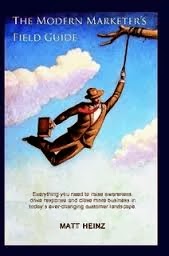
The Modern Marketer's Field Guide: Have You Read it? You Should

When it comes to B2B marketing, there are not a lot of great books out there. For the most part, the books that do exist focus on the novice marketer or focus on high level approaches. Matt Heinz has brought us probably the most practical book out there for the more advanced B2B marketer - the modern marketer. The Modern Marketer's Field Guide is a must read for any marketer that is looking to get to that next level. Matt has assembled a number of experienced marketers such as Brian Hansford,  Maria Geokezas, Jackie Jordahl and Bailie Losleben to provide the advice and guidance that many B2B marketers desperately need.

The book is broken down into the following sections:
  • Content Strategy
  • Demand Generation
  • Lead Management and Nurturing
  • Social Media
  • Events & Tradeshows
  • Sales Operations
  • Customer Loyalty & Retention
In just 137 pages, this book is jammed packed with tips and practical advice that you can start using today. For example, I used a tip from the chapter on blogging on how to improve the way I promote blog posts. I now post tweets that include the Twitter handle of anyone that I've quoted or mentioned in my blog posts. I'll try and incorporate more prominent people and then ask them to promote my post via Twitter. I've also challenged people via Twitter that I mentioned in my posts which has proven to be effective in getting a response. Not only does this help you promote your blog, it can also help you expand your social network, it helps you grow your social currency. I've also been inspired to think of other ways to improve my social presence such as starting a Twitter chat on an area that I have expertise.

The Modern Marketing Field Guide is Groundbreaking


In this book Matt covers new ground where most marketing books fall short. As an example, he focuses on B2B marketing past the end of the sale. For many marketers, the sales-marketing funnel ends with the purchase of a product. Matt takes this further. In his chapter on content marketing advice, he suggests that marketers need to develop content to help transform customers into advocates and to help keep them at this level. Matt is also a proponent of an advocate centric organization that listens to its customers, communicates regularly, provides practical advice and thought leadership, and owns up to its mistakes. This is sound advice that all B2B marketers and executives should heed to and I applaud Matt for focusing on this. Listen, the book isn't revolutionary as all of this content can be found on different blogs but I've found few sources that pull of these areas together into one book - that makes it unique.

Because the book is a compilation of mostly blog posts, it's a bit of a mishmash of content that can be jarring at times. Matt may have been in a rush to get this content out to the public and before long, the content may be obsolete. It's easy to see past this as the content provided by true industry experts who have been there and done that is just too good. If you are a B2B marketer, you will walk away with at least five ideas you can incorporate into your current marketing plans today.

I could keep going here but I want to encourage you to experience this for yourself. There are too many nuggets in this book from getting the most of webinars and marketing automation to advanced marketing metrics that you should be tracking. I highly recommend that you get a copy of this book today or download the free version.

Chad H.
@chadtev

Please Note: I did receive a complimentary copy of this book but I have no financial incentive to write a positive or negative review. From someone that has worked with many of the best marketers around the world for over 10 years I do feel I'm qualified to provide a through review.

Read more >>

Friday, December 27, 2013

The Slow Death of Email and What You Can Do About it

Being in the world of marketing automation for as long as I was, I was a bit jaded and defended email as a marketing tool like it was the be all and end all of marketing. Since moving to another part of B2B marketing and executing different types of email campaigns I now have a completely different perspective.

Email is in fact losing its touch. In this fantastic Slideshare by Gary Vanderchuck "How to Tell Your Story in 2014" he asks "When was the last time you were excited by an email?". I can tell you honestly that I don't remember. Perhaps it was a transactional email I received that told me a shipment had arrived? When was the last time you were excited about getting an email?

Gary goes on to show an image that says "Marketers ruin everything". What he means is that when marketers find a tactic that works, they can run it into the ground. The trick as I see it is to always staying ahead of the pack by using advanced marketing methods. I'm not alone in my thinking.
When was the last time you were excited to open an email?

The Evolution of the Modern Marketer: Email Tips From the Pros 


If you ever want to take a peak into the minds of the B2B marketers that are at the cutting edge of everything, head over to www.topliners.com. This discussion "Declining email response rates?" is a fantastic example as these top marketers are discussing their own email campaigns and what they have found to be successful. These are the new breed of marketers - the modern marketers. They of course live outside of Topliners but Topliners is one of the only public forums that you'll find them. Listen closely to what a few of these marketers are saying about email:

 Kristin Connell: IMO, I think it's too generalized of a statement to say that the "biggest pain point for digital marketers is declining email response rates." I think it's merely a symptom of the larger issue to digital marketers - to Eytan's researched response - in that it's becoming much more complex and doesn't just require better tools, but better, more "modern" skill sets.

Jennifer Gonzalez: I think declining response rates correlate to people trying to build their lists through less than ideal methods. For example, if you purchase lists to build up your database, your response rates will decline because you are emailing people who are not interested in your message.

lkincke:  I think it's a matter of perspective, it may feel (as a digital marketer) like response rates are the pain point but the truth behind having an engaged, responsive audience is having engaging content.  If your response rates are declining and all other factors surrounding your audience, deliverability, etc remain the same then the clear problem is in the content.  Being on the consulting/agency side the last few years I feel very strongly that the average marketer is reluctant to admit when their content might be the problem. It's much easier to claim it's an industry-wide trend than to attempt to optimize something you put together, no one wants to admit that maybe their baby is ugly. 

Dave Liloia: I think that there are two worlds at work here though. The first is made up of people like us who understand the space, know what is possible and work REALLY REALLY hard to be better every day. The other world is made up of people who still use a word that starts with B and ends with LAST and think that's an ok way of doing business.

Good data + good content + good process = good campaigns


Kurt Weisenberger: For LifeSize, since we've further segmented our database specifically by verticals for our nurture programs we've seen increased response rates. We also create very timely content on a monthly cadence for our primary prospects - and customers.

There are a bunch of good ideas here and they revolve around the following marketing concepts: segmentation, personalization, data and content. The tools are an instrument for success - they make it easier but it's more the mindset that makes these marketers have higher email response rates then the tools they use. However, is it enough?

Is it enough? Will These Best Practices Save Email? NO!


It's great that you have some advanced marketers that are creating a better, more engaging experience for their email recipients. Here's  the big question: even with employing these best practices, will email response continue to decline due to the overuse of this channel? Time will tell. These advanced marketers have proven that you can still be successful with email but it takes effort and commitment. It also takes knowledge. You need to know your customers - what they want, what their challenges are and what they would be interested in. I don't think it will be enough and Gary agrees with me.

Gary Vanderchuck summarizes this into the simple concept of "storytelling". Marketers need to communicate what the story of their organization is (its value proposition). To get the attention of potential buyers, marketers need to engage with their audience. Social media is a great channel to use for this purpose but it can't be used as a "blasting platform". You need to really engage your audiences.

While Gary focuses his story on driving marketers to use social platforms like Facebook, Twitter and Instagram as tools to tell your story, there is definitely more that can be done. Your story is being written outside of channels that you control and directly interact with.

Storytelling 2.0


While I agree with Gary that storytelling will win the day as it is the best way to convey a message, it goes well beyond the mainstream areas of social media. Marketers should be ensuring that their story is a positive one on online review sites such as Yelp, Linkedin, Quora and Google. Marketers should be leveraging their best customers - their advocates - to help spread this story. It should not just fall on the company to be the storytellers. Your customers and other influencers can assist here. Would you be more included to open or respond to an email that came from a company or from a friend or colleague of yours?

Email as we know it toady is definitely on the decline. You can use advanced methods to maintain a very good response rate but if you don't continue to evolve your marketing techniques, your efforts will be limited and will diminish with time. Best of luck to you.

Chad H.
@chadtev

Read more >>

Wednesday, October 30, 2013

Marketing Automation And Advocate Marketing: A Sweet Combination

waffles-and-syrup
Marketing automation + advocate marketing = delicious!
This post was originally posted here.

2013 has been a year of transition for me. My wife and I will be adding a new addition to our family, which will require me to paint a room pink and have tea parties (it’s a big transition after having two boys), and I moved from a behemoth of a technology company to a fast moving startup.
I have also moved from one area of B2B marketing to another. While the audience we focus on at Influitive is still primarily B2B marketers, the space that we play in is a bit different.

Marketing automation software is essentially a marketing database that runs marketing campaigns and provides insights on how those campaigns have performed. It’s the driving engine behind marketing’s efforts and can justify where marketing should be spending its budget. There are, of course, many other functions, such as sales enablement features, but let’s focus primarily on the core aspects of marketing automation.

Influitive focuses on advocate marketing, which is all about taking your customers, partners, employees and fans, and mobilizing them to support marketing campaigns, refer new business and help close deals. We call these super duper supporters your advocates and Influitive helps you tap into these amazing brand ambassadors.

Looking at these two areas of B2B marketing, they are not as different as they once appeared to me when I switched marketing disciplines.

Why advocate marketing and marketing automation are like waffles and maple syrup


Is it a coincidence that marketing automation and advocate marketing share the same initials, but in reverse? I think not!

Both areas actually work well together, like like waffles and maple syrup, for example.

Waffles, which represent marketing automation, are awesome by themselves, but they taste so much better with maple syrup, which is the advocate marketing component.

Adding advocates to campaigns which are being executed from your marketing automation system can amplify your existing campaigns and maximize your marketing automation investment.

5 ways marketing automation can tap into advocates to increase campaign effectiveness


Here are the top five recommendations on how you can leverage your advocates and advocate activities to maximize the effectiveness of your marketing automation campaigns:

1. Mix in online reviews to your lead nurturing efforts


The most recent Nielsen Trust In Advertising report found that 84% of buyers cited recommendations from people like them as their most trusted source when purchasing a product.

When mobilized, advocates can provide online ratings and reviews on sites such as G2 Crowd, TrustRadius, Quora, the Salesforce AppExchange and many others.

Instead of directing prospects to marketing materials that you have created, which are seen as less genuine in the eyes of your buyers, why not direct them to third-party sites where your advocates have left you glowing reviews?

You can also ask your prospects if they would like to connect with these advocates and set up a reference call.
tap-into-your-advocates
Did you know? Like maple syrup, marketing automation and advocate marketing have strong roots here in Canada.

2. Score leads based on acts of advocacy that have been performed


There are certain social indicators of advocacy which explicitly indicate that a prospect is more interested in your company as well as when their interest is peaking.
These can include:
  • Following your company on social channels such as Twitter, LinkedIn, YouTube, Google+, SlideShare, Spiceworks and Facebook
  • Sharing information about your company on social networks such as Twitter and LinkedIn
  • Mentioning your company on public forums such as Quora or Spiceworks
  • Responding to surveys and requests for more information
Many of your prospects are fans of your company even if they aren’t customers.

They may not have the budget or exact need at the moment for your services, they may have used your product or service at a former company or they may love what your company represents in their industry.

You can tap into this positive sentiment and track these activities.

As these activities increase, they should be scored appropriately, and an inside sales rep should reach out at the right time to see if they are ready to purchase or just to thank them for their support.

3. Add testimonials from advocates to landing pages to increase lead conversion


MarketingExperiments has published a number of case studies which show that including indicators of trustworthiness on your landing pages reduces friction.

There is no better way to do this than to use testimonials that you have collected from your advocates. You can gather testimonials that indicate the strength of your customer onboarding services, various benefits of your products and even justify spending the five minutes needed to read through an eBook.

Sprinkle in some testimonials and measure the increase in conversions.

4. Ask advocates to share your marketing content


These days, relying solely on email and even your owned social and web properties to reach your target audience is a mistake. The Nielsen Trust In Advertising report backs this up: content shared by people who are similar to your intended buyers is much more powerful and your prospects will be much more receptive to this information.

Have your advocates share your infographics, upcoming webinars and other marketing content with their social networks in order to maximize the effectiveness of the campaigns that you are running.

Be sure to accurately measure the leads coming from advocate activities by using unique URLs and/or designated landing pages.

5. Get feedback on your planned marketing campaigns


…before pulling the trigger on a larger audience. Advocates love to provide feedback. Why? Because they want to have their voices heard.

They feel connected to you and asking them for feedback enhances this relationship. Of course, you need to ensure you are recognizing their contributions for this to work. When performed properly, you can use advocates to provide advance feedback on campaigns that you want to run for a larger audience.

Think about it. You’ve spent or about to spend a significant amount of on a nurturing program, video, infographic or webinar series. Wouldn’t you want to get some honest feedback or test your messaging on a smaller, dedicated audience before you do a major campaign launch? This is easy to do with a co-ordinated advocate marketing program. Using advocates this way, you’ll guarantee a much better chance of campaign success.

I hope you will take advantage of these recommendations and add the sweetness of advocates to your marketing automation efforts.

Chad H.
@chadhorenfeldt
Read more >>

Wednesday, September 18, 2013

Improve Your Writing Style: Solve Their Problem, Not Yours

I was recently inspired by this simple yet insightful post by Jonathan Greene from MarketingSherpa on how a small change in how you phrase items can mean the difference in the response you get on social media.

Too many companies are too focused on what they want when they post updates on their social channels and don't focus enough on how their message will help the people that they are targeting. 
Just because you tweet, doesn't mean I care.

He provides a simple example of a tweet from the food chain Publix (I'm paraphrasing the tweets):
"Trying to eat for more fish? Try this. Featured meal of the week cod sauté... www.eatbetter.com"

He contrasts this with a tweet from a clothing retailer: "Get ready for Saturday tailgates with the new hoodie from xxx. Shop now at www.pleasebuysomething.com. 

Notice how in the first example, Publix has phrased their tweet in a way that seems like it genuinely wants to help its audience while the retailer is just straight out selling. It's more concerned with its own problem of selling hoodies. I believe that this messaging is OK for the odd tweet but that won't win loyal followers if that's the only tune you're singing.

How will this benefit them or solve their problem?


Jonathan believes that when creating content for your social media channels you should ask yourself this question: "Why should someone engage with you rather than someone else?”. While I think that is valid, I would suggest that when writing something that you would like your audience to read and engage in, ask yourself "how will this benefit them or solve their problem?". Either they will respond or it will just get lost in a wave of tweets and posts that people are exposed to online and on their mobile devices. You need to decide if you want to take a few extra minutes and put yourself in their shoes or take the easy way out and craft a message where you only think of what you need. 

Here's another great example from Starbucks:

It's clear what the benefits are from joining their loyalty program (which I'm a proud member of).

Other things to consider when crafting messages for your audience:

  • If they share it with their social network, will it make them look good? No one will want to share content just because you ask them to. Even if they are following you and you add the two words  "Please RT". 
  • How do I want my audience to perceive our organization (or yourself if you take a personal approach)? Do you want to be seen as a stuffy, high and mighty corporation that is only out to make money or a company that values its audience and wants to create a two way communication flow?
The bottom line is that you need to decide how you want to be perceived by your audience. Some simple steps and a different approach can increase your social media engagement and reach as well as create customer advocates. While this may not have a direct impact on sales, it will definitely influence revenue growth as you increase the number of people you're able to influence. 

Something to think about.

Chad H.
@chadhorenfeldt

Read more >>

Wednesday, September 11, 2013

Rethink Your Approach to Customer Testimonials: Mobilize Your Advocates

This was a post I originally created for Kapost's Content Marketeer Blog.

“I’m too busy.”
“I’m travelling."
“It’s end of quarter.”
“I never got your email.”

How many excuses like these have you seen when you’re asking your customers for a testimonial? How many letters, emails, calls, texts, tweets etc… do you normally have to send before you hear back from your customers? It’s been proven that B2B buyers see their peers as the most trusted source of information so you need to get these customer quotes but why does it have to be so difficult? Until you change your approach, this cycle will continue.


Photo credit: megawatts86
You need to stop treating your customers like they are an ATM of testimonials that you can always bank on.

You know that’s not sustainable. Let’s take the example of a farm. Farmers can’t just magically harvest their crops season after season. They need to plant the seeds correctly, nurture their crops, and practice proper crop rotation to avoid destroying the land. This same concept applies to how you interact with your best customers to get the customer testimonials that you need.

Advocate Marketing: Mobilizing Your Biggest Supporters 


The first thing you need to do is to identify which of your customers are your biggest supporters – these are your advocates. Search through various social media channels and take note of which of your customers have positive things to say about you. If you run a feedback or NPS survey, collect the names that provide positive feedback. Ask your customer-facing teams who your happy customers are. Now you are on the right track. You then need to mobilize and motivate these advocates. Start off by focusing your advocates on small missions that will help spread the word of your brand. For example, you can ask them to follow you on Twitter, comment on a blog post, or respond to a discussion on LinkedIn. Next, seek out their feedback and learn more about them. Consider asking advocates these questions:

  • What is something they accomplished with your product this week?
  • What new features would they like to see?
  • What are their interests and how would they like to be recognized?

  • This is part of cultivating the relationship with your advocates that is similar to the example of following proper farming techniques. Many of your customers are looking to be acknowledged or would like a spotlight to talk about what they love about your product or service. You need to create these opportunities to properly harness the power of your biggest supporters.

    This means that you will need to invest some time in planning out your advocate marketing strategy. By creating this interactive, two-way conversation with your advocates, you are creating real, reciprocal relationships that result in customer BFFs (Best Fans for Life). This process will also generate a larger pool of potential customers that you can seek testimonials from. You are now creating an extended marketing arm that will gladly speak on your behalf as well as provide references and case studies when needed. Stop the excuses and start mobilizing and nurturing your advocates today. Your customers and your company will thank you for it. 


    Chad H.
    Read more >>

    Tuesday, May 28, 2013

    The Rules of Lead Generation Defined – Book Review

    For years I’ve been helping B2B marketers execute on their marketing strategies and at times I felt like I was working from scraps of information here and there that I have learned over the years. The issue was that there really wasn’t a guide for B2B marketers. We now have one: The New Rules of Lead Generation: Proven Strategies to Maximize Marketing ROI by David T. Scott. David was kind enough to send me on a copy and I will provide a short review of his groundbreaking work.

    There are many smart marketers out there that have provided a bunch of insightful resources but there really wasn’t a straightforward starting point for someone new who was just breaking into the field. David’s book has helped bridge that gap by creating the B2B Marketing bible for demand generation marketers. I have not seen another book out there that is ambitious enough to include the majority of marketing tactics covering both offline and online formats.

    Who Should Read This Book: Anyone New to B2B Marketing or Wanting to Improve


    David makes it very clear whom he is targeting – it’s not the mom and pop shop businesses. He’s trying to help those marketers that are looking for information on principles and strategies of enterprise level lead generation. If you are someone that wants to get an introduction into some of the tried and tested tactics as well as the basics on putting a lead generation strategy together, this book is for you.

    Besides those that may be new to B2B marketing, I would also recommend this book to those that are trying to put the various pieces together and may have been thrown into the role or volunteered without a full background in this area. Have a look at this book – you will benefit from it.


    What Did I Like? A Focus on Strategy, Testing and Metrics


    Definitions & Strategy. I love this quote from David “You can’t build a strong house without a string foundation”. The book is split up into two major areas: definitions and strategy of lead generation and lead gen tactics.

    David makes it clear that you need a firm strategy in place or your tactics will fail and you won’t be able to convince your executives to get the funding you need. He provides you with the details you need to start the planning process so even a newbie can get this in place in no time. David starts off by defining some of the basic concepts of lead generation as well as focus on targeting and segmentation (My comment: YES!). Without these foundations, it can be difficult for marketers to get their bearings and execute on their strategy. This is something I have emphasized to many marketers over the years and it’s nice to see something in writing with a hard cover that that outlines this. Don’t miss David’s “5 Steps of a Lead Generation Campaign”.

    Testing. A number of resources will tell you what you need to do. David emphasizes throughout his book that you are never done tweaking your tactics. You need to constantly test as a best practice for one organization may produce the opposite effects for another. You never really know what works best unless you test in lead generation. He covers testing techniques from emailing to cold calling. David believes that there are no mistakes in testing lead generation – you need to experiment to find out what works best to reach your target audience.

    The Importance of Metrics.
    So you don’t consistently measure the effectiveness of your campaigns. David gets you. Marketers are really behind in this area and David documents in laymen’s terms how to measure the overall Return on Marketing Investment (ROMI) of your campaigns as well as some of the basic metrics. Running some campaigns and hoping for the best is not a smart option. Metrics should be part of your overall strategy and something that you present to executives on a regular basis. This book will help point you in the right direction. He has included a good example of comparing the success of display ads vs. a tradeshow and how to measure the impact to demonstrate which tactic is better.

    There are also many small tips that you’ll take from this book from where to setup your booth at a tradeshow to best practices on messaging for your Google Adwords campaigns. You will definitely walk away with something from this book that you can use in your day-to-day marketing campaign execution.

    Where it Comes up Short


    In this book David admits that lead generation is in a constant state of evolution. There is no way he can cover everything that is out there as well as all the emerging trends. There is just too much going on and David has done an admirable job. I would have liked David to have focused more on these areas:
    • Marketing Automation. David makes a passing reference to some of the vendors out there including Eloqua and Marketo. I’m a bit biased here but marketing automation is a major force in lead generation today and should have had a bit more space allotted to it.
    • Content Marketing. David dismisses search engine optimization as “passive marketing” and not a large aspect of lead generation. I disagree with his opinion here, as content marketing is instrumental in attracting viewers to your materials and assisting in generating leads and moving buyers through the sales and marketing funnel. This is probably an area that can be covered in a follow up in the next volume.
    • Mobile. There are a lot of opportunities here that should be better acknowledged when it comes to Iphones and Android.
    Another consideration for the next volume is to cover the area of advocate marketing. David dismisses the area of “word of mouth marketing” but advocates today are generating leads through referrals. These are solid leads that have a much higher conversion rate then some of the other tactics out there.

    The book also could have used more illustrations and practical examples. David has done well to focus on the various social media tactics such as Twitter and Facebook but there are some good examples that could have been included to help the new marketer grasp these concepts. Again, only so much that can be fit into this book. I also disagree with the book’s emphasis on list purchases when it comes to email. I would recommend spending the time to build your lists organically then wasting money and time on list purchases that can get you in hot water with your email or marketing automation vendor.


    My Takeaway: Read it, Live it


    Let’s face it - B2B Marketing is a newer concept that is still emerging. We’ve moved beyond the traditional type of brand marketing that you see in Mad Men and marketers need to understand these new frameworks. Another name for this book should be “Lead Generation 101”. The New Rules on Lead Generation will help marketers get to that next level and should be standard reading for those studying marketing in business school and those that are newer or less experienced in this area. Happy reading!

    Chad H.

    @chadhorenfeldt

    PS: The last chapter on integrated campaigns is a must as it ties together many of the concepts and has some good examples.
    Read more >>

    Thursday, April 11, 2013

    Advocate Marketing: An Introduction

    Very recently I made the decision to shift to a different aspect of marketing that involves mobilizing your biggest fans or your advocates. This was a bigger shift then I thought it would be after specializing in marketing automation for almost eight years. But it's been extremely exciting to be part of building a new frontier in marketing.

    To summarize this concept of advocate marketing, it stems from studies today that demonstrate that B2B buyers don't trust traditional forms of marketing like they used to. Online ads, email promotions and other forms of PR have lost the impact that they previously had with all of the noise that exists in today's digital world. Buyers are also skeptical of sales people. They are going to do their own research via their social networks and through other means. Buyers trust people that have the same challenges that they do. Buyers trust people that went through a similar buying process. This is where your advocates come in and can help help bring authenticity and assurance that the buyer is making the right decision. The difficulty for the seller is connecting buyers and advocates together in a mutually beneficial and efficient manner. The key to this is forming an advocate marketing program.

    Mobilize your advocates

    I've been doing my research on this topic and have listed some resources that I thought you would find useful as a primer on this topic:
    I hope you have found this useful and if you have other resources that primers for newbies in this area, please add these in the comments.

    @chadhorenfeldt
    Read more >>

    Sunday, January 20, 2013

    Survey Shows B2B Marketers Will Prioritize Email Marketing, SEO, Social Media in 2013

    This is a guest post from CRM Analyst Ashley Verrill. This is the first ever guest post on this blog in its seven year existence so you know the content is going to be good. Much of this verifies what I've been saying for years but it's always good to see this data for yourself for a sanity check. For example, before you go upload that list of emails that you just bought, read the data below...


    B2B marketers will focus their efforts – and dollars – on in-house email marketing, SEO and social media this year, according to recently released survey results.

    Research firm Software Advice kicked off the 2012 B2B Demand Generation Benchmark poll last fall. Their goal was to provide marketing professionals benchmarks to compare their lead generation performance to peers.

    The survey asked questions about the effectiveness of various channels, offers and content for lead quality and volume. Experts also queried marketers about their spending priorities in 2013, both over all and by channel.

    To help analyze these results, CRM Analyst Ashley Verrill interviewed Eloqua Marketing Programs Director Elle Woulfe. In this video, she discusses the survey group’s opinions bout the most effective channels for lead generation.


    And below are the detailed results of our survey.

    Most Popular Channels

    The graph below illustrates the percentage of marketing respondents that use each channel for demand generation.

    Volume of Leads by Channel

    The chart below is ranked from highest to lowest percentage of marketers identifying the channel as high volume.

    Quality of Leads by Channel

    The chart below is ranked from highest to lowest percentage of marketers identifying the channel as producing high quality leads.

    Cost by Channel

    The chart below is ranked from highest to lowest percentage of marketers identifying the channel as low cost-per-lead.

    Quantity of Leads by Content or Offer

    Here’s how each content or offer ranked from the highest to lowest percentage of marketers viewing them as high volume.

    Quality of Leads by Content or Offer

    Here’s how they ranked from the highest to lowest percentage of marketers viewing the content or offer as high quality.

    Most Popular Content or Offer

    The graph below illustrates the percentage of marketing respondents that use each content or offer for demand generation.

    Overall Demand Generation Spend Plans for 2013

    The chart below shows how marketers will adjust their spending plans relative to what they allocated for programs in 2012.

    Spend Plans by Channel This Year

    The chart below reveals how marketers will adjust their spending plans by channel in 2013 relative to 2012.

    About the Sample

    We collected 155 responses from Sept. 26 to Nov. 12, 2012. Below is a breakdown of the sample by industry, business size, marketing budget and seniority.

    Demographics by Industry

    Demographics by Number of Employees

    Demographics by Marketing Budget

    Demographics by Seniority

    Read more >>

    Monday, October 22, 2012

    Managing Your Social Network: Top Tools You Should Use

    After having my kids I took a step away from social media except for posting adorable pics of my kids on Facebook. That's about all I had time for - so I thought. My thought process was driven by a severe lack of sleep (which still exists) and a desire to focus on my core tasks which included leading my team. Here's the problem: my role is all about helping out customers and providing the best customer experience possible. In addition, establishing relationships on Twitter, Facebook and LinkedIn doesn't mean just setting them up and letting them languish. You can do this but when you need these people, don't expect them to respond. Like any relationship, you need to nurture your social network. This doesn't mean connecting with everyone but there are some tools I've started to use that are easy to use and can quickly turn you into a social media rock star.

    Top 5 Tools You Should Use to Manage Your Personal Social Media Network


    Before we start, when I refer to social media, I'm mostly referring to LinkedIn, Twitter and Facebook.

      Buffer
    1. Buffer. Buffer allows you to setup a bunch of Twitter, LinkedIn and Facebook updates to publish on a set schedule. That way if you have interesting things you want to post, you don't have to do it all at once or use another tool where you delay the posting. Just post items to Buffer and they will be published based on the schedule you've setup. In addition, you can use Buffer with other tools like Tweriod or Socialbro (recommended) that will tell you the optimal times to post your updates. That way your posts will get the largest possible audience. You can download a Buffer app for your Iphone or get the browser extension.

      Since using Buffer for only two months, my Klout score has jumped more than 5 points. I can't give all the credit to Buffer as I do have some cute kids and they do get a bunch of likes on Facebook but Buffer is a goldmine. When I have time, I find interesting pieces of information that I hope my audience will like and I post them using Buffer. It allows me to spend some concentrated time and then have posts setup for the next 2-3 days at least.
    2. Flipboard. Flipboard is an app for your Iphone or Ipad that allows you to easily flip through a summary of your social media networks. It allows me to review what others in my network have posted and either like, retweet, +1 or comment on what they have created. I can do it quickly when I'm waiting in line or caught in a subway or flight delay. I see it as the ying to Buffer's yang. Buffer allows me to post more material and Flipboard allows me to better engage my audience. I like it as I can easily listen to what others including friends, colleagues and customers are saying.

      Flipboard

      Flipboard has opened my eyes to new people and information that I would never have known about the flipping action of cycling through materials is fun for me. I can setup a number of boards based on my interests (for example, saved Twitter searches) and it also has a highlight reel of top pieces of information from your different social media accounts. I have used it to review my Google Reader RSS feed that I not looked at for 2 years (and never thought I would until my kids went to university). You can even blend Buffer with Flipboard by sending articles you find on Flipboard to Buffer's account email address which will queue up your posts via Buffer.
    3. Pocket (Read it Later). Pocket allows you to save web pages and articles to read them later. I typically use the Iphone bookmark plugin or the browser bookmarklet to capture pages. I then read them using the Iphone app typically when I'm stuck without an internet connection (on a plane or subway). This application also works with Flipboard so I can save items I find there to Pocket to read them later. Once I've read the full article (when I have time), I'll then decide if I should I forward it on to my social network. This is another great application that helps me feed my buffer stream.
    4. Rapportive (or Xobni). Rapportive is a Gmail plugin that allows you to easily social network with people you email to or who you receive email from. When you receive an email or type in an email you'll see their social media profile pop up on the right side and you can see which social networks they're associated with and if you're currently connected. If you're not connected, you can easily connect with them which quickly helps you grow your network. Xobni does basically the same thing for those that use Outlook and there is a version called Smartr for Gmail but I didn't like it as much as Rapportive. I do have Smartr on my Iphone as it does have all of the social media profiles for contacts that are on my phone but I haven't found a use for it just yet.


      What I typically do is provide an item of value (such as a follow up from a meeting) and then request a connection through Twitter and/or LinkedIn using Rapportive. I like this tool as I can expand my social network in the normal context of my working day. If I'm already connected, I may review their latest social media posts and decide to engage with them. I can also refer to this information during meetings etc...
    5. An Iphone. Tying all of these tools together is an Iphone (or an Android phone). In order to make it easy to listen, engage, connect with my social network as well as expand it, I need my Iphone as it allows me to do all of this anywhere and with the swipe of a finger.
    You don't have to right off social media or let it control you. You just need the right tools. Hope this helps. Do you have any tools you can recommend?
    Read more >>

    Tuesday, September 25, 2012

    Marketing Automation Not Just About Revenue (But it's Damn Important)

    I've had the following conversation a few times with clients who have implemented marketing automation: "so now that we have marketing automation in place we want to do ROI reporting - TODAY". Jumping into ROI/closed loop reporting right away can be difficult. You need to have the right processes in place including a strong relationship between marketing and sales as well as a focus on revenue metrics to name just a few of the requirements. A recent report by the Lenskold Group and The Pedowitz Group backs this up. Don't try and do everything at once with marketing automation - create a plan that will lead to incremental success but don't stop with just simple automation. Improving your organization's overall reporting structure and focusing on marketing's contribution to top line revenue brings many added benefits.

    Show me the ROI?

    While companies that have implemented marketing automation demonstrate a higher adoption of ROI type reporting such as sales metrics and revenue metrics, the focus is still on cost efficiency metrics, engagement metrics, lead metrics and response metrics (see the right side of the chart below).

    Source: Lenskold Group - 2012 Lead Generation Marketing Effectiveness Study

    There is no question that there has been a tremendous improvement in the number of companies that are now using some ROI type reporting (4 out 10 companies according to this report). That said, the biggest improvements with marketing automation are seen in increased quality and quantity of leads. Ensuring that the marketing automation building blocks are in place including automated lead scoring and nurturing help generate trust with sales and the rest of the organization. This can help you buy the influence that is needed when trying to close the loop and gain more insight on leads after they move to sales - especially with the long sales cycles that we see with many B2B companies. ROI reporting requires marketing to create a unified lead management process with sales and to also have support from IT when needed.

    Source: Lenskold Group - 2012 Lead Generation Marketing Effectiveness Study

    Take it to the Next Level - It's Worth it

    The bottom line is that it is worth it to get to ROI type reporting. Those companies that are using marketing automation and ROI metrics are seeing a measurable difference when compared to companies that don't use these similar metrics. For example, companies using marketing automation and ROI metrics have seen a 69% increase in marketing's revenue contribution. I would be rather a CMO at a company where I can demonstrate how my team is impacting sales and revenue growth then a CMO at the other company that has marketing automation but can't demonstrate top line revenue contribution. Marketing Automation gives you the tools to reach the promised land. If you can't see a clear path to get to ROI reporting, talk to your account team with the marketing automation vendor you work with - they should have marketing experts that can help.
    Source: Lenskold Group - 2012 Lead Generation Marketing Effectiveness Study
    Oh and if that wasn't enough, here are a few of the other key findings from the report for companies using ROI metrics to assess their effectiveness:

    • More likely to be outgrowing competitors
    • More likely to define their marketing as highly effective and efficient
    There is no question that there is some tough roads ahead for companies that go down this path. What this report backs up is what I see every day. The companies that roll up their sleeves and go all in get the best results. This requires patience, determination and proper planning. Good luck to those going down this road and congratulations to those that are already reaping the rewards.

    Additional Sources:
    Read more >>

    Wednesday, September 12, 2012

    When Lead Scoring Will Fail

    Reasons lead scoring fails
    Having worked with B2B marketers for many years, it's typically a no-brainer when someone asks me "should we implement lead scoring?". Lead scoring, which is the process of automating the qualification of leads that you generate, is a key stepping stone to get marketers to the next level. Having said that, your company may not be fully ready for it and there are some steps to start moving in the right direction. Lead scoring can't be used as a band-aid for companies that have incomplete processes. I'll outline some items that will prevent your organization from a successful launch of lead scoring. I'm not saying that you need to nail all of these before you start down the lead scoring path. Lead scoring evolves over time. However, you should consider these items.

    Top Five Reasons Lead Scoring Will Fail

    1. Not enough leads. I read a recent Marketing Sherpa article about a company that was able to produce some awesome lead gen results without a CRM or lead scoring. You can get away with this if your a small company starting out and your still ramping up your demand generation efforts. You really need a large supply of leads to justify lead scoring. Lead scoring is disruptive for organizations as your automating the prioritization of how leads should be followed up on. If there are not enough leads then sales or the tele-prospecting team will jump on every lead regardless of the best lead scoring system put in place. People need to make their quotas.
    2. There is no end goal. Lead scoring can't be something that you setup just to cross it off your marketing automation checklist. It must be setup with a goal in mind. Typically it has a dual purpose: it helps sales prioritize the follow up of qualified leads and it helps marketing determine the type of offers that should be sent as lead scoring is tied to the different stages of a buyer's journey. Possible goals can include increasing the velocity of leads through the sales funnel, increasing the overall revenue generated by sales, launching a specific lead nurturing campaign that is geared to leads with a low lead score etc...  You also should consider the emotional side (have you read Switch?)- making sales people happy and giving more power and respect to marketing. These aren't as flashy to the CEO but they make things more enticing for both sales and marketing. Besides winning a Markie (special award for marketers), the biggest award I've seen given to a marketer was receiving recognition from the sales team of a job well done.
    3. Unrealistic expectations. Lead scoring at the moment is still not a science. It will not slice bread. It will not make your product more attractive. It will not generate more leads (it may reduce the number of leads). Many marketers and sales teams see it as the bright shiny toy on the shelf that they have to have. They think it will solve all of their problems. It won't. It will promote some great conversations and it can help you improve your lead generation engine but this will take time. Because lead scoring is not a science it will require some tweaking and fine tuning. Don't expect it to move mountains after a few days.

      I also see sales teams that want to take over the lead scoring discussions and build out very elaborate and complicated lead scoring models that use some of the traditional BANT criteria that sales teams have used for years to qualify leads. I don't recommend that lead scoring be used for that purpose and I'm not alone (See: Why BANT No Longer Applies for B2B Lead Qualification).  Automated lead scoring is best used or doing an initial qualification of leads that meet a minimal level of an agreed upon definition between sales and marketing of a "qualified lead: and then having a tele-prospecting team do further qualification to see if a real sales opportunity exists. At that stage, there are different tools that sales can use to determine if a prospect is really engaged or not.
    4. Too many lead scoring criteria at the beginning. I recommend using five criteria to track the profile of an individual (job role, industry, company size etc...) and five criteria to track engagement (recency and frequency of web visits, social media activity, email responses, form completions etc..) to start off with. Test out the criteria and see if it's working after three months. You may find that you can add some additional criteria based on discussions with your sales team. Build in a schedule for a regular review of your lead scoring criteria.
    5. Not enough data. I still help review about one lead scoring model each week on average and one of the biggest issues I see is lead scoring programs that are scoring on data points that don't exist. Your lead scoring criteria can't be created in a vacuum. For example, if your going to score leads based on industry, review your web forms to determine if you are collecting that data. Review your live events to see if you ask that question at booths and/or roadshows. The score is only as good as the data you are collecting. You may even require some additional data tools to clean your data and append additional information.

      In addition, you need to review your lead scoring model every 3-6 months to ensure that it's still producing enough quality leads. If you don't do this, sales will ignore the lead score and you will be back to square one.
    Another  top reason that lead scoring typically fails and a common thread through these five items is the lack of alignment between marketing and sales. These two teams need to work together and have common goals to get the most out of lead scoring. I have seen lead scoring work when the end goal was to help marketing segment their database and serve up different pieces of content but you can only get so far without having a good relationship with sales. The success of your business depends on a close tie between these two groups.

    This is not meant to discourage you but it's something to keep in mind when thinking about a lead scoring project. Many companies I work with will concentrate on getting their database in order first as well as creating nurturing paths to help enrich their database before tackling scoring. It comes down to your priorities.

    Articles to consider: Lead Scoring Has Drastically Changed – How do You Measure up?

    Image courtesy of Beachhead Marketing

    Read more >>

    Monday, September 03, 2012

    Improving Your Upsell/Cross Sell Conversions

    Cross-sell
    I was recently asked about approaches to take for creating a cross-sell nurturing program - what are the best practices? I could highlight a few examples of some well crafted emails and messaging but getting a good conversion rate goes well beyond a good email design and an engaging call to action.

    Amanda Hinkle wrote a great a simple yet powerful article over at MarketingProfs "Three Cross-Sell and Up-Sell Tactics to Improve Email Marketing Results". Her first point "Take Advantage of Available Data" really hit home with me. If you have a marketing automation tool that can track the digital behavior of your web visitors, then you can review which pages your customers have visited on your website. Take a first pass at some of the products your looking to cross sell to existing customers and review which customers of other products have browsed those pages. That simple step can provide you with a seed list for contacts to add to your first cross-sell campaign.

    You can also rely on traditional methods such as truly understanding the sweet spot of who buys your products and looking for similar customers in your database. Try this - instead of just firing off campaigns to anyone who matches your criteria, start with those who are actively engaging with you. This includes those that are responding to your emails, visiting your website regularly and/or agreed to be customer advocates (references). Segmenting based on behavior has proven to be a major contributor to marketing success,

    A lot of this all comes down to data - start small and focus on who you are targeting. The list and not the email creative is more important in executing a successful campaign. Thoughts?
    Read more >>

    ShareThis

    LinkWithin

    Related Posts Widget for Blogs by LinkWithin