Sunday, July 04, 2010

Tips to Improve How You Segment Your Database

Hi everyone. Between taking a nice vacation, recovering from the vacation and then work travel, the ‘old blog was collecting some dust. During my travels and discussions with customers, one of the items that keeps coming up is the need for clean, complete and accurate data. When you have the right data you can laser focus your marketing efforts and achieve a higher response from your marketing campaigns. This hopefully results in more sales opportunities and closed business for your company and that nice bonus that you deserve.

Let’s face it, there is no magic wand that will instantly get you the data that you need for your segmentation goals. It’s going to take some time and effort but there are some ways to automate the process and I’m going to focus on two examples that I came across this week. Before we get to these, let’s examine the pitfalls that some marketers fall into when it comes to collecting data.

Reality Bites: We’re Too Busy, We Change and We Lie

One of the easiest ways to build out the profile of individuals in your database is to ask people to provide you with the information you need for your segmentation purposes and to make sales happy. This is typically done when visitors arrive on a landing page where they are encouraged to fill out a form to receive something in return (demo, white paper, webinar etc…). At times, you may see a really long form that asks for everything from your name to the name of your pet (Ok, maybe not the name of your pet but you know what I mean). Here are the problems with this approach:

  • If you ask for too much information, your form conversion rate will go down. The more fields you have on a form that is designed to generate leads, the greater the chance that a web visitor will not the complete the process. The reality is that buyers typically need the information you’re offering but can be impatient and feel that if there is too much effort for a simple piece of content, it’s just not worth it and move on.

  • People lie. Don’t tell me you’ve never entered in a fake name and phone number to download something. You really need to consider the information that you ask people and when in the buying process you are asking for it. Requesting web visitors for the time frame in which they are looking to buy your product can be problematic as the person completing the form may lie to avoid getting a call from a sales rep even if they are looking to purchase in the next 3 months.

  • Seasons change. People change. The interests and position you have today may not be the same three months down the road. Are you allowing people to update their information?

You’re probably saying “well, I need that data to properly segment and route potential leads so I have no other choice but to have those really long forms and ask for everything up front”. There are other ways to collect the information you need but it involves being patient and having the right tools. When creating a lead gen form remember to focus on collecting data that you need at that point in time and to ensure that there is a true value exchange of information. Therefore, while it may be okay to ask for the complete address of a registrant when they sign up to receive your newsletter, you need to ask yourself: Do I really need to collect this information now? Is it justified for me to ask for this information for what the web visitor will be receiving in return? Remember to keep the subscriber in mind as your work through your data collection processes. Let’s get to some possible ideas that will help you improve the way that you collect information from your subscribers.

Example 1: Dynamic Email Content Based on Email Clicks

When asking an email subscriber to provide any of their private information, it’s best to do so in a way that makes it as easy as possible for the subscriber and is as unobtrusive as possible. I recommend a method called “Progressive Profiling” in which you collect information from the subscriber over time. For example, if you’ve entered a new subscriber into a lead nurturing program you can ask for additional bits of info such as their title, major challenge or geographic location as they download pieces of content from the emails that are part of this program. This subtle approach works well and has produced high conversion rates (I need to dedicate a post just on this topic).

This past week, I read about a fantastic approach from Avid that makes it easy for email subscribers to customize the email content they receive from Avid as well as let Avid know what they are interested in. The other bonus for Avid is that they don’t need to send different versions of the newsletter – they just send one version that dynamically changes the content based on the subscribers preferences. Just by clicking on a button in the email, the subscriber will receive an updated email newsletter with content that is tailored to their needs. Avid now has additional data they can use to send more targeted communications and their approach could not have been easier for the subscriber.

How did Avid do this? You can get your “geek on” read the full details but I’ll provide you with the Coles notes version. On the initial email newsletter you receive when you provide your email address, you are encouraged to customize future newsletters by selecting the topics that most interest you. When a topic is clicked on, the registrants profile is updated through the magic of marketing automation and can be used to determine which content should appear when the next newsletter is sent. You can try this out yourself here: http://forms.avid.com/forms/spotlightdemo
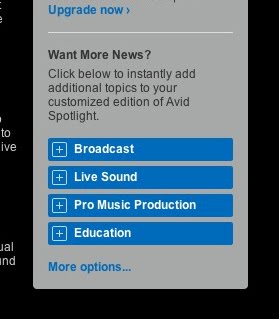

Let’s move on the second example from SmartBrief that can help you get your subscribers to update their information.


Example 2: Optional Profile Update When You Clickthrough from Email

As a manager I’m always looking for tips on improving my leadership skills and one newsletter that I read consistently is by SmartBrief (which I highly recommend). While SmartBrief does ask for a fair amount of information up front, subscribers get tremendous value in the content and it’s worth it. Last week I had a unique experience when I clicked on an article from an email they sent me. Before I was taken to the article, I came to a screen that gave me the option of updating my profile or going right to the article:

While I don’t know how successful this approach was for SmartBrief, I thought it was innovative and shouldn’t be too difficult for marketers to replicate (ping me if you want to discuss how to do this in more depth). When I clicked on the “Update My Profile” button, all of my information was pre-populated which made it easy for me to scan it to see if any updates were needed. I also liked how I was thanked for being a loyal newsletter subscriber as well as provided with an offer of the 10 most popular stories from the past year if I chose to update my profile. I found this approach unique as I didn’t find this method too intrusive. I would recommend that marketers experiment with this tactic if they’re looking for a way to get subscribers to update their profile.

Both examples demonstrate how you can collect additional data for segmentation purposes in an easy and non-threatening approach. Hopefully this will spark some ideas of your own and you can work on improving how you get a more complete and accurate view of your database to assist you in your marketing efforts. Good luck!


Until next time.

Chad H.
Read more >>

Thursday, April 22, 2010

Customer Service at its Best: Wind Mobile

For someone who lives and breathes customer service as part of my profession I am very critical with companies I deal with as I have a high expectation on the type of service I should receive. I’ve finally found a company that does a fantastic job at servicing its customers across many channels and you know I have to blog about it.

Up here in Canada we’ve had three main mobile providers for as long as I can remember. I won’t go into the history of these guys but I can tell you that we have been royally screwed with poor customer service, high prices and a general disregard for the customer. Late last year Canada finally agreed to open up competition on mobile carriers and it’s been a breath of fresh air. Enter Wind Mobile into the picture. Amen.

At the same time that Wind was getting set up in Canada, I was focused on tightening down on our spending with a new baby and only one income. I noticed that my wife has had some outrageous mobile bills due to our close family that we have in the US and in other parts of Ontario. There were probably ways that we could have saved money by dialling a number before making a long distance call but why does it need to be so difficult? Wind offered us unlimited calling in Ontario and for an additional small fee, unlimited calling to the US which is not a service that the other “big 3” provide (unless I’m wrong). This was a small miracle for us because it essentially cut our mobile bill by a third and we quickly became one of their first customers. I can’t say I’m usually an early adopter but in this case I was willing to take the risk. Here’s the good part – besides the cost savings we enjoy, the story gets better. The company itself continues to demonstrate that it cares about its customers and these are some lessons that we can all learn from them.

Customer Service 201 from Wind Mobile

Wind goes way beyond 101 so that’s why I’ve started at the 201 level. Have a look at these and see if you’re company is following them:

  • Easy Access to Customer Support: This is a no-brainer yet there are many companies out there that make you jump through many hoops to get the help you need. While Wind provides the ability to email them, I’ve called them each time. I’ve found that I never have to wait more than a few minutes and the agents I’ve spoken with have all been very nice and courteous. For example, I’ve complained that the there were long distance charges on my bill due to Wind not having its network fully up and running. They quickly corrected my bill with no argument. Activating my phone could not have been easier and they were helpful in porting over my old number from my previous carrier (a newer development in Canada). Overall, I’ve always felt that they cared about my business when I interacted with them which is more than I can say for the other “big 3”.

  • Provide a public forum for feedback: Ever go to a seminar and have the instructor/presenter ask you to fill out a survey on how they did? Ever thing to yourself “this feedback will probably be tossed and is a waste of my time”? Wind takes this head on by providing a public forum where customers voice their opinions - good and bad. Wind

    The result is the appearance of a company that is bold and transparent and has a growing customer community. I loved this one discussion where a dissatisfied customer explained why he decided to go back to a previous mobile provider. When another person (his forum handle is @TBR)chimed in to further criticize Wind he received the following rebuke from a Wind supporter:

    @TBR - Are you even a Wind customer? From other posts I have read, you are not. So I suggest you do not comment on this type of stuff until you experience Wind's service yourself. The poster joined Wind to make up his own mind on their service. As he stated he read all the complaints but wanted to make an informed decision. So I suggest you STOP being a troll loser.

    Now that is a loyal community! How much more real does the company appear to you with a forum that is public?

  • Listen and respond to customers: Wind is actively monitoring the forum and responding when needed. One of the complaints that we had when we first starting using the service was the ring beep you heard when someone tried to call you. It was the European standard and not the North American standard. A number of people trying to call my wife were confused when they heard this weird ring and unfortunately hung up. Let’s just say many Wind customers were not happy with Wind over this. Wind listened to the complaints and modified the ring beep within a reasonable timeframe which made many people happy.

    Wind also conducts surveys and has their CEO regularly contributing to the corporate blog. Here is one quote that is inspiring for all Wind customers:

    Over the past three months, our network and service offering have improved tremendously. I’d like to thank those of you who’ve been contributing constructive comments here on the site, via other social media sites like Facebook and Twitter, and through our Care Centre and stores.

    Wind is setting a good example on how companies should be using various social communities to retain and acquire customers.
  • Provide existing customers with deals – not just new customers: When Wind launched a campaign to give customers $150 in credits they didn’t hide this promotion from existing customers. When you login to your account details, you can clearly see that you can get this credit.
    image When I called Wind, they quickly activated this promotion.

How Can Wind Improve its Customer Service?

While Wind is doing a great job, there is always room for improvement. Let’s look beyond the details of individual complaints. Here are a few general suggestions that I would recommend based on my observations:

  • Respond better on Twitter. I know from my own experience that I fired off a few positive tweets regarding Wind and didn’t even get a retweet or even a thank you. That’s OK but those little things can build loyalty. We’ll see if they read and respond to this post.

    What I found even more disturbing was that when I did a quick Twitter search on “windmobile” there were several inquiries that were not addressed. It’s 2010 Wind Mobile! Time to step it up and engage customers on this channel. Take a look at @comcastcares and follow that example. I must say, they do a kick ass job of responding on Facebook so maybe that’s where they’re focusing on.

  • Enhance customer communication. Below is the only email I get from them.
    image
    There is an opportunity to drive people to new blog posts or promote any new features within this transactional email. In addition, Wind could consider sending an additional monthly e-newsletter. I’m not saying I want to get spammed but if they have promotions or if they’re improving service – I would like to know! Consider creating an automated welcome nurture program for new customers to gauge them on their experience for the first three months.

As my NYC tour guide told us “so they’re you go”. Wind Mobile provides some great examples on how you can take your customer service up a notch – regardless if you’re a B2B or B2C company.

Chad H.

Read more >>

Wednesday, April 07, 2010

Wake up and Send More Email

Social media is all the rage these days and I’m in complete agreement that it should be part of your campaigns but let’s not overlook the power of email and how it’s being underutilized by many organizations today. From conversations that I have with marketers I sometimes sense this feeling of anxiety when I recommend that they should increase the frequency of emails that are sent to their opted-in database. This fear stems from a number of different sources and I typically hear the following:

  • We don’t have anything good to send to our database
  • We don’t have any time-sensitive events that we need to promote
  • We’re sending too many emails already
  • We need to cleanse our database first before executing campaigns

Too Many EmailsDon’t get me wrong, I’m not saying that you should go and carpet bomb your database with a press release on how your company now has an office in the North Pole to service the growing northern population. On the other hand, what you may find is that there are opportunities to send more relevant and timely email communications to certain segments of your database. Let’s take a closer look at these sources of fear when it comes to pulling the email trigger to help marketers break free from their “email frequaphobia”.

”We don’t have anything good to send to our database”

There is an inherent issue with this statement. When the marketer says “we don’t have anything good to SEND to our database”, they assume that the marketer is defining how and when the buyer should receive information. In today’s B2B purchase process, the marketer is no longer in charge. The marketer needs to make educational materials that will guide the prospect along the buyer’s journey as they progress through the evaluation stages to the eventual product purchase. If this is not done, there is a greater chance that leads will leak out of the sales and marketing funnel and may go to the competition.

Therefore, marketing organizations can no longer use this statement as a crutch. What is recommended is to map out the content that prospective buyers would be interested in at various stages of the sales process and automate the delivery of this communication. In terms of having the necessary content, many organizations may be surprised at the content that they already possess. Review your website and other sources such as blogs and previous campaigns and look at ways that content can be repurposed (I talk more about this here: The Recession is Here - Time to Become an Eco-Marketer). If the email content is relevant based on a prospect’s recent behaviors, then increased frequency becomes a non-issue. Yes, these initiatives will require resources to prepare the content as well to set up these types of campaigns but it is well worth it – trust me. You can also take advantage of technology to at least help with the campaign execution piece. My recommendation is to start small and show results and then build on that momentum.

“We don’t have any time-sensitive events that we need to promote”

This statement is very similar to the first section. Just because you’re not presenting at tradeshows or executing monthly webinars doesn’t mean that your database should not be receiving regular communication from you. Here are a few campaign ideas to consider when thinking about providing relevant and engaging content via email:

  • Email newsletters. This tried and true communication piece will work as long as the content is good (i.e. more educational than promotional)

  • Welcome Program to ramp up new email subscribers on the resources available to them. See: Ready to Welcome Your New Leads?
  • Lead Nurturing Programs for leads that are currently evaluating your product or services
  • Longer term lead nurturing programs for leads that have been passed back to marketing
  • Reengagement Programs. These are programs that target leads that are associated to stalled opportunities or contacts in your marketing database that are no longer responding to your emails.
  • Additional event triggered communication. For example, I describe how you can engage web visitors that have searched for something on your website but couldn’t find what they’re looking for: http://eloqua.blogspot.com/2010/02/engage-search-visitors-viatriggered.html
  • Customer communications. This may include emails for new clients, timely product usage information, regular tips and tricks and renewal notices. It all depends on your type of business but I’m sure there are not many companies that couldn’t improve in this area.
  • Social media highlights. If you have a blog, Twitter account and/or YouTube channel, consider blending the best content from these different sources into an email that can be shared by your email subscribers. Don’t assume that just because you tweet that people read it. Use email as the glue to your social media efforts to get the most out of your social media content. Consider adding RSS feeds from these channels directly to your emails (an oldie but goodie: Latest Trends in Email Marketing: RSS and Calendar Reminders).

Part of this effort is creating a lead nurturing culture in organizations which I’ve outlined here: How To Build a Lead Nurturing Culture Part I.

“We’re sending too many emails already”

    You may have this gut feeling that your sending too many emails to your database and that if you keep sending emails that your subscribers will call it quits. This issue tends to generate even more hysterics in larger organizations. The first thing you need to do is to get a handle on how many emails that you're actually sending. You should be able to get a sense of he average number of emails that the majority of your database is receiving within a given time. If your data is telling you that the majority of your database only received 2-3 emails within a three month time period, there may be an opportunity to send relevant content to your database to keep them engaged and maintain the brand awareness that helped get these subscribers in your database to begin with.


    Make sure you can easily obtain this type of email frequency information and monitor it regularly. What you don’t want to have happen is create a multitude of automated programs and the realize that a proportion of your database is in fact receiving too much email. For more information on this topic, see: What’s the [Email] Frequency Kenneth?


    “We need to cleanse our database first before executing campaigns”

    Ok, your database is a bit of a mess and it’s taking time to clean it up. Guess what – you’re always going to have some data issues. Your database will never be perfect. Don’t use that as an excuse to not start on a simple nurturing program to a specific segment ( for example: a specific industry) or creating a welcome program.


    In addition, you can even use automated email programs to collect more information regarding your subscribers over time which can help clean up your database. In fact, when you start sending out regular email campaigns, you’ll soon see who in your database truly wants to hear from you based on the digital body language that these subscribers are exhibiting.

    Keep this in mind: The more you wait before you execute your campaigns, the more stale your database gets. Don’t let this happen to you. Start thinking about what you can do to increase the number of quality interactions that you can have with your database via email. Break free from email frequaphobia and leave your competition in the dust.


    Chad H
    @chadhorenfeldt

    Photo Credits:

    Read more >>

    Tuesday, January 26, 2010

    5 Marketing Automation Email Tips

    I have the pleasure of welcoming a new bunch of Eloqua team members who we start off with a boot camp here in Toronto so they get to know each other and the rest of the company. I’m going to outline some of the cool things our customers do but I’ll also sherpa walking carrying loadprovide a short intro on what I do in my day to day. To make it easy for everybody, I like to describe my role as a sherpa for our customers. Not a marketing sherpa (that name is already taken) but a marketing automation sherpa as my job is to guide marketers on a journey to help them reach their goals. Like any sherpa that is climbing a mountain, I need to have a number of tools handy that I can recommend depending on the situation (yeah, I got a big bag of tools).

    In this post, I’m going to outline some tips you can use to engage or reengage your email subscribers. While you don’t need a marketing automation tool, these tactics can take a long time to create and execute manually. Because the process is automated, with marketing automation, you just need to define your list criteria and business rules once and the program manages the rest for you.

    Tips To Engage and Reengage Email Subscribers

    Good for you! You’ve started to build your marketing database through your different marketing channels. What are some of the ways to ensure that your messages are breaking through the inbox? Here are a few ideas:

    • Send out the same email with a different subject line. In a recent case study on B2B Online, NIIT, a global learning solutions company, created an automated email program that engaged subscribers based on their “Digital Body Language”. The program would automatically detect if the email recipient didn’t respond to the first email and send a subsequent email that was the same as the first email but with a slightly different subject line. Response rates for this campaign were greater that 20% which is very good for B2B campaigns.

    • Send out the same email with a different a “From” address and subject line. You can send the same email or a slightly different email with a different “From” address. For example, if you’re sending a newsletter, you may have a corporate email address such as newsletter@company.com as the address the newsletter is coming from. The follow up email to those that didn’t respond to the first email may be from the CEO or an account manager. You would be surprised how experimenting with slightly different “From” addresses can improve response rates. An IDG Research has demonstrated that the name of sender affects open rates twice as much as the subject line. The trick is to automate the follow up emails to non-responders so the technology does the work for you and you can move on to other initiatives while maximizing every drop from your campaigns.

      In a post that I wrote over two years ago I outlined how we pushed this even further by sending a follow up email to non-responders that looked like a forwarded email. The original email was sent from a VP and received decent response. The follow up email looked like the Account Manager forwarded the VP email to the subscriber and said “Hey, you may have missed this great email below”. The response rates tripled with the different “From” address.

    • Personalize the Email Heading. Ok, we covered the “From” address and the subject line – what’s the next thing you typically see when you open the email? The heading or title. While your first campaign may have had a generic heading that was geared to a specific vertical or focused on your offering, think of an email heading that is targeted at the specific job role of the email recipient. Here is an example and you tell me which heading works better if you’re a CIO:
      A. Does your IT Infrastructure keep you up at night?
      B. As a CIO, we know your IT Infrastructure can keep you up at night.

      The second example is more personable and seems like you truly understand and want to solve the problems of that poor head of IT. You may be saying – how can I personalize the heading for each of my email subscribers? marketing automation systems allow you to add dynamic content sections (not just a personalized field) and rules. I recommend creating a few personalized sections based on the largest and most important segments that are part of your campaigns. Think of the time that you’ll save by only having to send one email yet knowing that the extra hour you spent adding in some personalization will improve engagement and campaign success.
    • Stop with the Email. You may be saying, what a minute, what are you trying to pull here as this is a post on marketing automation email tips. Well, sometimes, as a sherpa, I have to reach further into my bag as we have some email subscribers that are just not responding anymore to email. What do we do? Delete all of these contacts that you spent good marketing dollars on? I would say that you may need to take a closer look at the contacts that didn’t respond. If these people are in the right industry and have the right title, it may make sense to have your inside sales team call some of these contacts to see if they still exist or outsource this task to companies like ReachForce or MarketOne. Perhaps send a post card to an unresponsive executive with an incentive to respond as Trinet did with with amazing success. Don’t forget about the other options that are out there and rely on email as your all in one magic bullet. You can also try some unconventional methods like confirming that these contacts are still valid by using LinkedIn.

    I hope that you found these tips useful and I wish you well on your marketing journey.

    Chad H.
    @chadhorenfeldt

    PS: BONUS: Another email tactic you can use is send an HTML email and then send a follow up text email to non-responders. MarketingSherpa has reported that almost two thirds of business executives are viewing emails on mobile devices and text based emails may get more traction.
    Read more >>

    Tuesday, December 22, 2009

    5 Mistakes B2B Marketers Need to Avoid in 2010

    2009 has been a long year but as I reflect back on my many conversations, I've created a top 5 list of items to avoid in 2010:

    1. Not having a defined social media strategy

    sugar pour You would be surprised by the number of companies that say “yeah, social media is important but it’s not important to us at the moment”. In 2010 you will not have a choice but to make social media part of your overall marketing strategy. If you’re company is just breaking ground in this area, at the very least make a commitment to listen to what people are saying about you. For example, check out http://addictomatic.com/ and search for your company name. Most likely, you are being mentioned. Now search for your competitors. This may be enough of an impetuous to get moving on a reactive social media strategy such as “monitor what is being said about you and respond where needed to protect our brand”.

    Addictomatic is a free tool that will get you started down this path. You may want to look at some of the paid services out there such as Radian6 or Vocus. Once you have this down, you can then start working on a proactive strategy and determine what it will take in your organization to make this possible. If you’re having trouble with this concept, skip down to #4.

    2. Not sending relevant and timely messages

    2009-12-22_0215 If you continue to only send email blasts on a schedule that you dictate to your email subscribers, you risk massive list attrition, damaging your overall email deliverability and a loss of sales and sales opportunities. The key to sending relevant communication is to automate the process. This may mean creating a lead nurturing program for new inquires on your website or using dynamic content in emails that presents a more relevant message. This concept needs to be at the forefront of your planning in 2010. If you have an automated program in place, look at ways that it can be adjusted to get an even higher response.


    3. Not having an accurate picture of your database

    BadData Did you have an email campaign this year that received a lower than expected response and blamed the creative or the offer on the poor results? It may well have had to do with these items but did you consider looking at the state of your list and/or database? I highly recommend that you query your database to understand how "active" your contacts are. You need to understand the true state of your database so you can make decisions on what you need to do in 2010 to achieve your goals. Knowing how many contacts in your database have bounced and unsubscribed is no longer enough - you need to understand how much "dead wood" you're carrying around.

    In addition, your data may need a "face lift" or a complete makeover as it's either inaccurate or out of date. Consider using data tools that are included in your marketing automation system to clean up your data. You can also look at services like Fresh Address (http://biz.freshaddress.com/) that can clean up your email addresses or providers such as ReachForce or MarketOne that can generate leads based on your specific needs.

    4. Not taking advantage of your online community

    knowing-is-half-the-battle-300x282 As a marketer, there are thousands of online resources out there that you can take advantage of to improve your marketing skills. You can even get a marketing degree from schools online. However, this is just “half the battle” (why am I having memories of GI Joe cartoons from the 80s?). You need to engage other marketers to really learn and get the most out of the resources that are available and there are online communities that are waiting to be taken advantage of. Here are some things you can do today:
    • Search for a LinkedIn Group that interests you and join it. Participate in discussions or start a new one yourself. Not sure which group to join? See which groups your connections have joined or ask them directly.
    • Ask and answer questions on LinkedIn. You may see a theme here. There are a lot of experts in your area that are willing to help you so have a look at LinkedIn Answers. To begin, I recommend browsing the Marketing and Sales category and looking for a subcategory that interests you.

    • Join Twitter and look for a Twitter List that includes tweets about areas of marketing that interest you. To get started, use a tool like http://listorious.com/ that lists some of the top lists on Twitter. An easier idea is to look at the list of a tweeter that you admire and follow their list. Here is my Twitter list that I generated that I follow daily. Again, to really engage the community you need to ask questions and respond.
    sodial-media-success This is just the tip of the iceberg. At my company, I’m an active participant in our customer only community. If you’re lucky to have such a community available to you, take advantage of it. Find out who the people that contribute the most and try and help them out if they need it. They will hopefully help you in return. You may want to look for them on LinkedIn or Twitter and follow some of my recommendations above. I’m a big advocate of Xobni that is a plugin for Outlook. It helps me easily add people to my Twitter and LinkedIn communities – check it out.

    5. Not using best practices or acting on lessons learned from past campaigns

    While this may be a given, you need to be continuously updating your skills to get the most out of your marketing campaigns. I highly recommend that you subscribe to resources such as the Marketing Insights blog, MarketingSherpa, MarketingExperiments, SiriusDecisions, ClickZ, and MarketingProfs to name just a few of the great resources that I use on a daily basis. This is on top of the number of great articles that my community of LinkedIn and Twitter provide me.


    I also recommend testing your campaigns by using A/B and multivariate testing for emails and landing pages. What you may find is that you're going to be creating your own best practices based on what you found successful.


    My last point is to accurately track your campaigns so you can easily see why certain campaigns were more successful that others in order to reproduce this success for future campaigns.

    Of course, one of your biggest sources of best practices should be the vendors you work with. Part of my daily job is to work with marketers to help them improve their campaigns and make them successful. You too should have access to a live person that can meet with you regularly and that can provide you with advice on what you’re doing right and where you can improve. Make that a priority for 2010 if you can.

    I hope you enjoyed these and please let me know if there are additional mistakes that you recommend avoiding in 2010. Happy Holidays from my family to yours!

    Chad_Matty

    Chad H
    @chadhorenfeldt
    ”You’re so 2000 and late” courtesy of zazzle.com
    ”The Battle” image courtesy of Patrick Hester's Blog
    ”Good Data, Bad Data” courtesy of CounterForce Blog
    ”Your community Profile” courtesy of www.socialdesire.com
    Read more >>

    Sunday, November 15, 2009

    B2B Marketing Trends From Eloqua Experience 09 Via Twitter

    Earlier this month I left my newborn and poor wife at home for an unforgettable week at Eloqua Experience in San Francisco. This sold out event brought together some of smartest marketers from all over the world. While there were a few keynote speakers, the conference focused on having the Eloqua community share their experiences so we could all learn from each other.


    The main difference this year from last year was that we not only shared our knowledge and insights with each other but with the power of Twitter, we could share these with the rest of the globe. This made the event even more exciting as tweeters could listen to speakers, engage other tweeters, tweet their experiences, and see what others were tweeting about all at the same time! To better understand, how Eloqua pulled this off, see: Social Media Buzz at a Live Event. The result was better than Eloqua could ever have expected. The content generated by the event attendees was almost as good as the content from the speakers themselves. Why? Because it’s real. It’s in the moment. What better way to get in the heads of those that attended than by reading their actual thoughts.

    EE09_Eloqua_Experience_TwitterWhile I could write a number of blog posts on my own findings from this event, I decided to let Twitter write the post for me. Of course, I did sift through over 1,000 tweets for trends as well the most memorable tweets. The Eloqua product was much discussed at the event but I’ve excluded those tweets here as this post was focused on learnings for B2B marketers that goes beyond Eloqua. I hope you enjoy it and I encourage you to follow the Tweeters that I mention below. They are some of the best and brightest out there. And if you’re mad that I forgot a important moment or missed a cherished tweet of yours, add a comment at the bottom.

    Social Media And B2B Marketing

    Social media played such a major factor at this event. This post as an example, was written from the product of social media (Twitter). At Eloqua Experience, there was a focus on helping marketers better understand the different aspects of social media, how to better leverage social media, and why they need to leverage it. One of the memorable moments on Day #1 was at the social media training session when all of students needed to set up a Twitter account (if they didn’t have one) and tweet using the #EE09 hash tag. It actually caused Twitter to block the IP address at the hotel from accessing Twitter for a short period of time due to the amount of new Twitter accounts generated. Those at the event felt proud that they’re collective voice reverberated across the internet – powerful stuff!

    David Meerman Scott was a fantastic speaker and adding all the golden nugget tweets from his presentation wouldn’t due it justice. I have added a few though.


    Here is a small taste of what was discussed:


    tracyekraft: Social Media Revolution http://bit.ly/1Q6I5R at Eloqua Experience learning how to be better w/social media. #ee09

    EricHorton: Twitter just blocked the IP for the #ee09 Twitter training session. How will new users learn to reap the benefits from Twitter?

    jocebrown: Social's big impact in B2B marketing will be in how you interact with customers and develop advocates and relationships - Laura Ramos #EE09

    stevewoods: Thought leadership and credibility, NOT community size are main drivers of why ppl engage in online communities - @lauraramos at #EE09

    chadhorenfeldt: Track social media engagement, not ROI @lauraramos #EE09

    edthewebguy: #ee09 steve woods - if facebook was a country it would be the 4th most populous

    rhonda: #EE09 It's not about controlling the message it's about getting information out there. @dmscott

    Bpoz: @dmscott: lose your fear of social media and lose control of your marketing. #EE09

    tillatorrens: New Rule by @dmscott - EARN attention by publishing your way in - via YouTube, blogs, etc #EE09

    chadhorenfeldt: #EE09 @dmscott borrowed this from @yoda to describe new rules of marketing: u must unlearn what u have learned

    The Marketing Organization

    While many of my conversations are focused solely on technology, it’s the people and process that are the building blocks of a successful marketing organization. The tweets below focus mostly on the session held by Tony Jaros from SiriusDecisions and some additional tweets from the Omniture session who use much of what SiriusDecisions preaches. The marketing organizations that have the right people and are using the best practice strategies will have the most success. As an example, SiriusDecsions focused on the concept of what they called the Demand Center.

    lauraramos: #EE09: Tony Jaros of Sirius Decisions talks about the gap in marketing skills, not the technology or relationship with sales.

    lauraramos: #EE09: Now need 2 worry about how 2 facilitate demand through the entire waterfall. Don't sell yourself short by thinking it's anything less

    lauraramos: #EE09: Best marketing organizaitons will see the biggest change at the bottom of the waterfall. Waterfall is center of all marketing.

    jocebrown: Neither a white paper not a product is a campaign....you need to be solving a problem....cannot continue to be tactically focused #EE09

    lauraramos: #EE09: Quality marketing talent must support a wide variety of disciplines. Silos must go. Marketing automation experience will be key.

    jocebrown:Frightening number of B2B marketers self taugh with no budget for training according to Sirius....huge performance gap #EE09

    lauraramos: #EE09: The Demand Center is a center of excellence for program creation but with advisory, technical, and execution around buyer's journey.

    jocebrown: It's the people and process not the technology that is stalling sophisticated nurturing and scoring - Laura Ramos #EE09

    lauraramos: #EE09: Omniture organization looks like: Audience Program Mgmt, Offer Development, Channel Execution, and Marketing Operations supports all.

    lauraramos: #EE09: 1: Sales engagement means taking in sales language: what do we contribute to the pipeline, how many sales accepted oppty do you need?

    paynejoe: Avg CMO tenure 22 mnths. BUT if the CMO has a demand generation or sales enablement background he/she is 2 times liklier to make 5yrs #ee09

    Measuring Marketing Effectiveness

    This was definitely a hot topic and Eloqua was lucky to not only have speakers like Laura Ramos and Tony Jaros but also CMOs from its customer base. A theme across many of these discussions was the need for marketing to demonstrate its impact to the rest of the business. This doesn’t just mean the pipeline influenced from a lead nurturing program but also can mean the effectiveness of lead scoring to the sales team.

    lauraramos: #EE09: all this [marketing] activity amounts to 18 to 30% of the pipe. Must look at influence in the waterfall, even if marketing doesn't source it.

    lauraramos: #EE09: @siriusdecisions Marketers must measure the performance of demand creation, not of marketing.

    SuaadSait: Benchmarking marketing statistics is NOT what matters, Baseline YOUR mktng data & set goals to grow as a commitment per @lauraramos #EE09

    jocebrown: Nurturing value measured in pipeline velocity - Drew Clarke IBM #EE09

    rhonda: #ee09 Drew Clark on measuring nurturing: what type & how many activities lead participates in, what their role is in opp & in account.

    lauraramos: #EE09: Waterfall + database segementation shows Omni needed to acquire 150K more names to feel the model. Content choice: research survey.

    lauraramos: #EE09: Omniture measures conversion across channel and pipeline. Lets them know where to invest marketing programs and why.

    rhonda: @pteshima #EE09 ?'s CMOs ask: What initiatives drive ROI, how does sales & mktg funnel look, r my strategies working, how do I benchmark?

    rhonda: #EE09 Scott Sheppard shares great ideas on rolling out lead scoring to your sales team: videos, distribute custom reports & driving adoption

    Marketing Tactics

    If you ask many marketers, one of the main reasons they came to Eloqua Experience was to pick up a few tips that they could take home with them and implement right away. This could mean learning how to clean your data so that it could be easy to segment off of or something simple as creating a control group that you send no marketing communication to and measuring how it fairs to the rest of the database. It’s very powerful when marketers themselves can share their results and let you know what is working and what isn’t.

    jill_rowley: @lauraramos - content needs to be about me and my needs, not you and your products, your awards. #EE09 #Eloqua

    JenPumpItUp: Session tip: How good is your lead scoring program? Only as good as your sales team buy-in. Make sure they're a part from the start. #EE09

    rhonda: #EE09 marketers shld work w/ the sales team to help define a qualified lead for scoring... But DON'T ask them to help you prioritize assets!

    rhonda: #EE09 Incorporate time frame into ur scoring model to ensure recency is reflected in the "value" of the lead.

    rhonda: #EE09 Sales adoption of lead scoring is a paradigm shift-if rep reluctant, push adoption not just from top but via success of their peers.


    lauraramos: #EE09: Omniture says realtime alerts increased contact ratios by to 100X and increased opportuntiies generated by 21X vs. no tools/process.

    jfernandez: I love the idea of misspellings within automated e-mails from Sales Rep to add a touch of authenticity. Brilliant stuff, @Omniture. #EE09

    Eloqua: Omniture: EVERY email must be personalized and relevant. #EE09


    gclarkmt: Mikel Chertudi says Omniture only saw a 3% drop in conversions with their really long contact form versus a short form. #EE09

    gregforrest: Omniture says do less programs and make them better - get more out of them. #ee09

    tmcmullen: favorite idea of the day - create a control group when testing marketing campaigns/effectiveness #ee09

    hallim: #EE09 data cleansing - tactics to support the overall strategy of demand generation and qualified leads into the sales pipline

    chadhorenfeldt: http://twitpic.com/o5sq5 - Great Eloqua data quality dashboard in Eloqua by @gregforrest #EE09 #b2b #marketing

    jill_rowley: Tony Jaros from SiriusDecisions says something like....Lead nurturing turns garbage into gold. #EE09 #Eloqua

    Until Eloqua Experience 2010…

    I hope you enjoyed some of these tweets as much as I did and if you were at Eloqua Experience, I hope these tweets bring back some good memories. To end this post, I want to highlight some of the true marketing rock stars that were at the event. These people were the finalists for the Markie awards. Here is Tweet from the Markie awards ceremony celebrating the achievements of the finalists:

    stevewoods: Was a fantastic evening! Congrats all! RT @chadhorenfeldt: http://twitpic.com/o7l7g - The Eloqua Markies finalists #EE09

    For more information on the winners, see: Winners of the 2009 Markie Awards where you can learn more about the categories, the winners and why they won.

    Be sure to add comments on your favorite tweets or moments at EE09. Looking forward to Eloqua Experience 2010!

    Chad H.

    @chadhorenfeldt

    PS: For videos from the event and some of the sessions I mentioned above, check out the Eloqua YouTube Channel. For more pictures, Check out the Eloqua Fanpage on Facebook

    PPS: I would like to thank every tweeter at the event – you made this post possible. Believe me, it was hard choosing who to include! I would especially like to thank @lauraramos, @jocebrown and @rhonda who I used extensively.

    PPPS: I did mention that this post was not on the Eloqua technology but I did want to give a shout out to the Pedowitz Group and its Sweet Platform that captured all of the tweets from the event in Eloqua and made it possible for me to analyze them. Very nice add-on and a big thank you.

    Read more >>

    Tuesday, October 20, 2009

    How To Build a Lead Nurturing Culture Part I


    Are any of you out there new fathers? How about new parents? I’m still getting the hang of holding my 2 month old son while I check my emails or read a book. I’m getting much better at this juggling act and on some of those nights when he stays up I’ve been able to generate some blog post ideas – I just didn’t have the two hands needed to type until now. :) So here we are.

    My biggest inspiration for this post was re-reading Jim Collins’ famous Good to Great. I remember reading it years ago and recalling how it guided some of my career choices as well my management style. It was time to give it another read to see if I could get another boost of inspiration. While I was distracted by reading about how great Fannie Mae and Circuit City were, you need to read past this to get the major points that Jim (if I can call you that Mr Collins) is trying to make.

    Technology Does Not Create Momentum – It Accelerates It

    Good to Great stresses that technology is not going to instantly transform a good company to a great company. There are many factors that are necessary before technology can really provide companies with the boost that they may have been expecting. In addition, some companies may not be able to fully utilize technology until they’ve put the proper building blocks in place.

    There are many similarities between the concepts that Jim Collins discussed in his book and lead nurturing. Lead nurturing can mean many different things to may different people. In my definition for this post, I’m referring to a process that automatically delivers highly targeted emails to prospects or customers in a specific time frame via a marketing automation platform. There is no question that lead nurturing has been a proven tactic for B2B marketers. Aberdeen has reported that the Best-in-Class organizations are have doubled the bid-win-ratio on nurtured leads compared to their peers who have launched lead nurturing programs. Why are we seeing some companies exceed at lead nurturing over other similar companies? Why do we see other organizations that have the technology in place for automated lead nurturing under perform? Beyond the technology itself, what is needed is an organizational culture that will foster and, well, nurture the concept of lead nurturing. For this to happen, marketers are going to need to roll up their sleeves and get to work. I'm going to provide some pointers on how to get there.

    Building a Lead Nurturing Culture

    Executing a successful lead nurturing campaign is no different that executing traditional types of marketing campaigns. However, there are some key items that you need to focus on and like any marketing effort, proper planning up front and processes will make all the difference. They key here is creating the right frame of mind for your organization that will allow lead nurturing to succeed.

    Here are the key items that you need to consider in building a lead nurturing culture:

    • Targeted, Engaging Content is King. Content is at the core of your lead nurturing efforts. It needs to be engaging and be targeted to your intended audience. You will need to push your organization to ensure you have the resources in place to create the necessary content for your lead nurturing efforts. This may mean sequestering experts from all over your company to help create this content or hiring content professionals.
      If you think that a “one size fits all approach” for your lead nurturing content will do, you will not achieve optimal results. If you think that product sales sheets are appropriate for lead nurturing, you will not achieve optimal results. If you’re not sure the type of content that should be included in lead nurturing campaigns, check out SavvyB2BMarketing’s post Need Content? 20 Formats to Consider. Remember that your prospective customer is being bombarded with hundreds of emails each day – how is your email going to appeal to them? Always keep this in mind.

      Whether you have content generated for your nurturing campaign or you discover that you already have the content you need from your previous marketing campaigns, you still need to align this content within your lead nurturing campaigns to match your prospects’ buying process. For more information on this topic, see The Buying Process; Auditing your Content Assets.
    • Focus on leads that are in the funnel. Rather than trying to continuously fill the top of the funnel, marketers need to create campaigns that will engage the contacts that are in your database but not yet ready to buy.

      Aberdeen’s research stated that only 16% of the total leads from the companies they studied are deemed as "sales opportunities" that will actually close. Therefore the remaining leads (84%) present a tremendous opportunity for your company. If you keep your company top of mind to these prospects, there is a greater chance that they will buy from you than your competitors. In addition, there is a significant savings in cost per opportunity by focusing on leads that have already expressed interest in your product or service.

      Using lead nurturing to target existing leads can not only keep these people “warm”, it can also be used to further qualify them which leads to our next point around sales and marketing alignment.

    Building a lead nurturing culture will not happen in one day and either will this blog post (my son just started to cry). Stay tuned for the next post(s) where we’ll cover a common framework for sales and marketing, establishing standard marketing effectiveness metrics and benchmarks, creating focused segments and outlining the right skills marketers need for lead nurturing to thrive.

    Remember, technology will only succeed if your organization has fostered the right environment for lead nurturing to succeed.


    Chad H.

    “King” image courtesy of seoibiza.com

    Read more >>

    ShareThis

    LinkWithin

    Related Posts Widget for Blogs by LinkWithin